3D Scanning: Heritage & Innovation in Ireland & Beyond
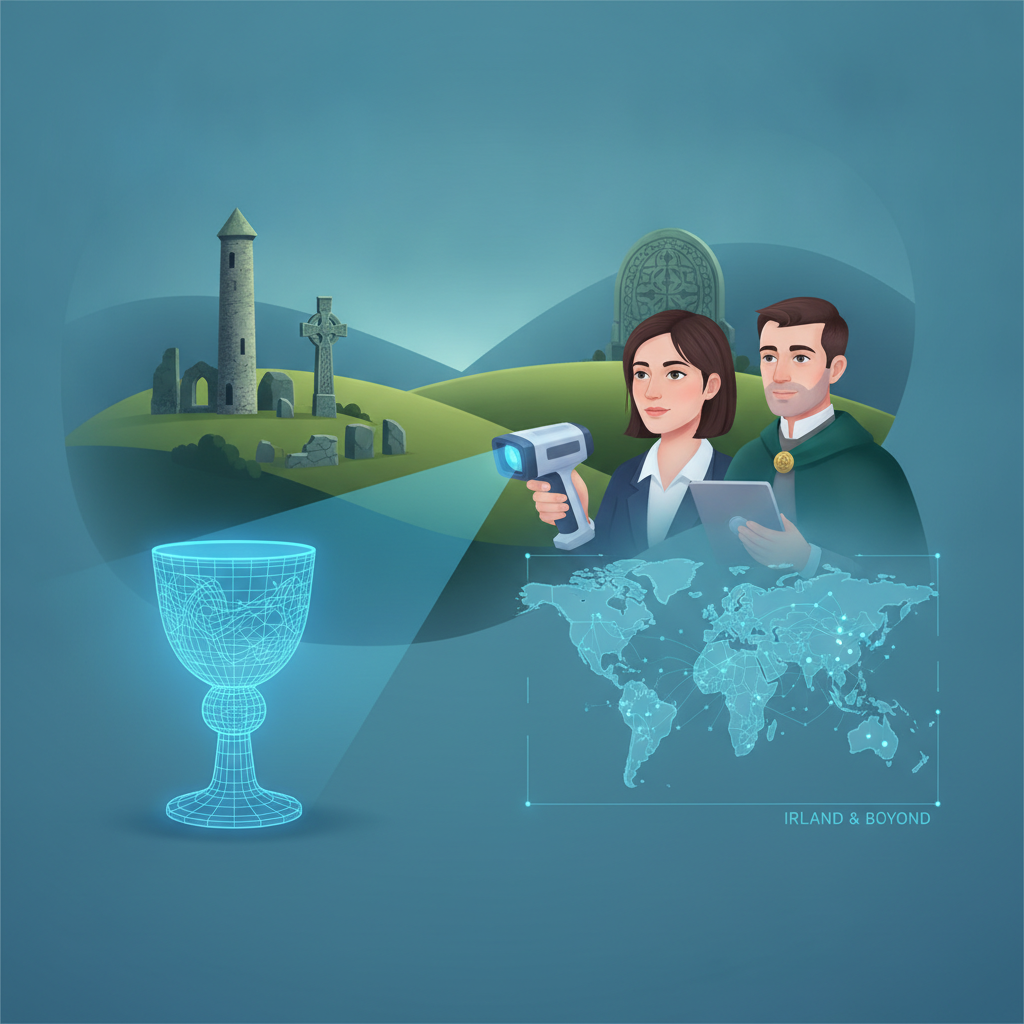
The world of three-dimensional technology is constantly expanding, offering unprecedented ways to capture, preserve, and innovate. While the emerald isle of Ireland boasts a rich tapestry of history and a burgeoning tech scene, 3D scanning is playing a pivotal role in bridging the past with the future, from meticulously recreating ancient artefacts to propelling modern industrial designs. At PrintIn3D, we're passionate about making this transformative technology accessible, and whether you're preserving a family heirloom or developing the next big product, our scan 3d professionnel luxembourg services are here to turn your physical objects into digital realities, serving clients across the entire EU/EEA, including the Grand Duchy. Imagine bringing a fragile, centuries-old Celtic cross back to life digitally, or rapidly prototyping a complex industrial component. This incredible capability is what 3D scanning offers, providing a powerful bridge between the tangible and the digital, opening doors to endless possibilities for cultural preservation, design innovation, and much more.
- What is 3D Scanning and How Does it Work?
- Bringing History to Life: 3D Scanning Irish Artefacts
- Modern Innovations: Beyond Museums and into Industry
- The Process: How PrintIn3D Makes 3D Scanning Accessible
- Why Choose PrintIn3D for Your 3D Scanning Needs in Luxembourg?
- Frequently Asked Questions About 3D Scanning
What is 3D Scanning and How Does it Work?
At its core, 3D scanning is a non-contact, non-destructive technology that captures the physical shape of an object or environment and converts it into a precise, three-dimensional digital model. Think of it as taking a photograph, but instead of just capturing colour and light, it captures every curve, dimension, and intricate detail in three dimensions. This digital model, often a "point cloud" or a mesh of triangles, can then be manipulated, analysed, replicated, or 3D printed.
There are several different technologies employed in 3D scanning, each suited to different types of objects and applications:
- Laser Triangulation: A laser line or point is projected onto an object, and a sensor measures the deformation of the laser beam to calculate the distance and create a 3D point cloud. This method is excellent for capturing fine details and is often used for smaller, intricate objects.
- Structured Light Scanning: This technique projects a known light pattern (like stripes or grids) onto an object. The way the pattern distorts on the object's surface is then captured by cameras, and algorithms calculate the object's geometry. Structured light scanners are known for their speed and accuracy, making them ideal for a wide range of applications, from human faces to industrial parts.
- Photogrammetry: While not strictly a 'scanner,' photogrammetry involves taking multiple overlapping photographs of an object from various angles. Special software then stitches these images together, identifying common points and calculating the object's 3D geometry and texture. This method is highly versatile and can be used for very large objects or environments, such as archaeological sites or buildings.
- Contact Scanning (CMM): Though less common for general-purpose 3D scanning, Coordinate Measuring Machines (CMMs) use a physical probe to touch the surface of an object at various points, recording precise coordinates. This is often used for highly accurate industrial inspection and quality control.
Once the data is captured, it undergoes a crucial post-processing phase. Raw scan data can often be noisy or incomplete. Software is used to clean up the point cloud, align multiple scans into a single, cohesive model, and then convert it into a mesh. This mesh can then be "textured" with colour information if the scanner captured it, resulting in a realistic digital twin of the original object. This digital asset is incredibly valuable, whether for archival purposes, reverse engineering, or preparing for 3D printing. For anyone seeking to transform physical objects into digital designs, our design 3d professionnel luxembourg and scanning services work hand-in-hand to provide comprehensive solutions.
Bringing History to Life: 3D Scanning Irish Artefacts
Ireland's landscape is dotted with historical treasures, from ancient megalithic tombs and monastic settlements to intricate Celtic metalwork and Georgian architecture. The challenge for archaeologists, historians, and conservators has always been how to study, preserve, and share these invaluable artefacts without causing damage. This is where 3D scanning emerges as a game-changer.
Imagine a fragile, ancient illuminated manuscript or a weathered stone carving on a monastic cross. Traditional methods of documentation, such as photography and hand-drawn sketches, offer limited information. 3D scanning, however, captures every nuance, every tool mark, every crack, creating a perfect digital replica.
Case Studies and Applications in Ireland:
- Archaeological Sites and Artefacts: From the intricate carvings at Newgrange to the detailed artwork on high crosses across the country, 3D scanning allows researchers to create virtual models that can be studied in unprecedented detail, without the risk of physical degradation. These models can be shared globally, making Ireland's heritage accessible to researchers and enthusiasts worldwide.
- Museum Collections: Irish museums are increasingly employing 3D scanning to digitise their collections. This provides digital archives for future generations, allows for virtual exhibitions, and enables the creation of high-quality replicas for educational purposes or for display when the original is too fragile. For instance, the National Museum of Ireland could potentially scan delicate bog bodies or medieval jewellery, making them available for virtual interaction.
- Conservation and Restoration: Before restoration work begins on a historic building or a damaged artefact, a precise 3D scan provides an invaluable baseline. It allows conservators to meticulously plan their work, identify areas of decay, and even create replacement parts with pinpoint accuracy using 3D printing from the scanned data.
- Public Engagement and Education: Imagine walking through a virtual reconstruction of Dublin Castle as it stood centuries ago, or holding a 3D-printed replica of a Viking sword in a classroom. 3D scanning makes this possible, fostering a deeper connection to history and making learning more interactive and engaging for all ages.
While these examples highlight Ireland's journey, the principles and benefits are universally applicable. If you're a museum, heritage site, or educational institution in Luxembourg looking to preserve your cultural assets, our scan 3d professionnel luxembourg service offers the same level of care and precision to bring your history to the digital realm.
Modern Innovations: Beyond Museums and into Industry
While preserving the past is a noble application, 3D scanning's utility extends far beyond museums and archaeological digs. It is a cornerstone of modern industrial innovation, driving progress in fields from manufacturing and engineering to product design and healthcare. For businesses in the Grand Duchy, embracing this technology can unlock significant competitive advantages, particularly in areas like rapid prototyping luxembourg and precise manufacturing.
Key Industrial and Commercial Applications:
- Reverse Engineering: This is one of the most powerful industrial applications. If you have a physical part but no existing CAD (Computer-Aided Design) model, a 3D scan can capture its geometry. This digital model can then be used to modify the design, analyse its properties, or reproduce the part, even for components where original blueprints are lost or unavailable. This is particularly valuable for repairing older machinery or improving existing designs.
- Quality Control and Inspection: Manufacturers use 3D scanning to ensure that produced parts meet exact specifications. By comparing a scan of a manufactured part against its original CAD model, deviations can be quickly identified and measured, ensuring high product quality and reducing waste. This is crucial for precision industries.
- Product Design and Prototyping: For designers and engineers, 3D scanning accelerates the design cycle. A physical prototype, even a hand-sculpted one, can be scanned, digitised, and then refined in CAD software. This digital model can then be sent for impression 3d sur mesure luxembourg, creating iterations rapidly and cost-effectively. This iterative process is at the heart of effective product development and is a key component of our prototypage rapide luxembourg services for Luxembourgish businesses.
- Customisation and Personalisation: From bespoke medical implants (like prosthetics and orthotics) to custom-fit consumer products, 3D scanning allows for precise measurements of unique shapes. This enables the creation of perfectly tailored items, enhancing functionality and user experience.
- Architecture, Engineering, and Construction (AEC): Scanning existing buildings or construction sites provides accurate 'as-built' data, crucial for renovations, facility management, and planning new projects. It helps identify discrepancies between design and reality, improving project accuracy and reducing costly errors.
For businesses in Luxembourg, leveraging professional 3D scanning can streamline operations, enhance product quality, and significantly reduce development times. Whether you need a small component reverse-engineered or a large object captured for design purposes, our service is designed to be hassle-free and efficient. We provide the expertise needed for precise usinage rapide 3d luxembourg and the creation of complex digital models, acting as your trusted partner in bringing innovative ideas to fruition.
The Process: How PrintIn3D Makes 3D Scanning Accessible
At PrintIn3D, we understand that not everyone owns a 3D scanner or has the expertise to operate one. That's why we offer a comprehensive, hassle-free 3D scanning service designed to make this powerful technology accessible to everyone, from individuals with unique projects to businesses seeking advanced solutions. We pride ourselves on being your 3D printing partner, offering friendly WhatsApp support and a commitment to quality.
Our 3D scanning service is tailored to your needs, ensuring convenience and precision for clients across Ireland and the entire EU/EEA, including Luxembourg. Here’s how our streamlined process works:
- Consultation & Quotation: It all starts with your idea. Simply reach out to us with details about the object you need scanned. Provide us with its dimensions, material, and any specific requirements you have (e.g., desired level of detail, whether colour texture is needed, and the intended use of the digital model). We'll discuss the best scanning method for your object and provide a transparent, competitive quote, outlining the coût impression 3d luxembourg and scanning services.
- Object Submission: We offer flexible options for getting your object to us:
- Ship it to us: For clients in Luxembourg and across Europe, you can securely ship your object to our facility. We recommend careful packaging to protect your item during transit.
- Drop it off (Ireland): If you are located in Ireland, particularly around Dublin, you have the option to drop off your object at our premises.
- On-Site Scanning (Ireland): For larger or immobile objects within Ireland, we may be able to arrange on-site scanning. Please contact us to discuss the feasibility and logistics for this option.
- Professional 3D Scanning: Once your object is with us, our expert team utilises state-of-the-art 3D scanning technology to capture its precise geometry and texture. We employ techniques best suited to your object's characteristics, ensuring maximum accuracy and detail. Our advanced equipment guarantees a high-resolution digital twin.
- Data Processing & Model Generation: After scanning, the raw data undergoes meticulous post-processing. This involves cleaning up the point cloud, aligning multiple scans (if necessary), and converting it into a usable mesh model (e.g., STL, OBJ, or other common 3D file formats). We ensure the model is watertight and ready for its intended purpose. If you need further modifications or enhancements, our création modèle 3d luxembourg service can assist in refining the scanned data into a print-ready or design-ready file.
- Delivery of Digital Model: Finally, your high-quality 3D digital model is delivered to you in your preferred file format. You can then use it for a multitude of applications: archival, reverse engineering, inspection, 3D visualisation, or, crucially, for 3D printing. If you’re looking to get a physical replica, our comprehensive service impression 3d luxembourg can bring your digital scan to life.
- Return of Physical Object: Your original physical object is carefully packaged and returned to you, either via shipping or collection, once the scanning process is complete.
We understand the importance of intellectual property, especially for businesses developing new products. That's why PrintIn3D offers Non-Disclosure Agreements (NDAs) to provide you with complete peace of mind, ensuring the confidentiality of your designs and scanned objects.
Why Choose PrintIn3D for Your 3D Scanning Needs in Luxembourg?
When it comes to transforming your physical objects into precise digital models, you need a partner you can trust. PrintIn3D stands out as an award-winning service provider dedicated to quality, reliability, and unparalleled customer care. We are committed to extending our expert services to businesses and individuals across the Grand Duchy, offering a superior scan 3d professionnel luxembourg experience.
Here’s why PrintIn3D is the ideal choice for your 3D scanning and printing needs:
- Award-Winning Expertise: We’re not just saying we’re good; we’ve got the accolades to prove it! PrintIn3D was honoured with the Silver Rising Star award at the prestigious Irish Print Awards 2026 and was a finalist in three categories. This recognition underscores our commitment to excellence and innovation in the 3D printing and scanning industry.
- Hassle-Free Service: Our core mission is to make 3D technology accessible. You don't need to own a 3D scanner or even understand the intricate technicalities. Simply tell us what you need, and we'll handle the rest, providing a seamless and easy experience from consultation to digital model delivery.
- Comprehensive Solutions: Beyond just scanning, we offer a full suite of services. From 3d design service luxembourg to convert your concepts into print-ready models, to custom impression 3d grand-duché de luxembourg services, and even the sale of high-quality filaments like achat filament pla luxembourg and filament abs luxembourg acheter from brands like Bambu Lab and SUNLU. We are truly your one-stop shop for all things 3D. Our capabilities also extend to more advanced needs like impression 3d industriel luxembourg and working with materials like filament 3d composites luxembourg, providing an encompassing offre d'impression 3d luxembourg.
- Fast Turnaround & Reliability: We understand the importance of speed in today's fast-paced environment. We strive for efficient processing of your scanning projects. For filament orders, we even offer same-day dispatch before 4 PM, with typical delivery within 5-7 working days across Europe.
- Customer-Centric Support: Your satisfaction is our priority. We offer friendly WhatsApp support, ensuring you can easily reach out with any questions or concerns. Our team is always ready to assist, providing expert guidance every step of the way. We believe in building partnerships, not just processing orders.
- Confidentiality Assured: We respect the privacy and intellectual property of your projects. For sensitive items, we readily provide Non-Disclosure Agreements (NDAs), giving you complete peace of mind that your designs and scanned data are protected.
- Risk-Free Guarantee: We stand behind the quality of our services and products with a 30-Day Risk-Free Return policy, which even includes original and return shipping. This demonstrates our confidence in delivering exceptional results and ensures your complete satisfaction.
Whether you're an artist looking to digitise a sculpture, an engineer needing to reverse-engineer a component, or a business requiring a digital archive of your products, PrintIn3D is equipped to be your reliable partner. We combine advanced technology with a commitment to excellent service, ensuring that your 3D scanning projects in Luxembourg are handled with professionalism and precision. Choose PrintIn3D and experience the difference that an award-winning, customer-focused partner can make.
Frequently Asked Questions About 3D Scanning
What types of objects can PrintIn3D scan?
We can scan a wide variety of objects, from small, intricate parts for reverse engineering or design, to larger items for archival or replication purposes. The suitability depends on factors like size, material, surface finish (e.g., highly reflective or transparent objects can be challenging but often manageable with specific techniques). If you have a specific object in mind, simply contact us with details, and our expert team will advise on the best approach for your scan 3d professionnel luxembourg needs.
How accurate are PrintIn3D's 3D scanning services?
Our 3D scanning services utilise professional-grade equipment and techniques, ensuring high levels of accuracy and detail. The exact precision can vary depending on the scanning method chosen and the size/complexity of the object, but we always strive to achieve the highest possible resolution for your specific requirements. We'll discuss the expected accuracy during your initial consultation to match your project's needs.
What file formats do you provide after a 3D scan?
We typically provide scanned 3D models in widely compatible formats such as STL (Stereolithography), OBJ (Object), and PLY. We can also provide other formats upon request, depending on your software and application needs. These formats are universally accepted by most 3D modelling software, CAD programs, and 3D printing slicers, making your digital model versatile for various uses including our service impression 3d luxembourg or further design work.
Can you 3D print an object after it has been scanned?
Absolutely! One of the most popular applications for 3D scanned data is creating physical replicas. Once your object has been professionally scanned and converted into a digital 3D model, we can seamlessly transition to 3D printing it for you. This allows for rapid prototyping, creating replacement parts, or producing multiples of a unique design. Our comprehensive entreprise impression 3d luxembourg can handle the entire process from scan to print.
Is 3D scanning a destructive process for my object?
No, 3D scanning is a completely non-contact and non-destructive process. Our scanners capture the geometry of your object using light or lasers, meaning there is no physical interaction that could damage or alter the original item. This makes it an ideal solution for scanning delicate, fragile, or valuable artefacts and heirlooms without any risk to their integrity.
Ready to unlock the potential of 3D scanning for your project in Luxembourg? Whether it's to preserve a piece of history, accelerate product development with rapid prototyping luxembourg, or bring a complex design to life, PrintIn3D is your expert partner. Contact us today to discuss your 3D scanning requirements and receive a personalised quote. Let's transform your physical objects into digital masterpieces together!