3D Scanning Luxembourg: Preserving Heritage, Driving Innovation
The Grand Duchy of Luxembourg, a nation celebrated for its rich history, vibrant culture, and burgeoning innovation, stands at the fascinating crossroads of tradition and technology. As the world increasingly embraces digital transformation, tools like 3D scanning are proving invaluable, not just for preserving ancient relics but also for catalysing future innovations. For businesses and individuals seeking to unlock these possibilities, expert 3D scanning Luxembourg services are transforming how we interact with both our past and our future. PrintIn3D.ie is proud to extend its award-winning 3D scanning and printing services across the entire EU/EEA, including the forward-thinking nation of Luxembourg, providing a hassle-free solution to bring your ideas to life.
- The Digital Revolution for Luxembourg's Heritage
- Fueling Innovation: 3D Scanning in Modern Luxembourg
- How 3D Scanning Works: A Glimpse Behind the Lens
- PrintIn3D.ie: Your Trusted Partner for 3D Scanning and Printing in Luxembourg
- The Future is 3D: Impact on Luxembourg's Economy and Culture
- Frequently Asked Questions
- Conclusion
The Digital Revolution for Luxembourg's Heritage
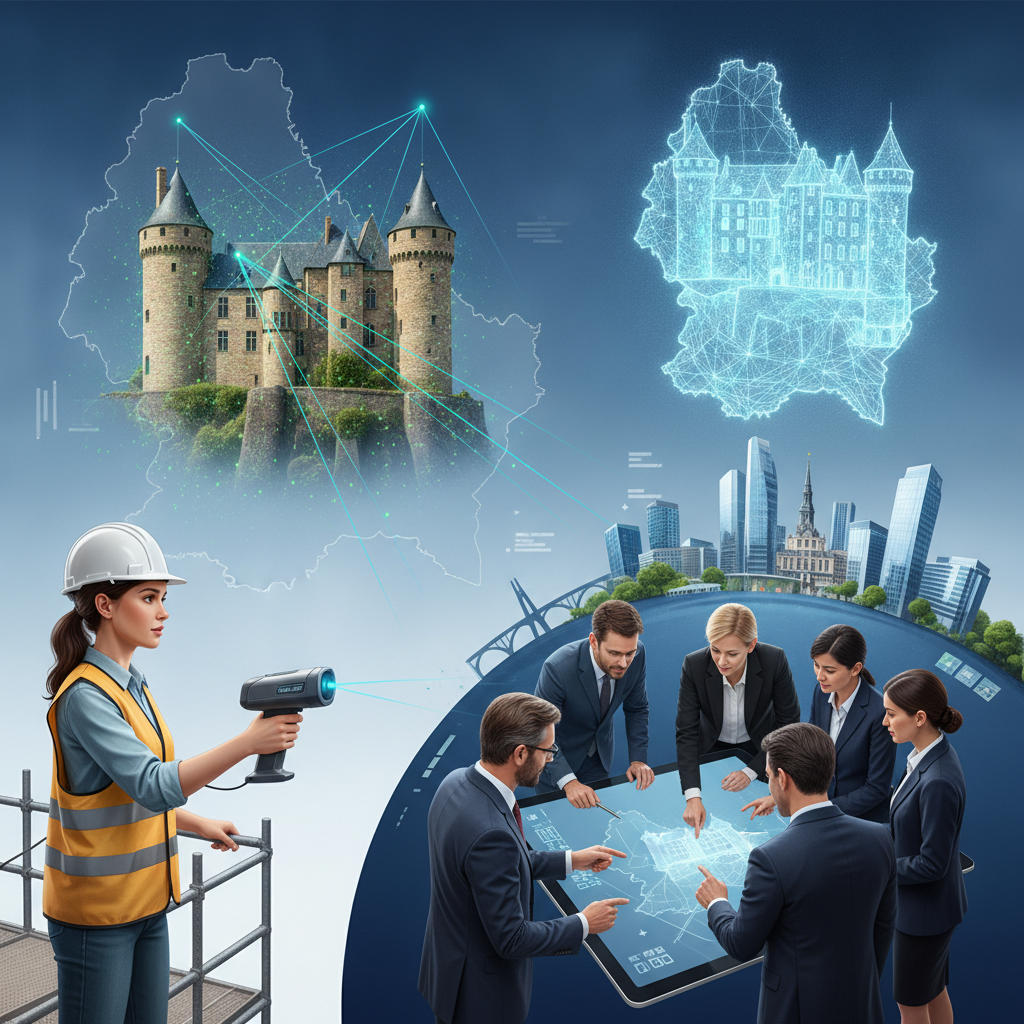
Luxembourg's landscape is dotted with historical treasures, from the ancient Roman remains to medieval castles and the fortifications of the capital city. These invaluable assets are not merely tourist attractions; they are tangible links to generations past, offering insights into the Grand Duchy's unique journey. However, time and environmental factors pose a constant threat to their integrity. This is where 3D scanning Luxembourg steps in as a powerful ally for heritage preservation.
Preserving Cultural Artifacts with Precision
Imagine being able to digitally capture every intricate detail of a medieval sculpture from Vianden Castle, a delicate archaeological find, or the vast network of the Bock Casemates. 3D scanning technology allows for the creation of incredibly precise digital replicas, or "digital twins," of physical objects and environments. These digital models serve several critical purposes:
- Archival Records: They provide an unalterable, high-fidelity record of an artifact's condition at a specific point in time, invaluable for future reference and research.
- Damage Assessment: Detailed 3D scans can help monitor subtle changes or degradation over time, enabling proactive conservation efforts.
- Virtual Collections: Museums and cultural institutions in Luxembourg can use these scans to create virtual exhibitions, making their collections accessible to a global audience online without risking damage to the original pieces.
This digital preservation ensures that even if an original artifact succumbs to decay or disaster, its precise form and details are secured for eternity, available for study, appreciation, and replication.
Restoration and Replication Made Easier
When historical artifacts suffer damage, restoration can be a painstaking and often subjective process. 3D scanning offers an objective and accurate method for aiding restoration:
- Reconstructing Missing Parts: If a piece of a statue or a decorative element is lost, a 3D scan of the remaining parts can be used to digitally reconstruct the missing section with high accuracy. This digital model can then be 3D printed to create a physical replacement.
- Documentation for Repair: Conservators can use the detailed 3D models to plan intricate repairs, ensuring minimal impact on the original material and structural integrity.
- Creating Replicas: For educational purposes or to protect fragile originals, perfect replicas can be 3D printed from the scanned data. These replicas can be handled by students, displayed in less secure environments, or even sold as souvenirs, generating revenue for cultural institutions. This ability to create exact copies is a game-changer for cultural outreach in Luxembourg and beyond.
Educational Outreach and Immersive Experiences
Beyond preservation, 3D scanning opens up new avenues for engaging the public with Luxembourg's rich history:
- Interactive Learning: Students can interact with 3D models of historical artifacts on screens, rotating them, zooming in, and even disassembling them virtually to understand their construction.
- Virtual Reality (VR) and Augmented Reality (AR): Imagine walking through a digitally reconstructed Roman villa near Dalheim or exploring the medieval walls of Luxembourg City in VR, bringing history to life in an unprecedented way. 3D scans are the foundational data for such immersive experiences.
- Accessibility: Digital models can be adapted for people with disabilities, offering tactile representations for the visually impaired or audio descriptions integrated into virtual tours.
Fueling Innovation: 3D Scanning in Modern Luxembourg
Luxembourg is not just about its past; it's a hub for modern innovation, finance, and technology. The proactive nature of its economy and its commitment to digital transformation make it an ideal environment for advanced technologies like 3D scanning to thrive. Beyond heritage, 3D scanning is a crucial tool in design, manufacturing, and various industrial applications, driving the Grand Duchy's economic progress.
Rapid Prototyping and Product Development
One of the most significant applications of 3D scanning in modern industry is its role in speeding up the product development cycle. For companies engaging in rapid prototyping Luxembourg, 3D scanning is indispensable:
- Concept Validation: Designers can quickly scan physical prototypes or existing products to generate digital models, allowing for rapid iterations and modifications in CAD software. This significantly reduces the time and cost associated with manual measurement and modelling.
- Fit and Function Testing: Components designed in CAD can be scanned and digitally assembled to check for fit, clearance, and interference before committing to costly tooling or full production. This also applies to usinage rapide 3d Luxembourg processes where precision is paramount.
- Competitive Analysis: Companies can scan competitor products to understand their design, engineering, and manufacturing approaches, informing their own product development strategies.
This iterative process allows businesses to bring innovative products to market faster, maintaining a competitive edge in sectors like automotive, aerospace, and consumer electronics, all of which have a presence or influence in Luxembourg.
Reverse Engineering and Design Optimisation
3D scanning is the cornerstone of reverse engineering, a process vital for innovation and problem-solving. When original CAD files are unavailable, or a component needs to be redesigned or improved, 3D scanning bridges the gap:
- Creating CAD Models from Physical Objects: Whether it's an antique car part, a complex piece of machinery, or a handmade artisanal product, 3D scanning can accurately capture its geometry and convert it into a fully editable CAD model. This allows for modifications, remanufacturing, or integration into new designs.
- Improving Existing Designs: By scanning an existing product, engineers can identify areas for improvement in terms of material usage, structural integrity, or ergonomic design. For instance, in création modèle 3d Luxembourg, this means turning a tangible object into a digital blueprint for enhancement.
- Legacy Part Manufacturing: For industries reliant on older machinery or vehicles, 3D scanning enables the precise reproduction of discontinued parts, ensuring continuity and extending the lifespan of valuable assets.
Customisation and Personalisation
In an age where consumers and industries demand tailored solutions, 3D scanning plays a pivotal role in enabling mass customisation:
- Ergonomics and Medical Devices: From custom orthotics and prosthetics to bespoke ergonomic tools, 3D scanning allows for precise body measurements or object interactions, leading to perfectly fitted and highly functional designs.
- Art and Design: Artists can scan their physical sculptures or models to create digital versions for scaling, reproduction, or integration into digital art forms. Architects can scan existing structures for renovation projects or to create accurate models of complex building facades.
- Specialised Industrial Components: For bespoke machinery or unique installations, components can be 3D scanned to ensure they fit perfectly within their designated environment or interact seamlessly with other custom parts.
Medical and Industrial Applications
The precision and non-contact nature of 3D scanning make it ideal for sensitive applications:
- Healthcare: Beyond prosthetics, 3D scanning is used for dental impressions, creating custom surgical guides, and even for monitoring changes in body shape over time, such as in reconstructive surgery or physical therapy.
- Quality Control and Inspection: Manufacturers can scan components to compare them against their original CAD models, quickly identifying deviations or defects. This is crucial for maintaining high standards in various industries, including those served by impression 3d industriel Luxembourg services.
- Architecture, Engineering, and Construction (AEC): Scanning existing buildings or construction sites provides accurate "as-built" data, aiding in renovations, facility management, and clash detection.
How 3D Scanning Works: A Glimpse Behind the Lens
Understanding the basics of how 3D scanning operates demystifies the technology and highlights why it's so powerful for both heritage and innovation. At its core, 3D scanning is the process of collecting data from the physical world to create a digital representation.
Different 3D Scanning Technologies
There are several types of 3D scanning technologies, each suited for different applications:
- Structured Light Scanning: This method projects a pattern of light (like stripes or grids) onto an object. A camera then captures how this pattern distorts on the object's surface. By analysing these distortions, the scanner calculates the object's precise 3D shape. Structured light scanners are known for their high accuracy and speed, making them excellent for capturing fine details on small to medium-sized objects.
- Laser Scanning: Laser scanners use a laser beam or line to probe the object's surface. A sensor measures the distance to the object as the laser moves, creating a cloud of data points. There are handheld laser scanners for portability and large-scale scanners for environments. These are particularly versatile and effective for a wide range of sizes.
- Photogrammetry: While not a "scanner" in the traditional sense, photogrammetry involves taking multiple overlapping photographs of an object from different angles. Special software then stitches these images together to create a 3D model. It's often used for large structures or environments and can capture textures very well.
The choice of technology depends on the object's size, material, desired accuracy, and the specific application.
The Process: From Object to Digital Model
Regardless of the technology used, the general workflow for 3D scanning involves several key steps:
- Data Acquisition: The object is placed on a turntable, or the scanner is moved around the object, capturing thousands to millions of data points (a "point cloud") or geometric meshes that define its surface.
- Data Alignment and Merging: If multiple scans are taken (especially for larger or complex objects), they need to be aligned and merged into a single, comprehensive dataset.
- Mesh Generation: The point cloud is converted into a polygonal mesh, which is a collection of interconnected triangles that form the surface of the 3D model. This is where the object's shape truly begins to take digital form.
- Post-Processing and Clean-up: The raw mesh often contains noise, holes, or unwanted data. Specialised software is used to clean, smooth, and refine the mesh, ensuring a watertight and accurate model.
- Texture Mapping (Optional): If colour and photographic detail are required, high-resolution images taken during the scanning process can be mapped onto the 3D model, giving it a realistic appearance.
- Export to CAD/Other Formats: The final 3D model can then be exported into various formats, such as .STL (for 3D printing), .OBJ, or converted into a parametric CAD model for design and engineering applications. PrintIn3D.ie ensures that the output is always in a usable format for your needs, whether it's for impression 3d sur mesure Luxembourg or digital archiving.
PrintIn3D.ie: Your Trusted Partner for 3D Scanning and Printing in Luxembourg
At PrintIn3D.ie, we understand the transformative power of 3D scanning for both preserving cultural treasures and accelerating modern innovation. We are committed to making these advanced technologies accessible and hassle-free for individuals and businesses across the EU/EEA, including the vibrant market of Luxembourg. As a 'Rising Star' at the Irish Print Awards 2026, we pride ourselves on quality, reliability, and unparalleled customer support.
Seamless Service for Individuals and Businesses
Whether you're a museum conservator, an architect, a product designer, or an entrepreneur with a groundbreaking idea, PrintIn3D.ie offers tailored 3D scanning Luxembourg services. We cater to clients needing to digitise physical objects, offering flexible options for sending your items to us, or discussing on-site scanning for larger projects. Our friendly WhatsApp support ensures you have a partner every step of the way, guiding you through the process and answering any questions you may have.
We work with a diverse range of clients, from small startups to large enterprises, providing reliable and efficient solutions for various applications. Our commitment to excellence means you receive high-quality digital models, ready for your specific needs, be it for archival, design, or replication.
Comprehensive Solutions: From Scan to Print
Our expertise extends far beyond just 3D scanning. PrintIn3D.ie is your complete 3D printing partner. Once your object has been digitally captured and processed into a precise 3D model, we can then offer:
- Custom 3D Printing: From your scanned file (or any other 3D model you provide), we can 3D print physical objects with exceptional detail and accuracy. This means your digitised artifacts can be brought back to life as replicas, or your reverse-engineered components can be manufactured. We are proud to offer a leading service impression 3d Luxembourg.
- 3D Design Services: If you have a concept, sketch, or need modifications to your scanned model, our expert designers can convert your ideas into print-ready 3D models. This is ideal for those requiring création modèle 3d Luxembourg from scratch or needing adjustments for specific applications.
- Rapid Turnaround Times: We understand that time is often of the essence. We strive for fast turnaround times on our custom services, ensuring your projects stay on schedule.
For any entreprise impression 3d Luxembourg or individual maker, PrintIn3D.ie provides an end-to-end solution.
Why Choose PrintIn3D.ie?
We believe in building lasting relationships with our clients by offering a service that stands out:
- Award-Winning Excellence: Recognised as a Silver Rising Star at the Irish Print Awards 2026, and a finalist in three categories, our commitment to quality and innovation is independently acknowledged.
- 30-Day Risk-Free Return: We stand by the quality of our products and services. Our unique policy includes original and return shipping, giving you peace of mind.
- Expert & Friendly Support: Our team is always ready to assist you via WhatsApp, ensuring a smooth and pleasant experience, especially for first-time buyers.
- Confidentiality Assured: We offer Non-Disclosure Agreements (NDAs) for sensitive projects, safeguarding your intellectual property and designs.
- Fast Delivery Across EU/EEA: For filament orders, we offer same-day dispatch for orders placed before 4 PM, with typical delivery times of 5-7 working days for Europe, including Luxembourg.
Beyond Scanning: Filament and Custom Printing
For those in Luxembourg who own 3D printers, PrintIn3D.ie is also your go-to source for high-quality 3D printer filaments. We stock popular brands like Bambu Lab and SUNLU, offering a range of PLA and PETG filaments designed for excellent print results. Our convenient online store makes it easy to buy 3d filament Luxembourg, including options for achat filament PLA Luxembourg, and even to find filament PETG Luxembourg prix. We aim to be competitive, making us a smart choice for those looking for 3D printer filament bulk buy Luxembourg, or specific materials like filament ABS Luxembourg acheter, though we currently specialise in PLA and PETG, catering to a wide range of printing needs. While we currently focus on PLA and PETG, the world of filament 3d composites Luxembourg is constantly evolving, and we stay abreast of trends to meet future demands.
Whether you need a one-off scan, a complex series of prints, or a reliable supply of materials, PrintIn3D.ie is equipped to support your needs, making your experience with 3D technology truly hassle-free and successful. When considering the coût impression 3d Luxembourg, our transparent pricing and high-quality results offer exceptional value.
The Future is 3D: Impact on Luxembourg's Economy and Culture
The applications of 3D scanning and printing are only just beginning to unfold. For Luxembourg, embracing these technologies promises significant long-term benefits.
Economic Growth and Job Creation
The proliferation of 3D scanning and additive manufacturing creates new opportunities for businesses and fosters innovation across various sectors. This drives demand for skilled professionals in 3D design, engineering, data processing, and advanced manufacturing, contributing to economic growth and job creation within the Grand Duchy. Luxembourg's strategic position and commitment to R&D make it an ideal hub for these emerging industries.
Cultural Preservation for Generations
Ultimately, the digital revolution in heritage ensures that Luxembourg's rich cultural legacy is not only preserved but also made more accessible and engaging for future generations. By digitising artifacts and historical sites, we create an imperishable archive that can be studied, experienced, and reinterpreted for centuries to come, solidifying Luxembourg's place as a guardian of European heritage.
Frequently Asked Questions
What kind of objects can be 3D scanned?
Virtually any physical object can be 3D scanned, regardless of its size or complexity. This includes small artifacts, sculptures, machinery parts, human body parts, and even large environments. The primary limitations relate to highly reflective or transparent surfaces, which may require special preparation, or extremely deep, narrow geometries that can be difficult for light or laser to reach. PrintIn3D.ie can scan most objects, and we'll advise you on the best approach for challenging items.
How long does 3D scanning take?
The time required for 3D scanning varies significantly depending on the object's size, complexity, desired accuracy, and the chosen scanning method. Simple, small objects might take minutes to scan, while large, intricate artifacts or entire rooms could take several hours or even days. Post-processing the raw scan data into a usable 3D model also adds to the overall timeframe. We provide estimated timelines for each project during the consultation phase.
What are the benefits of 3D scanning for businesses in Luxembourg?
For businesses, 3D scanning offers numerous benefits, including faster product development through rapid prototyping, cost savings by reverse engineering parts without original CAD data, improved quality control through precise inspection, and enhanced customisation capabilities. It helps companies remain competitive by enabling innovation and efficiency. Services like rapid prototyping Luxembourg rely heavily on 3D scanning.
Can PrintIn3D.ie scan large objects in Luxembourg?
Yes, PrintIn3D.ie offers flexible 3D scanning solutions for a range of object sizes. For smaller items, you can conveniently ship them to our facility. For larger objects or installations, we can discuss on-site scanning options within the EU/EEA, including Luxembourg, ensuring your project's specific needs are met. Our goal is to provide a hassle-free and comprehensive service impression 3d Luxembourg.
What file formats do you provide after a 3D scan?
After a 3D scan, PrintIn3D.ie can provide the digital model in various industry-standard file formats, most commonly .STL (Stereolithography), .OBJ (Wavefront Object), .PLY (Polygon File Format), and .FBX (Filmbox). We can also work to convert these into CAD-compatible formats such as .STEP or .IGES if required for engineering applications. We ensure the format is compatible with your intended use, whether for 3D printing, animation, or CAD design.
Conclusion
From safeguarding invaluable historical artifacts to accelerating the development of cutting-edge products, 3D scanning is a truly transformative technology with profound implications for both heritage and innovation in Luxembourg. It offers an unparalleled bridge between the physical and digital worlds, enabling new forms of preservation, education, and economic growth. As Luxembourg continues its journey into a digitally-driven future, the role of expert 3D scanning Luxembourg services will only become more critical.
At PrintIn3D.ie, we are dedicated to being your reliable partner on this exciting journey. With our award-winning service, commitment to quality, friendly support, and comprehensive range of 3D printing and design solutions, we make bringing your 3D dreams to life an effortless experience. Explore the possibilities of 3D scanning and discover how PrintIn3D.ie can help you preserve the past and build the future, right here in the Grand Duchy.
Ready to transform your physical objects into digital assets or bring your 3D designs to life?
Contact PrintIn3D.ie today to discuss your 3D scanning, design, or printing project!