3D Scanning Transforms Irish Heritage & Industry
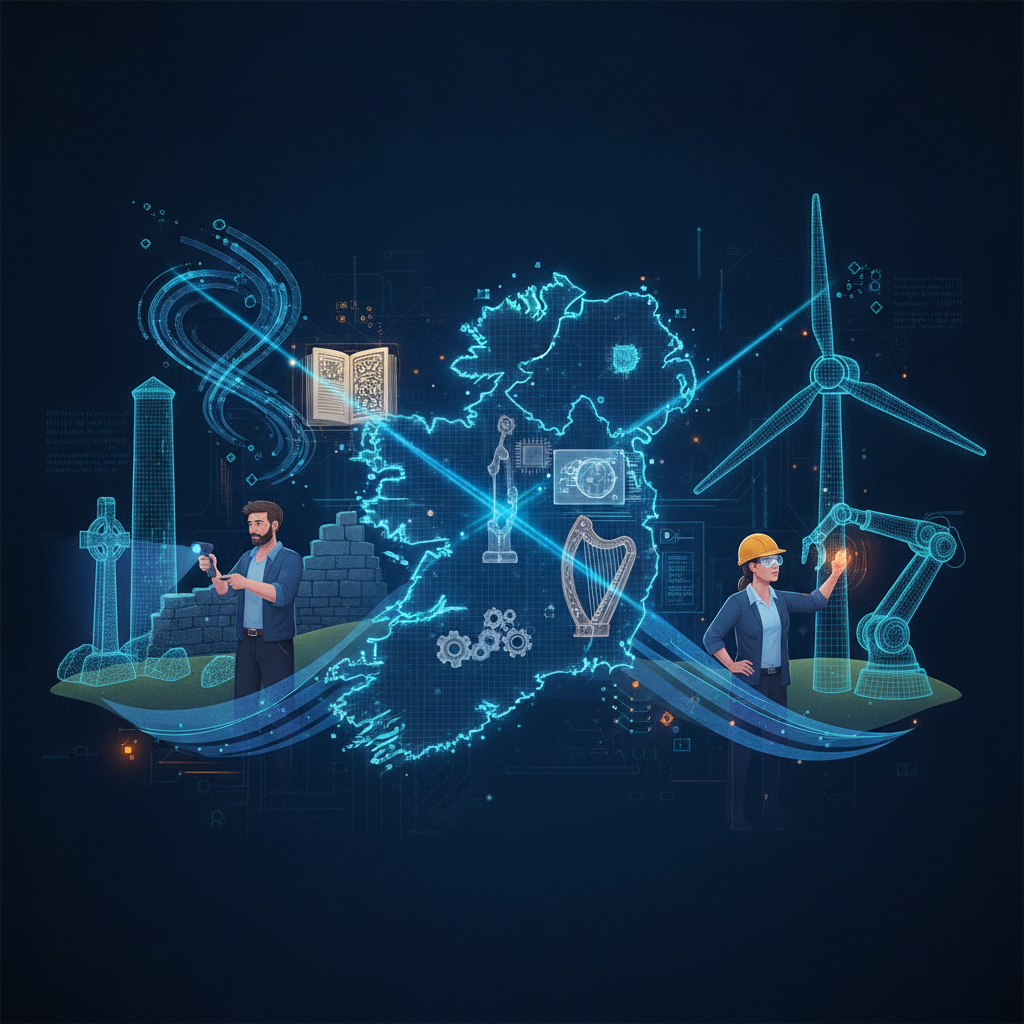
Ireland, a land rich in history and buzzing with innovation, is witnessing a remarkable transformation powered by cutting-edge technology. Beyond traditional photographs, a revolutionary process is capturing the essence of our past and shaping the future of our industries: 3D scanning. This incredible technology allows us to create precise digital replicas of physical objects, from ancient artefacts to complex industrial components, opening up a world of possibilities for preservation, design, and manufacturing right here in Ireland.
At PrintIn3D.ie, we're passionate about bringing these possibilities to life. We understand that whether you're safeguarding a precious piece of history or developing the next big innovation, accuracy and detail are paramount. Our 3D scanning services provide the foundation for incredible projects, paving the way for intricate 3D designs and, ultimately, stunning physical objects crafted with high-quality 3d printer filaments.
Table of Contents
- The Power of 3D Scanning: Beyond Traditional Documentation
- Preserving Ireland's Past: 3D Scanning in Heritage
- Driving Innovation: 3D Scanning in Irish Industry & Manufacturing
- The Synergy: 3D Scanning, Design, and 3d Printer Filaments for Irish Innovation
- How PrintIn3D.ie Supports Your 3D Scanning & Printing Needs in Ireland
- Frequently Asked Questions About 3D Scanning in Ireland
- Embracing the 3D Revolution in Ireland
The Power of 3D Scanning: Beyond Traditional Documentation
Think about a photograph. It captures a moment, a two-dimensional image that provides a glimpse of reality. Now, imagine being able to capture not just the image, but the entire physical form – every curve, every dimension, every intricate detail – in a three-dimensional digital model. That’s the magic of 3D scanning. Using advanced lasers, structured light, or photogrammetry techniques, 3D scanners gather millions of data points from an object's surface, creating a "point cloud" that can then be processed into a complete, editable 3D digital model.
Unlike traditional photography, which only shows a single perspective, a 3D scan provides a comprehensive digital twin. This means you can rotate, measure, analyse, and even physically recreate the object with unparalleled accuracy. For anyone needing to document, replicate, or innovate, this capability is a game-changer. From the smallest archaeological find to a large-scale industrial component, 3D scanning offers a level of detail and versatility that was previously unimaginable.
Preserving Ireland's Past: 3D Scanning in Heritage
Ireland's rich tapestry of history, from ancient monastic sites to mediaeval castles and priceless museum collections, is a national treasure. However, these artefacts and structures are vulnerable to the passage of time, environmental factors, and even accidental damage. 3D scanning offers a powerful new tool for ensuring these irreplaceable elements of our heritage are preserved for generations to come.
Digital Archiving of Artefacts
Imagine a delicate ancient manuscript or a fragile Bronze Age tool. Handling such items carries risks. With 3D scanning, these objects can be digitally archived with astounding precision. Museums and archaeological teams across Ireland can create comprehensive digital inventories, allowing researchers worldwide to study artefacts without ever touching the originals. This not only protects the objects but also enhances accessibility for academic study and public engagement. Digital models can be shared and explored in ways that physical exhibits cannot, democratising access to Ireland's past.
Virtual Tourism and Interactive Experiences
Beyond static archives, 3D scanning can bring Ireland's heritage to life in immersive ways. Imagine taking a virtual tour of the Rock of Cashel, exploring the intricate carvings of Newgrange, or even holding a digital replica of the Ardagh Chalice in your hand – all from anywhere in the world. 3D models allow for the creation of interactive educational experiences, virtual reality tours, and augmented reality apps that can engage a new generation with Irish history. This technology is proving invaluable for tourism bodies and cultural institutions looking to showcase Ireland's unique story on a global stage.
Conservation and Restoration
When an ancient statue loses a limb or a historic building shows signs of wear, 3D scanning provides invaluable data for conservationists. By scanning the object, experts can precisely map areas of damage, identify missing components, and even recreate them with exact measurements. This level of accuracy is critical for restoration projects, ensuring that repairs are sympathetic to the original and structurally sound. If a critical part of a structure is eroding, a 3D scan can provide a baseline for monitoring deterioration over time or for crafting a replacement part that fits perfectly, maintaining the integrity of the original.
Driving Innovation: 3D Scanning in Irish Industry & Manufacturing
While its applications in heritage are profound, 3D scanning is equally revolutionary for Ireland's vibrant industrial sector. From small businesses to major manufacturers, the ability to rapidly digitise physical objects is streamlining workflows, accelerating product development, and improving quality control, giving Irish companies a competitive edge.
Rapid Prototyping and Product Development
In the fast-paced world of product design, speed is everything. 3D scanning enables rapid prototyping service Ireland by quickly converting existing physical models, prototypes, or even competitors' products into editable CAD (Computer-Aided Design) files. This means designers don't have to start from scratch, significantly reducing development cycles. Whether you have a clay model, a hand-carved prototype, or a legacy part, a 3D scan can provide the digital blueprint needed to iterate, refine, and produce new versions. This capability makes custom prototype manufacturing Ireland faster and more efficient than ever before.
Quality Control and Reverse Engineering
Accuracy is paramount in manufacturing. 3D scanning allows for incredibly precise quality control by comparing a manufactured part directly against its original CAD model. Any deviations, even minute ones, can be quickly identified, ensuring products meet stringent specifications. Furthermore, 3D scanning is indispensable for reverse engineering. If an original CAD file is lost, or a component needs to be replicated without an existing blueprint – perhaps a critical part for older machinery – a 3D scan can create a new, accurate digital model, enabling efficient replacement or redesign.
Customisation and Mass Personalisation
The demand for personalised products is growing. 3D scanning empowers businesses to create truly custom items. Imagine custom-fitted ergonomic tools, bespoke packaging, or unique consumer products tailored to individual user needs. By scanning an individual (e.g., for custom orthotics) or a specific environment, companies can produce perfectly fitted or integrated solutions, adding immense value and opening up new markets for custom 3d printed gifts ireland and other personalised items, even those available on platforms like etsy 3d printed products ireland.
Medical and Dental Applications
Ireland's healthcare sector is also benefiting. 3D scanning is vital for creating custom prosthetics, orthotics, and dental implants that fit perfectly and provide maximum comfort and functionality. By scanning a patient's body part or jaw, medical professionals can design and 3D print devices that are precisely tailored, leading to better patient outcomes and more efficient treatment processes.
The Synergy: 3D Scanning, Design, and 3d Printer Filaments for Irish Innovation
The true power of 3D scanning comes alive when it’s combined with expert 3D design and the transformative capabilities of 3D printing. It's a seamless workflow that moves from physical reality to digital innovation, and then back to tangible solutions. First, an object is precisely scanned, generating a rich dataset. This data is then converted into a usable 3D model, often a CAD file, ready for modification or direct replication. This is where 3d design expertise comes in, refining the model, adding features, or correcting imperfections. Whether you have a concept, a sketch, or a physical object to scan, professional 3d product design services ireland can turn it into a print-ready file.
Once the digital design is perfected, the next step is bringing it into the physical world through 3d printing ireland. This is where your choice of materials becomes critical, and it all revolves around high-quality 3d printer filaments. These versatile materials are the building blocks of 3D printing, and selecting the right type is crucial for the success of your project, especially when creating custom 3d printed parts ireland.
For those new to 3D printing, a common question is which filament is best for beginners. PLA (Polylactic Acid) is often recommended due to its ease of use, biodegradability, and excellent print quality. However, for applications requiring more durability or heat resistance, materials like PETG (Polyethylene Terephthalate Glycol) or ABS (Acrylonitrile Butadiene Styrene) are better choices. If you're looking to buy petg filament ireland or even buy abs filament ireland, understanding their properties is key.
PrintIn3D.ie offers a fantastic range of premium 3d printer filaments from trusted brands like Bambu Lab and SUNLU. We stock essential materials such as PLA and PETG, ensuring you have access to the best filament for 3d printing, whether for prototyping, functional parts, or decorative items. For a deeper dive into choosing the right filament, especially comparing some popular options, check out our guide on 3d printer filaments.
As a dedicated 3d printer filament shop ireland, we understand the need for quick access to materials. That's why we offer same day filament delivery ireland for orders placed before 4 PM, ensuring your projects never face unnecessary delays. We also cater to larger needs, serving as a reliable bulk filament supplier ireland for businesses and institutions.
How PrintIn3D.ie Supports Your 3D Scanning & Printing Needs in Ireland
At PrintIn3D.ie, we are your comprehensive 3D printing partner, providing end-to-end solutions that simplify the journey from concept to reality. Whether you're a heritage organisation, an industrial innovator, or an individual with a unique idea, we're here to help you harness the power of 3D technology without the need to own a 3D printer yourself.
- Custom 3D Scanning Services: Have a physical object you need digitised? We offer professional 3D scanning. You can ship objects to us, drop them off at our Dublin location, or for larger projects, we can even provide on-site scanning. We'll capture every detail and deliver a precise digital model, ready for further design work or 3D printing.
- Expert 3D Design Services: From converting your sketches and ideas into print-ready CAD file to 3d print service, our skilled designers can bring your visions to life. We work with you to refine concepts, ensuring they are optimised for industrial 3d printing services and functionality. We pride ourselves on being a trusted 3d design and prototyping company for clients across Ireland and the EU/EEA.
- Hassle-Free Custom 3D Printing: Once your design is ready – whether from a scan, a new design, or your own file – our advanced 3D printers are at your service. We offer custom 3D printing for a wide range of applications, producing high-quality parts and prototypes with fast turnaround times.
- Quality 3D Printer Filaments: For those who do their own printing, our online shop provides a comprehensive selection of Bambu Lab and SUNLU PLA and PETG filaments, with same-day dispatch before 4 PM for fast delivery across Ireland and Europe.
We pride ourselves on being an award-winning service, recognised as a Silver Rising Star at the Irish Print Awards 2026 and a finalist in three categories. This distinction underscores our commitment to excellence and innovation in 3d printing dublin and nationwide. We believe in making 3D technology accessible and risk-free, which is why we offer a 30-Day Risk-Free Return policy that includes original and return shipping. Our friendly WhatsApp support is always available to assist, and for sensitive projects, we readily provide Non-Disclosure Agreements (NDAs) to protect your intellectual property. At PrintIn3D.ie, your 3D dreams are our mission.
Frequently Asked Questions About 3D Scanning in Ireland
How accurate is 3D scanning, and what can it capture?
Modern 3D scanning technology is incredibly accurate, capable of capturing details down to fractions of a millimetre, depending on the scanner used. It can capture complex geometries, textures, and even colours of objects. From small, intricate jewellery pieces to large machinery or architectural elements, 3D scanners can faithfully digitise their physical form.
What kind of objects can be 3D scanned?
Almost any physical object can be 3D scanned! Common applications include historical artefacts, archaeological finds, sculptures, industrial components, prototypes, human body parts (for medical applications), and consumer products. The size and material of the object will determine the most suitable scanning method.
Do I need to own a 3D scanner or printer to use these services?
Absolutely not! PrintIn3D.ie is designed specifically for individuals and businesses who need 3D scanning, design, or printing services but don't own the equipment themselves. We provide the expertise and technology, offering a hassle-free solution for all your 3D needs. Just get in touch with your project, and we'll guide you through the process.
What happens after an object is 3D scanned?
After an object is 3D scanned, the raw data (a point cloud) is processed into a usable 3D digital model, typically in formats like STL, OBJ, or CAD. This model can then be used for various purposes: digital archiving, virtual reality experiences, reverse engineering, quality control, or most commonly, as the basis for 3D printing a physical replica or a modified version of the original object.
What are the benefits of using 3D scanning for Irish businesses?
For Irish businesses, 3D scanning offers numerous benefits including accelerated product development through rapid prototyping, improved quality control by precise comparison to CAD models, the ability to reverse engineer legacy parts, and the creation of highly customised products. This technology enhances efficiency, reduces costs, and fosters innovation, making businesses more competitive in the global market.
Embracing the 3D Revolution in Ireland
The convergence of 3D scanning, design, and printing is not just a technological advancement; it's a paradigm shift for how we interact with our physical world, preserve our history, and innovate for the future. In Ireland, this revolution is touching everything from the hallowed halls of our museums to the bustling floors of our factories. The ability to precisely capture, manipulate, and recreate physical objects is empowering new discoveries, streamlining industrial processes, and opening up exciting creative avenues for individuals.
At PrintIn3D.ie, we are proud to be at the forefront of this movement in Ireland. We offer the expertise, technology, and premium 3d printer filaments to transform your ideas into tangible realities. Whether you need to digitise a cherished artefact, reverse engineer a critical component, or simply bring a new product concept to life, we are your trusted partner. Let us help you unlock the full potential of 3D technology for your next project. Explore our services today and see how easy it is to print your 3D dreams.