PLA vs. PETG: Choosing Your Ideal 3D Printer Filament in Luxembourg
Embarking on a 3D printing project in Luxembourg? Whether you're a seasoned maker or just starting, one of the most crucial decisions you'll face is choosing the right 3D printer filament Luxembourg has to offer for your specific needs. The material you select dictates everything from the print's strength and flexibility to its finish and environmental resistance. Among the vast array of options, Polylactic Acid (PLA) and Polyethylene Terephthalate Glycol-modified (PETG) stand out as two of the most popular and versatile choices. Each has its unique characteristics, making it suitable for different applications.
At PrintIn3D.ie, your trusted 3D printing partner, we understand that navigating these choices can be daunting. We're here to provide a hassle-free guide to help you decide between PLA and PETG, ensuring your creations truly come to life. From aesthetic prototypes to robust functional parts, understanding these two filaments is key to achieving your desired results.
Table of Contents
- Understanding Your Filament Choices in Luxembourg
- Unpacking PLA: The User-Friendly Filament for Luxembourg Makers
- Exploring PETG: The Durable All-Rounder for Robust Prints
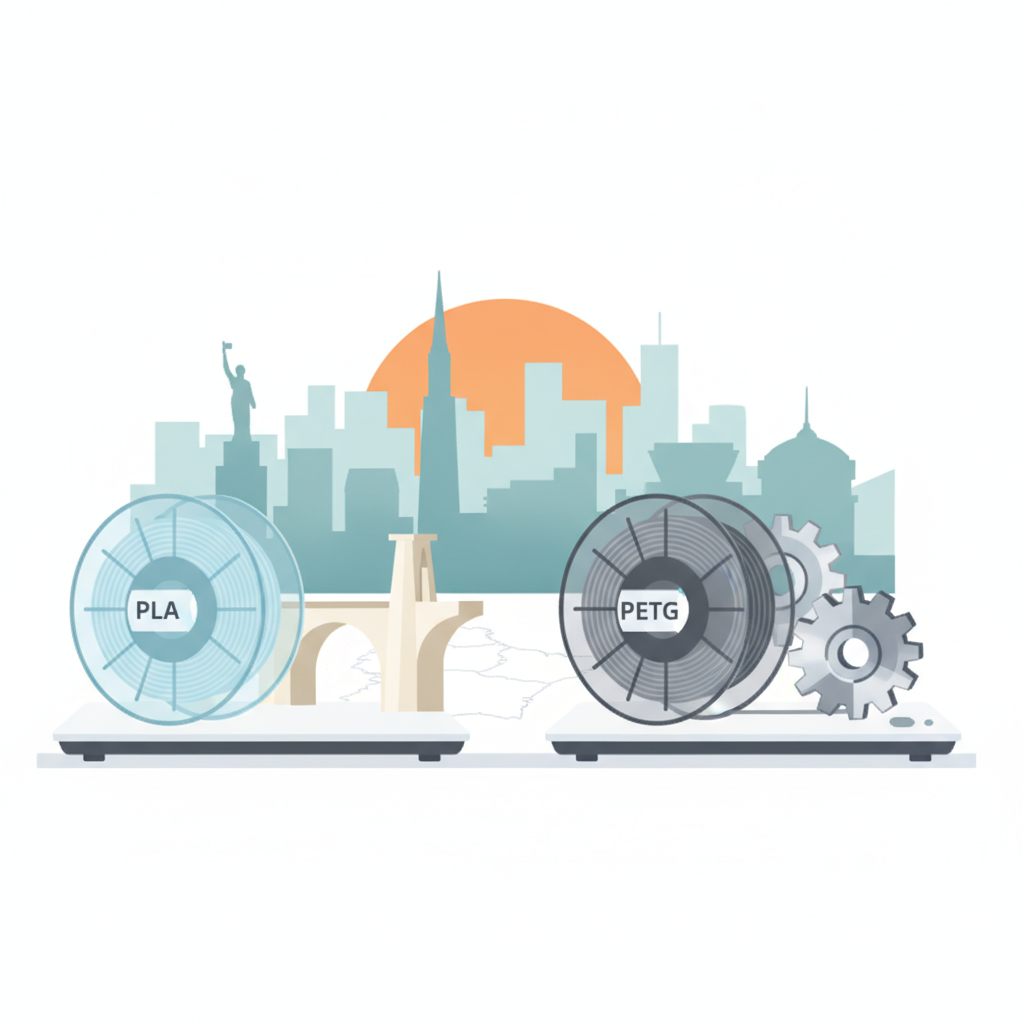
- PLA vs. PETG: A Direct Comparison for Your Projects
- Choosing the Right Filament for Your Specific Project in Luxembourg
- Beyond PLA and PETG: Expanding Your Material Horizons
- Why PrintIn3D.ie is Your Go-To for Filament and 3D Printing in Luxembourg
- Frequently Asked Questions About 3D Printer Filaments
- Your Next Steps in 3D Printing with Confidence
Understanding Your Filament Choices in Luxembourg
The Grand Duchy of Luxembourg is home to a growing community of innovators, designers, and engineers who leverage 3D printing for everything from custom 3D printing Luxembourg services to rapid prototyping for industrial applications. The right filament can significantly impact the success and quality of these projects.
PLA and PETG are thermoplastics, meaning they become soft and pliable when heated and solidify when cooled, a process that can be repeated without significant degradation. This property makes them ideal for Fused Deposition Modeling (FDM) 3D printers, which work by extruding melted filament layer by layer to build an object.
Let's dive deeper into what makes each of these filaments unique and when you might choose one over the other for your next project, whether you're looking to buy 3D filament Luxembourg or utilise a full 3D printing service.
Unpacking PLA: The User-Friendly Filament for Luxembourg Makers
What is PLA?
PLA, or Polylactic Acid, is derived from renewable resources like corn starch, tapioca roots, or sugarcane. This bio-based origin makes it one of the most environmentally friendly plastics available for 3D printing. It's widely regarded as the easiest filament to print with, making it a fantastic choice for beginners and those looking for a straightforward printing experience.
Advantages of PLA for Luxembourg Makers:
- Ease of Printing: PLA prints at lower temperatures (typically 190-220°C for the nozzle and 0-60°C for the bed), reducing warping and making it forgiving to print. It requires less effort to get excellent results, even without an enclosed printer or heated bed.
- Biodegradability: As a bioplastic, PLA is compostable under industrial conditions, offering a more eco-conscious option compared to petroleum-based plastics. This aligns with many green initiatives in Luxembourg.
- Low Odor: Unlike some other filaments (we're looking at you, ABS!), PLA produces a sweet, minimal odor during printing, making it more pleasant for indoor use, particularly in workshops or homes in Luxembourg.
- Wide Range of Colors and Finishes: PLA boasts an extensive palette of colors, including translucent, metallic, silk, and glow-in-the-dark options, perfect for aesthetic projects and decorative items.
- Excellent Detail: PLA's lower melting point and good flow characteristics allow for very fine details and sharp corners, crucial for intricate designs.
Disadvantages of PLA:
- Lower Strength and Brittleness: While adequate for many applications, PLA is generally not as strong or durable as PETG. It can be brittle and prone to breaking under stress or impact.
- Poor Heat Resistance: PLA has a low glass transition temperature (around 60°C), meaning it can soften and deform under moderate heat, making it unsuitable for parts exposed to sunlight or high temperatures.
- UV Degradation: Prolonged exposure to UV light can degrade PLA over time, affecting its structural integrity and appearance, which is a consideration for outdoor applications.
- Limited Chemical Resistance: PLA is not highly resistant to many chemicals, which can limit its use in specific industrial or laboratory settings.
Ideal Applications for PLA:
PLA is perfect for:
- Prototypes and Models: Its ease of printing and excellent detail make it ideal for concept validation and visual models, especially for 3D design service Luxembourg clients.
- Aesthetic Prints: Decorative items, cosplay props, figurines, and artistic projects benefit from PLA's wide color range and smooth finish.
- Educational Projects: Its user-friendliness makes it a favorite in schools and educational institutions across Luxembourg for teaching 3D printing fundamentals.
- Low-Stress Functional Parts: Gears or enclosures not subjected to high temperatures or heavy loads.
If you're looking for an achat filament PLA Luxembourg, PrintIn3D.ie offers quality PLA from brands like SUNLU, ensuring fast delivery across Europe.
Exploring PETG: The Durable All-Rounder for Robust Prints
What is PETG?
PETG is a co-polyester thermoplastic that shares many characteristics with polyethylene terephthalate (PET), the plastic used in water bottles, but with added glycol. The glycol modification makes it less brittle, clearer, and easier to 3D print than pure PET.
Advantages of PETG for Luxembourg Makers:
- Excellent Strength and Durability: PETG is much stronger and more durable than PLA, offering better impact resistance and flexibility. This makes it suitable for functional parts that need to withstand stress.
- Good Heat Resistance: With a glass transition temperature around 80-85°C, PETG handles higher temperatures than PLA without deforming, making it suitable for parts used in warmer environments.
- Chemical Resistance: PETG offers good resistance to various chemicals, oils, and greases, broadening its application scope in industrial or automotive contexts.
- Food Safe (clear PETG): Many clear PETG filaments are considered food-safe, making them ideal for creating containers, kitchen utensils, or components for food processing. Always check the manufacturer's specifications.
- Weather Resistance: PETG is more resistant to UV light and moisture than PLA, making it a better choice for outdoor applications or parts exposed to the elements.
- Good Layer Adhesion: PETG's excellent layer bonding properties result in very strong prints that are less likely to delaminate.
Disadvantages of PETG:
- More Challenging to Print: PETG prints at higher temperatures (typically 220-250°C for the nozzle and 60-80°C for the bed). It can be prone to stringing and oozing due to its sticky nature, requiring careful retraction settings.
- Hydroscopic: PETG absorbs moisture from the air, which can lead to poor print quality, bubbles, and weak parts. It's essential to store PETG filament in a dry environment or dry it before printing.
- Surface Finish: While PETG can produce good results, achieving a perfectly smooth, glossy surface can be more challenging than with PLA due to its stringing tendencies.
- Adhesion Issues: While it adheres well to itself, PETG can sometimes adhere too strongly to the print bed, potentially causing damage if not properly prepared (e.g., using a release agent).
Ideal Applications for PETG:
PETG is an excellent choice for:
- Functional Parts: Gears, brackets, jigs, fixtures, and mechanical components that require strength and durability.
- Outdoor Use: Parts exposed to sunlight, rain, or varying temperatures, such as garden accessories or drone components.
- Containers and Housings: Its food-safe properties (for specific grades) and chemical resistance make it ideal for practical storage solutions.
- Prototyping Functional Assemblies: When rapid prototyping Luxembourg projects require parts that closely mimic end-use properties, PETG shines.
Whether you're looking for a reliable buy 3d filament luxembourg solution or a complete 3D printing service Luxembourg, PrintIn3D.ie has the PETG filament you need.
PLA vs. PETG: A Direct Comparison for Your Projects
To help you make an informed decision, let's look at the key differences side-by-side:
| Feature | PLA (Polylactic Acid) | PETG (Polyethylene Terephthalate Glycol-modified) |
|---|---|---|
| Ease of Printing | Very easy, forgiving, minimal warping, low odor. | More challenging, prone to stringing, requires higher temperatures, hygroscopic. |
| Strength & Durability | Moderate, brittle, low impact resistance. | High, good flexibility, excellent impact resistance. |
| Heat Resistance | Low (softens ~60°C), unsuitable for high-temperature environments. | Good (softens ~80-85°C), suitable for warmer environments. |
| Flexibility | Rigid, brittle. | Semi-flexible, less brittle. |
| Surface Finish | Often smoother and glossier, good detail. | Can be good, but stringing can affect aesthetic quality. |
| Chemical Resistance | Limited. | Good resistance to many chemicals, oils, and greases. |
| UV & Weather Resistance | Poor, degrades over time with exposure. | Good, suitable for outdoor use. |
| Environmental Impact | Bio-based, industrially compostable. | Recyclable (though specific facilities needed for 3D printed objects). |
| Cost | Generally slightly less expensive. | Slightly more expensive, but often worth it for performance. |
Choosing the Right Filament for Your Specific Project in Luxembourg
The choice between PLA and PETG ultimately comes down to your project's specific requirements. Consider these factors:
- What is the purpose of your print?
- For aesthetic pieces, prototypes, or models that won't experience stress or heat, PLA is a fantastic and easy choice.
- For functional parts, outdoor components, or items requiring strength and heat resistance, PETG is superior.
- What environment will your print be in?
- Indoor, temperature-controlled settings? PLA is fine.
- Outdoor, high-temperature, or chemically exposed environments? Opt for PETG.
- How much experience do you have with 3D printing?
- Beginners will find PLA much more forgiving.
- Experienced makers might prefer PETG for its superior mechanical properties, even with the slightly increased printing complexity.
- Are environmental considerations paramount?
- If biodegradability is a key factor, PLA is the clear winner.
For businesses in Luxembourg requiring impression 3d sur mesure Luxembourg for specific industrial applications, or prototypage rapide Luxembourg for product development, selecting the correct filament is vital. Our team at PrintIn3D.ie can guide you through this process, whether you're sourcing filament or using our comprehensive service impression 3d Luxembourg.
Beyond PLA and PETG: Expanding Your Material Horizons
While PLA and PETG cover a vast range of 3D printing applications, the world of 3D printer filament Luxembourg has access to extends much further. For more specialized projects, you might consider:
- ABS (Acrylonitrile Butadiene Styrene): Known for its strength, impact resistance, and ability to be smoothed with acetone vapor, ABS is a strong contender for functional parts, though it requires higher print temperatures and ventilation. If you're looking for filament ABS Luxembourg acheter, PrintIn3D.ie can assist.
- Nylon: Extremely strong, flexible, and durable, often used for mechanical parts and gears.
- TPU/TPE (Flexible Filaments): These rubber-like filaments are perfect for creating flexible parts, gaskets, and phone cases.
- Filament 3D Composites Luxembourg: These advanced materials blend plastic with other particles like carbon fiber, glass fiber, or metal powder to enhance strength, stiffness, or aesthetic properties.
At PrintIn3D.ie, we're not just about selling filament; we're about providing solutions. If your project demands materials beyond PLA or PETG, our entreprise impression 3d Luxembourg offers expertise in a wide range of materials to meet your specific requirements, from prototypes to end-use parts.
Why PrintIn3D.ie is Your Go-To for Filament and 3D Printing in Luxembourg
Whether you're an individual maker or a large impression 3d industriel Luxembourg enterprise, PrintIn3D.ie is dedicated to being your reliable partner. We offer a comprehensive suite of services that goes beyond just selling 3D printer filament Luxembourg. Here's why you should choose us:
- Award-Winning Service: We're not just another 3D printing provider. PrintIn3D.ie was honoured with the Silver Rising Star award at the Irish Print Awards 2026 and was a finalist in three categories. This recognition underscores our commitment to quality, innovation, and customer satisfaction.
- High-Quality Filaments: We stock premium 3D printer filaments like PLA and PETG from trusted brands such as Bambu Lab and SUNLU. For those looking to buy 3d filament luxembourg, we ensure you receive reliable materials for consistent, high-quality prints. Need 3d printer filament bulk buy Luxembourg options? We can accommodate your larger requirements.
- Fast & Reliable Delivery: For all filament orders, we offer same-day dispatch if placed before 4 PM. Typical delivery to Europe, including the Grand Duchy of Luxembourg, is 5-7 working days, ensuring you get your materials quickly to keep your projects on schedule.
- Hassle-Free 3D Printing Services: Don't own a 3D printer or need assistance with complex projects? Our custom 3D printing service brings your ideas to life from your uploaded files. We handle everything, providing a seamless experience from concept to finished product. This includes efficient rapid prototyping Luxembourg for product development.
- Expert 3D Design & Scanning: If you have an idea but no 3D model, our professional 3d design service Luxembourg team can convert your sketches or concepts into print-ready models. We also offer 3D scanning services for physical objects, perfect for reverse engineering or replication, contributing to création modèle 3d luxembourg for various industries.
- Dedicated Support: We pride ourselves on friendly WhatsApp support, guiding you through every step. Whether you have questions about filament choice, an order, or need technical advice, our team is ready to help.
- Risk-Free Guarantee: We stand by the quality of our products and services. Enjoy a 30-Day Risk-Free Return policy, which even includes original and return shipping. Your satisfaction is our priority.
- Confidentiality Assured: For sensitive projects, Non-Disclosure Agreements (NDAs) are available, providing peace of mind for businesses and individuals in Luxembourg working on proprietary designs.
From helping you choose between PLA and PETG for your next project, to providing offre d'impression 3d Luxembourg for industrial-grade components, PrintIn3D.ie is your comprehensive solution provider. We believe in making 3D printing accessible and successful for everyone, offering transparent coût impression 3d Luxembourg and exceptional quality.
Frequently Asked Questions About 3D Printer Filaments
How do I store PLA and PETG filaments to maintain quality?
Both PLA and PETG can absorb moisture from the air, which negatively impacts print quality. It's best to store them in a cool, dry place, ideally in an airtight container with desiccant packets (like silica gel). This is particularly important for PETG, which is more hygroscopic than PLA.
Can I use PLA and PETG on the same 3D printer?
Yes, most FDM 3D printers are capable of printing both PLA and PETG. However, you will need to adjust your printer's temperature settings (nozzle and heated bed) and potentially retraction settings when switching between the two materials. A good bed surface adhesion is also crucial for PETG to prevent prints from sticking too strongly or warping.
What if my project requires something stronger or more flexible than PLA or PETG?
If PLA or PETG don't meet your project's specific strength, flexibility, or heat resistance requirements, there are other advanced filaments available. Materials like ABS, Nylon, or flexible TPU offer enhanced properties. PrintIn3D.ie offers a wide range of materials through our 3D printing service Luxembourg, and our experts can advise you on the best alternative for your needs, including filament 3d composites Luxembourg for specialized applications.
How can I get the best surface finish with PETG, given its stringing tendency?
Minimizing stringing with PETG often involves fine-tuning your printer's retraction settings (distance and speed), lowering print temperatures slightly (within the recommended range), and ensuring your filament is dry. Printing slower can also help. Experimentation with these settings will yield the best results for your specific printer setup.
Your Next Steps in 3D Printing with Confidence
Choosing between PLA and PETG doesn't have to be complicated. By understanding their distinct properties and aligning them with your project's demands, you can confidently select the perfect material to bring your 3D ideas to life. Whether you prioritise ease of use and aesthetics with PLA or demand durability and functional performance with PETG, both filaments offer incredible possibilities for makers and businesses alike.
At PrintIn3D.ie, we're passionate about empowering your creativity. From helping you select the ideal 3D printer filament Luxembourg has to offer to executing complex custom prints, we are your trusted partner. Explore our range of high-quality filaments, leverage our expert 3D design and printing services, and experience the PrintIn3D difference.
Ready to start your next 3D printing adventure in Luxembourg? Visit PrintIn3D.ie today to order your filament, get a quote for custom printing, or chat with our friendly team. Let's print your 3D dreams together!