3D Printing for Small Businesses: Your Guide to Growth in GB
3D Printing for Small Businesses: Your Guide to Growth in GB
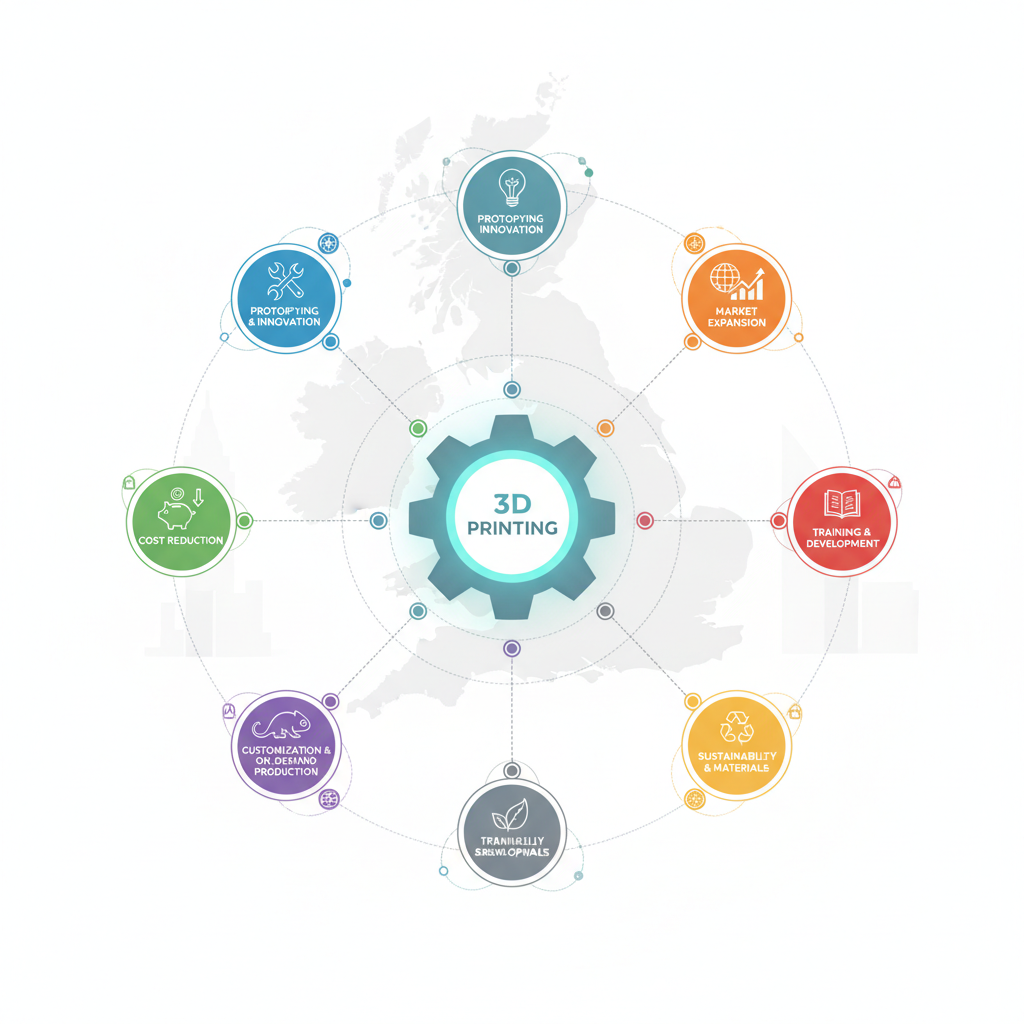
In today's dynamic business landscape, small and medium-sized enterprises (SMEs) in Great Britain are constantly seeking innovative ways to stay competitive, streamline operations, and bring new products to market faster. 3D printing for small businesses isn't just a futuristic concept; it's a powerful, accessible tool revolutionising how companies operate across the UK. From rapid prototyping to custom manufacturing and design, additive manufacturing offers unparalleled flexibility and cost-efficiency, empowering businesses to turn groundbreaking ideas into tangible realities with unprecedented speed.
This comprehensive guide is designed for UK-based entrepreneurs, product developers, engineers, and creatives looking to harness the potential of 3D printing. We'll explore how this technology can dramatically impact your design processes, production capabilities, and overall market strategy. Whether you're aiming to accelerate product development with a rapid prototyping service GB, offer bespoke products to your customers, or simply understand the possibilities, this pillar page will provide the foundational knowledge you need. We'll cover everything from the types of services available, like a dedicated custom 3D printing service, to the diverse materials and design considerations crucial for success. Prepare to discover how 3D printing can be your partner in innovation, helping your business thrive in the competitive GB market.
Table of Contents
- Introduction to 3D Printing for Small Businesses
- Rapid Prototyping and Product Development
- Customisation and Personalisation: Tapping into Niche Markets
- On-Demand Manufacturing and Inventory Reduction
- Cost-Effectiveness and Accessibility of 3D Printing
- Materials for Small Business 3D Printing: PLA, PETG, TPU, and More
- The Role of 3D Scanning in Small Business Innovation
- 3D Design Services for Small Businesses: From Concept to Print
- Choosing a 3D Printing Service vs. In-House Solutions
- Marketing and Selling 3D Printed Products in the UK
- Future Trends and Growth Opportunities in 3D Printing for SMEs
Introduction to 3D Printing for Small Businesses
For small businesses across Great Britain, 3D printing represents a paradigm shift, transforming the traditional manufacturing and design landscape. No longer exclusive to large corporations, this technology has become increasingly accessible and affordable, democratising product creation and opening doors to unprecedented innovation. At its core, 3D printing, or additive manufacturing, builds three-dimensional objects layer by layer from a digital design file. This method offers distinct advantages over subtractive manufacturing (like CNC machining), primarily through reduced material waste and the ability to create complex geometries that would otherwise be impossible or prohibitively expensive.
For SMEs, the introduction of 3D printing services means being able to compete more effectively in a global marketplace. It empowers local businesses, from startups in 3d printing service london uk to 3d printing service gb engineering uk firms, to innovate faster, respond to market demands with agility, and offer bespoke solutions that were once unfeasible. The ability to quickly prototype, iterate designs, and produce small batches of custom parts provides a significant competitive edge. This technology helps small businesses minimise upfront investments in tooling and inventory, mitigating risks associated with new product development. Furthermore, it fosters a culture of creativity and experimentation, allowing entrepreneurs to test ideas, gather feedback, and refine products much more efficiently. Embracing 3D printing isn't just about adopting a new tool; it's about unlocking a new era of possibilities for growth, customisation, and efficiency for small businesses throughout the UK.
Understanding these fundamental benefits is the first step toward integrating 3D printing into your business strategy and exploring the myriad applications that could propel your venture forward.
Rapid Prototyping and Product Development
One of the most transformative applications of 3D printing for small businesses is its role in rapid prototyping and product development. Traditionally, creating a physical prototype was a time-consuming and costly process, often involving elaborate tooling or manual craftsmanship. This bottleneck frequently hindered innovation, especially for SMEs with limited budgets and tight deadlines. With 3D printing, the barrier to creating functional prototypes has been significantly lowered, offering a rapid prototyping service gb businesses can leverage to bring ideas to life at an incredible pace.
Imagine being able to take a digital design, print it, and have a physical model in your hands within hours or a few days. This accelerated cycle allows businesses to test concepts, evaluate ergonomics, and identify design flaws much earlier in the development process. Iteration becomes seamless: a design can be modified in CAD software and reprinted, often multiple times within a single week. This iterative loop not only speeds up the time-to-market but also significantly reduces the costs associated with retooling or re-manufacturing expensive prototypes. For 3d printing service gb engineering uk companies, this means being able to validate complex designs and assemblies with tangible models before committing to mass production.
Furthermore, rapid prototyping facilitates better communication with stakeholders, investors, and potential customers. A physical prototype conveys the product vision far more effectively than drawings or digital renders alone, allowing for more insightful feedback and quicker decision-making. Whether you're developing a new consumer gadget, an industrial component, or a unique artistic piece, 3D printing provides the agility needed to innovate quickly and confidently. It empowers small businesses to experiment freely, push creative boundaries, and ensure their final product is as refined and market-ready as possible.
Customisation and Personalisation: Tapping into Niche Markets
In a marketplace increasingly driven by unique consumer desires, the ability to offer customisation and personalisation stands as a major differentiator for small businesses. 3D printing excels in this area, providing a flexible manufacturing method that makes bespoke products economically viable, even for one-off items or small batches. For entrepreneurs in the UK, this opens up vast opportunities to tap into niche markets and cater to individual customer preferences, fostering stronger brand loyalty and commanding premium prices. Whether it's a personalised gift, a custom-fitted medical device, or a unique architectural model, 3D printing enables businesses to deliver truly tailored solutions.
Unlike mass production, which thrives on uniformity, 3D printing doesn't incur significant setup costs for each variation. This means that designing and producing a slightly different version of a product for each customer carries minimal additional expense, making a custom 3D printing service incredibly attractive. Consider a business selling bespoke architectural models or intricate cosplay accessories; each item can be uniquely designed and printed to the customer's exact specifications. This level of individualisation is a powerful competitive advantage, allowing small businesses to carve out unique market positions that larger, mass-production-focused companies struggle to address.
Furthermore, customisation can extend beyond aesthetics to functional improvements. For instance, creating custom jigs, fixtures, or replacement parts that are perfectly tailored to specific equipment or operational needs. This agility in manufacturing means businesses can adapt quickly to changing demands, offering unique value propositions that resonate deeply with specific customer segments. This capability positions 3d printing services gb as vital partners for small businesses looking to offer unparalleled levels of customisation and stand out in the competitive UK landscape.
On-Demand Manufacturing and Inventory Reduction
For many small businesses, managing inventory can be a significant headache, tying up capital, requiring storage space, and carrying the risk of obsolescence. This is where 3D printing offers a revolutionary solution: on-demand manufacturing. The ability to produce items only when they are needed dramatically reduces the necessity for large, costly inventories, freeing up resources and mitigating financial risks. This lean approach to production is particularly beneficial for SMEs in the UK, allowing them to operate more efficiently and respond to market fluctuations with greater agility.
With on-demand 3D printing, businesses can transition from a "stock-and-sell" model to a "produce-and-deliver" one. If a customer orders a specific part or product, it can be printed immediately, eliminating the need to guess future demand or hold unsold goods. This is invaluable for specialty products, spare parts, or items with fluctuating demand. For a 3d printing service gb, this means they can cater to diverse needs without needing to stock every possible variant themselves, passing on those benefits to their clients. It also enables businesses to offer a wider range of products without the associated inventory burden, expanding their catalogue without expanding their warehouse.
This approach also drastically reduces waste and improves sustainability, as only the necessary amount of material is used for each print. Beyond just final products, on-demand manufacturing extends to creating tools, jigs, and fixtures, allowing workshops and engineering firms to produce custom aids as needed, reducing reliance on external suppliers and long lead times. By leveraging 3D printing for just-in-time production, small businesses can achieve a more sustainable, cost-effective, and responsive operational model, enhancing their competitiveness and improving cash flow management across the United Kingdom.
Cost-Effectiveness and Accessibility of 3D Printing
One of the most compelling aspects of 3D printing for small businesses in the UK is its unparalleled cost-effectiveness and increasing accessibility. Gone are the days when additive manufacturing was an exclusive domain of large industrial players. Today, the technology has evolved to a point where high-quality 3D printing services are within reach for even the smallest enterprises, offering significant advantages over traditional manufacturing methods.
Firstly, the initial investment required for 3D printing is often considerably lower. Small businesses can either invest in relatively affordable desktop 3D printers for in-house use or, more commonly and perhaps more strategically, leverage expert 3d printing services gb. Outsourcing eliminates the need for capital expenditure on equipment, maintenance, and specialised staff, making the technology immediately accessible without a prohibitive upfront cost. This pay-as-you-go model allows businesses to utilise advanced machinery and materials that they otherwise couldn't afford to own, ensuring they always have access to cutting-edge capabilities.
Secondly, 3D printing significantly reduces manufacturing costs, especially for low-volume production and prototypes. Unlike injection moulding or CNC machining, which require expensive tooling and setup times, 3D printing can go from digital design to physical object with minimal overhead per unique part. This flexibility allows for economical production of small batches, custom items, or intricate components that would be exorbitantly priced using conventional methods. For 3d printing service gb engineering uk projects, this means rapid and affordable iteration without breaking the bank.
Moreover, reduced material waste is another key cost-saving factor. Additive manufacturing builds objects layer by layer, only using the material that becomes part of the final product, unlike subtractive methods which cut away excess material. This efficiency translates directly into lower material costs and a more sustainable production process. Coupled with fast turnaround times and the ability to iterate designs quickly, 3D printing presents a highly economical and accessible pathway for small businesses across the UK to innovate and produce with confidence.
Materials for Small Business 3D Printing: PLA, PETG, TPU, and More
The choice of material is as crucial as the 3D printing process itself, directly impacting the final product's properties, appearance, and suitability for its intended application. For small businesses engaging with a 3d printing service gb filament uk, understanding the array of available filaments is key to making informed decisions. While the world of 3D printer filaments is vast, a few materials stand out for their versatility, accessibility, and utility for diverse small business needs across the UK.
PLA (Polylactic Acid)
PLA is perhaps the most popular and easiest-to-use filament, ideal for initial prototypes, educational models, and aesthetic parts. It's biodegradable, derived from renewable resources, and available in a wide spectrum of colours and finishes. While not as strong or durable as other plastics, its ease of printing and excellent surface finish make it perfect for rapid design iterations and non-functional visual models. Many Bambu Lab PLA and SUNLU PLA filaments are widely available for a 3d printer filament uk.
PETG (Polyethylene Terephthalate Glycol)
PETG strikes a fantastic balance between ease of use and strength. It offers higher durability, temperature resistance, and flexibility than PLA, making it suitable for functional prototypes and end-use parts that require more robustness. It's also food-safe (in its pure form), making it a popular choice for containers or parts that might come into contact with food. PETG is a go-to for many engineering applications where a strong, somewhat flexible, and chemical-resistant material is needed, and SUNLU PETG filament is a great option.
TPU (Thermoplastic Polyurethane)
When flexibility is paramount, tpu filament uk is the answer. This rubber-like material is ideal for parts requiring elasticity, impact absorption, or a soft-touch finish. Think phone cases, gaskets, flexible connectors, or wearable components. While more challenging to print than PLA or PETG, its unique properties make it indispensable for certain applications, offering exceptional durability and wear resistance.
Beyond these, materials like ABS (Acrylonitrile Butadiene Styrene) offer high strength and heat resistance, while advanced composites with carbon fibre or glass fill can provide even greater mechanical properties. A good 3d printing service gb will guide you through material selection to ensure your project's success, matching the right filament to your specific functional and aesthetic requirements.
The Role of 3D Scanning in Small Business Innovation
While 3D printing brings digital designs to physical reality, 3D scanning completes the reverse journey, transforming existing physical objects into digital models. For small businesses in the UK, integrating 3D scanning capabilities, often through a dedicated 3d scanning near me uk service, unlocks a host of innovative applications, from reverse engineering to quality control and customisation. This technology bridges the gap between the physical and digital worlds, opening new avenues for product development and problem-solving.
One of the primary benefits of 3D scanning is reverse engineering. If a small business needs to replicate an existing part for which no CAD file exists, or improve upon an older design, 3D scanning provides a precise digital blueprint. This is invaluable for replacing obsolete components, recreating historical artefacts, or adapting existing designs for new applications without having to manually measure and model. For a 3d scanning to cad service uk, this process allows for efficient digital archiving and modification.
Beyond replication, 3D scanning is a powerful tool for customisation and fit. Imagine a business that creates bespoke prosthetics, orthotics, or custom-fitted protective gear. 3D scanning an individual's anatomy ensures a perfect, comfortable, and functional fit that would be difficult to achieve with traditional methods. This precision is critical in various fields, from healthcare to performance sports equipment.
Quality control and inspection are also enhanced by 3D scanning. By scanning a manufactured part and comparing it to its original CAD model, deviations and imperfections can be quickly identified and analysed, ensuring product accuracy and consistency. For a 3d printing service gb scanning uk, this offers a holistic solution from concept to verification. The insights gained from 3D scanning empower small businesses to refine their designs, improve manufacturing processes, and ultimately deliver higher-quality products to their customers across Great Britain.
3D Design Services for Small Businesses: From Concept to Print
The journey from a brilliant idea to a tangible 3D print begins with a robust 3D design. For many small businesses in the UK, especially those without in-house CAD expertise, this initial step can seem daunting. This is where professional 3D design services become indispensable. These services bridge the gap between a sketch or concept and a print-ready digital file, making the power of 3D printing accessible to everyone, regardless of their technical design proficiency. A dedicated 3D design service UK can transform your vision into reality.
A professional 3D design service can take your hand-drawn sketches, photographs, existing 2D drawings, or even just verbal descriptions and convert them into precise, ready-to-print 3D models. This process often involves using specialised CAD (Computer-Aided Design) software to create intricate geometries and ensure dimensional accuracy. This is particularly vital for 3d printing service gb engineering uk applications where precision is paramount. The expertise of a designer ensures that the model is not only aesthetically pleasing but also structurally sound and optimised for the chosen 3D printing process and material.
Furthermore, 3D designers can assist with optimising existing models for printing, performing tasks like mesh repair, wall thickness adjustments, or splitting complex models into printable parts. They can also advise on design choices that enhance printability, reduce material usage, and improve the overall functionality of the final product. For businesses leveraging a 3d scanning to cad service uk, designers play a crucial role in cleaning up scan data and converting it into editable, parametric models.
By partnering with a reliable 3D design service, small businesses can focus on their core competencies while leaving the technical intricacies of CAD modelling to experts. This collaboration ensures that ideas are accurately translated into high-quality digital assets, paving the way for successful 3D prints and innovative product development. It empowers businesses to confidently enter the additive manufacturing space, transforming abstract concepts into practical, market-ready solutions for the UK market.
Choosing a 3D Printing Service vs. In-House Solutions
When a small business decides to integrate 3D printing into its operations, a critical decision arises: should they invest in their own in-house 3D printers or rely on a professional online 3d printing service? Both options have their merits, and the best choice often depends on the business's specific needs, budget, volume, and technical expertise.
In-House 3D Printing
Pros: Immediate access to printers, full control over the printing process, ability to iterate extremely quickly, potential cost savings for very high volumes of prints over time. It can also foster in-house expertise and creativity. For simple, frequent prototyping, an in-house solution might seem appealing, especially with the availability of consumer-grade desktop printers.
Cons: Significant upfront investment (printer, software, materials, maintenance), requires technical knowledge to operate and troubleshoot, ongoing costs for filament and spare parts, limited material options compared to industrial services, and the need for dedicated space and staff training. The quality of prints from consumer printers may also not meet professional standards for final products or advanced prototypes.
Professional 3D Printing Service
Pros: Access to industrial-grade printers and a wider range of advanced materials (including tpu filament uk and engineering-grade plastics), expert advice on design and material selection, consistent high-quality prints, no capital investment or maintenance costs, ability to handle complex geometries and larger prints, and scalable production for varying volumes. Many 3d printing services gb offer rapid turnaround times, especially in key areas like 3d printing service london uk.
Cons: Lead times for receiving prints (though often very short), less immediate control over the printing process, and potentially higher per-part cost for extremely simple, high-volume prints compared to a fully depreciated in-house machine. However, for most small businesses, the benefits of outsourcing far outweigh these cons, particularly when considering the diverse capabilities and reliability of a dedicated 3d printing services gb provider.
Ultimately, a professional 3d printing service gb offers a hassle-free solution, providing access to cutting-edge technology and expertise without the operational burdens. This allows small businesses to focus on their core competencies while benefiting from professional-grade 3D printed parts and prototypes.
Marketing and Selling 3D Printed Products in the UK
Once a small business has leveraged 3D printing for product development or on-demand manufacturing, the next crucial step is effectively marketing and selling these innovative products to the UK market. The unique advantages of 3D printing – customisation, rapid innovation, and intricate designs – can be powerful selling points that differentiate your offerings from mass-produced alternatives.
Highlight Uniqueness and Customisation: Emphasise that your products are not off-the-shelf. Focus on the ability to personalise, tailor, or create bespoke items that perfectly meet customer needs. For example, if you offer custom-fitted parts, stress the precision and individual benefits. This resonates strongly with consumers looking for something unique and specific. Utilise strong visuals showcasing the custom elements and design flexibility offered by 3d printing services gb.
Showcase Innovation and Problem-Solving: Position your 3D printed products as solutions to common problems or as examples of cutting-edge innovation. For 3d printing service gb engineering uk clients, highlight how rapid prototyping allowed for superior design or functionality. For consumer goods, demonstrate how 3D printing enabled a product to be lighter, stronger, or more ergonomically designed than traditional options. Share the story behind the product and the journey from concept to creation using additive manufacturing.
Target Niche Markets: 3D printing excels in serving niche markets that are underserved by mass production. Identify these specific customer segments – hobbyists, specific industries requiring bespoke parts, or individuals needing personalised gifts – and tailor your marketing messages directly to their unique requirements. Platforms like Etsy, focused on handmade and unique items, can be excellent channels for small businesses selling custom 3D printed gifts or bespoke items.
Utilise Digital Marketing: Leverage social media, e-commerce platforms, and content marketing to showcase the visual appeal and functional benefits of your 3D printed items. High-quality product photography and videos demonstrating the product in use can be incredibly effective. Consider creating blog content that explains the 3D printing process, the materials used (3d printer filament uk), and the advantages of choosing 3D printed solutions.
By clearly communicating the value proposition inherent in 3D printed products, small businesses can effectively capture market share and build a strong brand presence across the UK.
Future Trends and Growth Opportunities in 3D Printing for SMEs
The landscape of 3D printing is continuously evolving, presenting exciting future trends and growth opportunities for small and medium-sized enterprises across the UK. Staying abreast of these developments is crucial for businesses looking to leverage additive manufacturing for sustained competitive advantage and innovation.
Advanced Materials
The development of new and more sophisticated 3d printer filament uk materials is a major trend. We're seeing an expansion beyond plastics to include more accessible metal 3D printing, advanced composites, ceramics, and even bio-compatible materials. As these materials become more affordable and easier to print, small businesses will gain the capability to produce components with enhanced strength, heat resistance, and specific functional properties, opening doors to new markets and applications, particularly for 3d printing service gb engineering uk firms.
Automation and AI Integration
The future of 3D printing will see greater automation in workflows, from design optimisation to print farm management. Artificial intelligence (AI) is already beginning to assist in designing parts for optimal printability and performance, reducing manual design time and material waste. For 3d printing services gb, this means faster turnaround times and even greater efficiency, translating into cost savings and enhanced capabilities for clients.
Increased Speed and Scale
New printer technologies are emerging that significantly increase printing speed and build volume, allowing for quicker production of larger parts or batches. This scalability will make 3D printing even more viable for batch manufacturing and potentially even small-scale production lines, challenging traditional manufacturing methods in certain niches.
Decentralised Manufacturing
3D printing inherently supports decentralised manufacturing, where products can be made closer to the point of need. This trend can help small businesses in the UK establish local manufacturing hubs, reduce supply chain vulnerabilities, and quickly respond to local demand without extensive shipping networks. This could foster a network of localised 3d printing service london uk providers serving their immediate communities.
Hybrid Manufacturing
Combining 3D printing with traditional manufacturing techniques (hybrid manufacturing) offers the best of both worlds. For example, 3D printing a complex core and then machining it for precision finishing. This approach can lead to products with superior performance and cost-effectiveness. The integration of 3d scanning to cad service uk with these hybrid workflows will also become more seamless, enabling reverse engineering and customisation within a multi-faceted production environment.
By embracing these trends, small businesses can position themselves at the forefront of innovation, continuously adapting and growing within the ever-evolving additive manufacturing landscape.
Conclusion
The journey through the world of 3D printing for small businesses in Great Britain reveals a landscape rich with opportunity and innovation. From revolutionising product development with rapid prototyping service gb to enabling unparalleled customisation and streamlining inventory management through on-demand manufacturing, 3D printing stands as a pivotal technology for forward-thinking SMEs. We've seen how accessible and cost-effective this technology has become, supported by a diverse range of materials like tpu filament uk and robust 3D design services, ensuring that even complex ideas can come to life without extensive in-house expertise.
The strategic choice between in-house capabilities and leveraging a professional 3D printing service is crucial, with outsourcing often providing the most flexible and advanced solutions for UK businesses. Furthermore, understanding the nuances of 3D scanning and how to effectively market 3D printed products can significantly boost a small business's competitive edge. As the technology continues to evolve with advanced materials, automation, and decentralised manufacturing, the growth opportunities for businesses in the UK are boundless.
At PrintIn3D.ie, we are dedicated to being your trusted 3d printing service gb partner. Whether you're an engineer needing precise prototypes, a designer bringing bespoke creations to market, or simply exploring the possibilities, our expert services in custom 3D printing, 3D design, and 3D scanning are here to support your vision. Experience the hassle-free path to innovation with PrintIn3D.ie – your 3D printing partner for success in the UK. Don't just dream your ideas; print your 3D dreams into reality. Get an instant quote today and start your journey!