Finding Your Ideal Carbon Fiber Filament Supplier in the USA
Finding Your Ideal Carbon Fiber Filament Supplier in the USA
In the rapidly evolving world of 3D printing, the choice of filament can dramatically impact the strength, durability, and aesthetic appeal of your printed parts. Among the advanced materials gaining significant traction, carbon fiber reinforced filaments stand out for their exceptional properties. If you're looking to push the boundaries of your projects, whether for functional prototypes, end-use parts, or robust tooling, understanding how to select the right carbon fiber filament supplier in the USA is paramount. This comprehensive guide will equip you with the knowledge to navigate the market, evaluate suppliers, and make informed decisions, ensuring your 3D printing endeavors with carbon fiber are successful and rewarding.
Carbon fiber filaments combine the ease of FDM 3D printing with the incredible strength-to-weight ratio and stiffness of carbon fibers. They are typically based on common thermoplastics like PLA, PETG, ABS, Nylon, or Polycarbonate, infused with chopped carbon fibers. This infusion enhances mechanical properties, dimensional stability, and often provides a matte, high-quality finish. However, these benefits come with specific considerations, from material handling to printer compatibility, making the choice of a reliable supplier even more critical. We'll delve into everything you need to know, from identifying reputable suppliers to understanding technical specifications and ensuring optimal printing results.
Who This Is For
- Engineers and product designers seeking high-strength, lightweight prototypes or functional parts.
- Hobbyists and makers aiming to create durable, high-performance models.
- Businesses in industries like automotive, aerospace, or manufacturing requiring robust custom components.
- Anyone looking to upgrade their 3D prints from standard plastics to advanced composite materials.
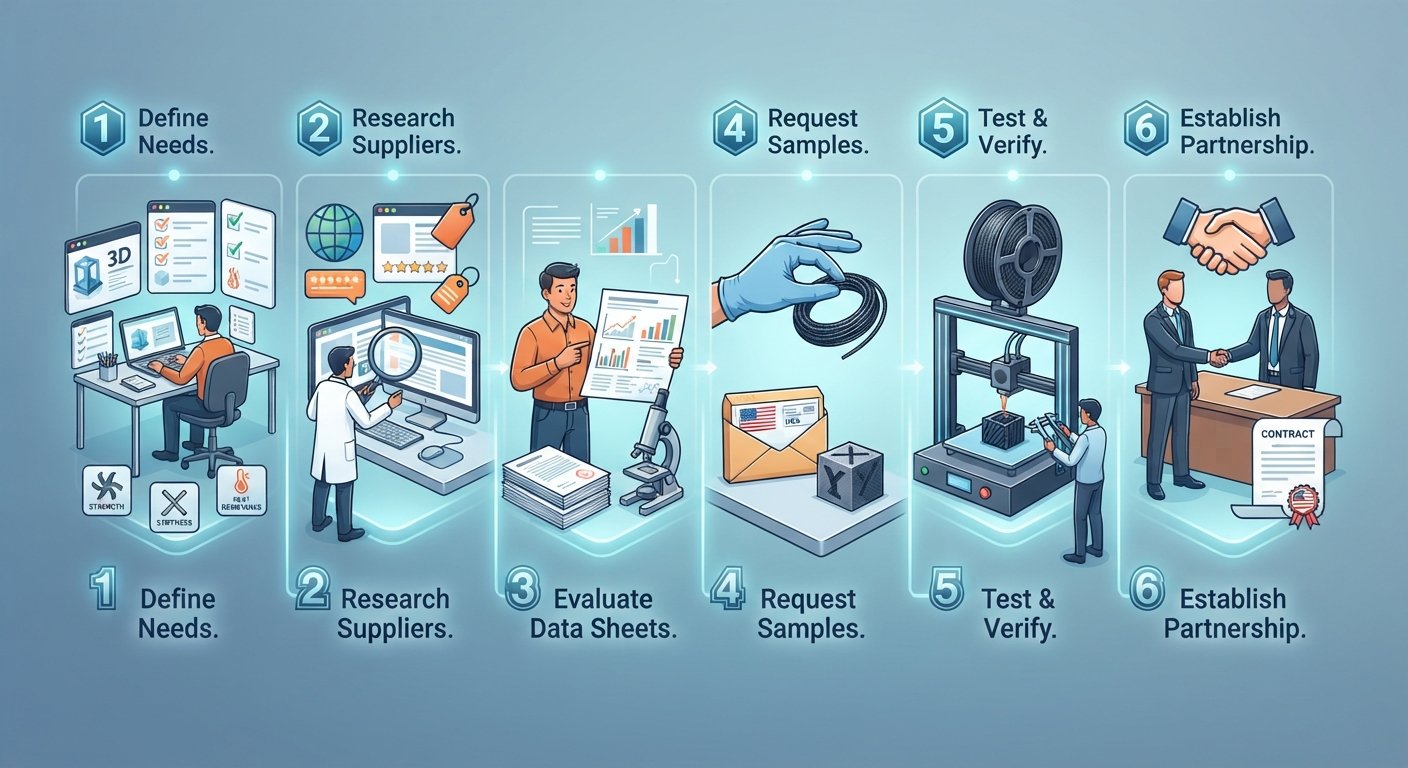
Step 1: Understand Carbon Fiber Filament Basics and Your Project Needs
Before you even begin searching for a carbon fiber filament supplier, it's essential to understand what carbon fiber filament is, its different variations, and how it aligns with your specific project requirements. Not all carbon fiber filaments are created equal; the base polymer significantly influences the final part's characteristics, and therefore, your choice of material. Popular base materials include PLA-CF, PETG-CF, ABS-CF, Nylon-CF, and PC-CF, each offering distinct properties.
For instance, PLA-CF (Carbon Fiber reinforced PLA) is known for its ease of printing and excellent stiffness, making it ideal for visual prototypes or parts that don't require high-temperature resistance. PETG-CF offers better impact resistance and temperature stability than PLA-CF, while ABS-CF provides higher heat resistance and toughness, often used for automotive components or durable enclosures. Nylon-CF is a favorite for high-strength, wear-resistant parts with good chemical resistance, and PC-CF delivers superior strength, heat deflection, and dimensional stability, suitable for demanding engineering applications. Your project's intended use, environmental conditions (temperature, moisture, UV exposure), required mechanical properties (tensile strength, impact resistance, stiffness), and post-processing needs will guide your initial material selection.
- Identify the Base Polymer: Determine if your project needs PLA-CF, PETG-CF, ABS-CF, Nylon-CF, or PC-CF based on temperature resistance, strength, flexibility, and ease of printing.
- Define Mechanical Properties: List the critical mechanical properties your printed part must achieve (e.g., stiffness for structural components, impact resistance for protective casings).
- Consider Environmental Factors: Account for the operating environment of your part (e.g., outdoor use requires UV resistance, high-temperature applications demand higher heat deflection).
- Check Printer Compatibility: Ensure your 3D printer can handle abrasive materials and higher print temperatures often required for carbon fiber composites. A hardened steel nozzle is almost always a necessity.
Tip: If you're unsure which carbon fiber composite is best, start with PLA-CF or PETG-CF as they are generally easier to print and can offer significant property improvements over their non-CF counterparts for many applications. For more demanding needs, consider Nylon-CF or PC-CF, but be prepared for more stringent printing requirements.
Step 2: Research Reputable US-Based Carbon Fiber Filament Suppliers
Once you have a clearer idea of the type of carbon fiber filament you need, the next critical step is to identify potential carbon fiber filament suppliers operating within the USA. While global options exist, choosing a US-based supplier often means faster shipping, easier communication, and adherence to US quality standards. This is particularly important for businesses or individuals who need reliable, quick access to materials.
Start your search by utilizing online search engines, specialized 3D printing forums, and review sites. Look for suppliers that specialize in engineering-grade filaments or have a dedicated section for composite materials. Pay attention to brand recognition and customer reviews. A reputable supplier will have clear product descriptions, safety data sheets (SDS), and technical data sheets (TDS) available for their filaments. These documents provide crucial information on material properties, recommended print settings, and safety handling. Look for mentions of their manufacturing processes and quality control measures. You might find that some companies offer comprehensive 3D printing services in addition to selling filament, which can be a bonus if you need professional printing for complex parts or large batches.
- Perform Online Searches: Use terms like "carbon fiber filament USA," "premium 3d printer filament supplier US," or "engineering filament supplier American."
- Check 3D Printing Communities: Explore Reddit, Facebook groups, and specialized forums for recommendations and experiences with various suppliers.
- Evaluate Supplier Websites: Look for professionalism, detailed product information, available SDS/TDS, and responsive customer service channels.
- Prioritize US-Based Operations: Confirm the supplier's primary operations and shipping originate from the USA to benefit from domestic logistics.
Warning: Be wary of suppliers with overly generic product descriptions, no available technical data, or unusually low prices. These can be indicators of lower quality or misrepresented materials, which can lead to print failures and wasted time/money.
Step 3: Evaluate Filament Quality and Specifications
The quality of carbon fiber filament varies significantly between suppliers, and this directly impacts your print success and the final part's performance. When evaluating a potential carbon fiber filament supplier, delve deep into the technical specifications and reported quality controls. Don't just look for "carbon fiber" in the name; understand the details.
Key quality indicators include filament diameter consistency (typically 1.75mm or 2.85mm, with tight tolerances like +/- 0.02mm), ovality, and freedom from contaminants. Inconsistent diameter can lead to extrusion issues, clogging, and poor print quality. The carbon fiber content and length of the chopped fibers also play a role. Higher carbon fiber loading generally translates to greater stiffness and strength, but it can also increase abrasiveness and brittleness. A good supplier will be transparent about these details. They should also provide recommended print temperatures, bed temperatures, and printing speeds for their specific blends. If you're exploring different material options, consider looking into suppliers that offer a range, similar to how a PLA filament supplier USA might offer various colors and blends, ensuring you can find a suitable alternative or complementary material for your projects.
- Review Technical Data Sheets (TDS): Compare properties such as tensile strength, flexural modulus, heat deflection temperature (HDT), and impact strength.
- Check Diameter Tolerance: Look for tight tolerances (e.g., +/- 0.02mm or better) to ensure consistent extrusion.
- Inquire About Carbon Fiber Content: Understand the percentage and type of carbon fiber used (e.g., chopped short fibers vs. longer milled fibers).
- Look for Certifications: While rare for all filaments, some engineering-grade materials may have industry-specific certifications or comply with certain standards.
- Read User Reviews for Consistency: Pay attention to feedback regarding print consistency, clogs, and final part quality.
Tip: Some premium carbon fiber filament suppliers offer sample packs or smaller spools. This is an excellent way to test their material quality on your specific printer setup before committing to larger, more expensive rolls. This helps you gauge consistency and overall printability.
Step 4: Consider Cost, Shipping, and Customer Support
Cost is always a factor, but for advanced materials like carbon fiber filament, it should be balanced with quality and reliability. While you might be tempted by the cheapest option, remember that print failures due to poor quality filament will ultimately cost you more in wasted time and material. Compare prices per kilogram across several reputable carbon fiber filament suppliers, taking into account spool size and any bulk discounts offered.
Shipping is another crucial consideration for US customers. Look for suppliers with transparent shipping policies, reasonable rates, and quick delivery times within the USA. Some suppliers might offer free shipping above a certain order value. Excellent customer support is invaluable, especially when working with challenging materials. A good supplier should be responsive to technical questions, provide troubleshooting advice, and have a clear return policy. If you're a business, you might also want to inquire about dedicated account managers or technical support teams. For example, PrintIn3D offers expert support for US customers, even if they're based in the EU, demonstrating a global commitment to customer success.
- Compare Pricing: Analyze the cost per kilogram, considering spool size and any bulk purchasing options.
- Evaluate Shipping Costs and Speed: Check for domestic US shipping options, estimated delivery times, and any free shipping thresholds.
- Assess Customer Support: Test responsiveness via email, phone, or chat. Inquire about technical support and troubleshooting assistance.
- Review Return Policies: Understand the supplier's policy for defective or unsuitable products.
- Look for Value-Added Services: Some suppliers might offer access to expert knowledge bases, print profiles, or even 3D design services for complex geometries, enhancing the overall value proposition.
Warning: Be cautious of suppliers with vague shipping terms, exorbitant shipping fees, or a lack of clear contact information. These can be red flags indicating potential issues with reliability or post-purchase support.
Step 5: Understand Storage and Handling Requirements
Carbon fiber filaments, like many other advanced 3D printing materials, are hygroscopic, meaning they absorb moisture from the air. Moisture absorption can severely degrade filament performance, leading to issues like bubbling, stringing, poor layer adhesion, and weakened parts. A good carbon fiber filament supplier will often provide recommendations for proper storage and handling, and sometimes even offer accessories to help maintain filament quality. This isn't just a suggestion; it's a necessity for successful printing with these materials.
Before purchasing, consider how you will store your filament. Options range from simple airtight containers with desiccant packets to dedicated filament dry boxes. Furthermore, carbon fiber filaments are abrasive. The chopped carbon fibers act like tiny knives, rapidly wearing down standard brass nozzles. This necessitates using hardened steel, ruby, or other abrasion-resistant nozzles. Your supplier should either explicitly state this or provide guidance. Ignoring these handling requirements can lead to frustrating print failures and costly equipment damage.
- Invest in Proper Storage: Plan for airtight containers, desiccant, or a filament dry box to protect against moisture absorption.
- Upgrade Your Nozzle: Ensure you have a hardened steel, ruby, or other abrasion-resistant nozzle ready for printing with carbon fiber filaments.
- Consider Print Environment: Some carbon fiber filaments (especially Nylon-CF and PC-CF) benefit from an enclosed printer to maintain stable temperatures and reduce warping.
- Read Supplier Recommendations: Always follow the specific storage and handling instructions provided by your chosen carbon fiber filament supplier.
Tip: Many advanced users pre-dry their carbon fiber filament even if it's new, as factory packaging isn't always perfectly sealed, or residual moisture may be present. A filament dryer can be a worthwhile investment for consistent results.
Step 6: Leverage Reviews, Community Feedback, and Supplier Reputation
One of the most powerful tools in finding a reliable carbon fiber filament supplier is leveraging the collective experience of the 3D printing community. Online reviews, forum discussions, and social media groups often provide unfiltered insights into a supplier's product quality, customer service, and overall reliability. Look beyond just star ratings; delve into detailed comments about specific filament types, consistency, shipping experiences, and how issues were resolved.
A supplier with a strong reputation in the US market, perhaps frequently mentioned by popular 3D printing influencers or consistently receiving positive feedback for their engineering-grade materials, is often a safe bet. Conversely, a supplier with numerous complaints about inconsistent quality, poor packaging, or unresponsive support should be approached with caution. Remember, the goal is not just to find carbon fiber filament, but to find a supplier that provides consistent, high-quality material and stands behind their products, much like you'd expect from any premium Bambu Lab PLA filament supplier.
- Read Customer Reviews: Focus on independent reviews on platforms like Google, Trustpilot, or dedicated 3D printing marketplaces.
- Engage in Forums and Social Media: Ask for recommendations and experiences in relevant 3D printing communities.
- Look for Consistent Feedback: Note if positive or negative trends emerge regarding product quality, delivery, or support.
- Check for Industry Recognition: While not as common for filament suppliers as for 3D printing services or equipment, any industry mentions or awards can bolster confidence.
Warning: Be critical of reviews that seem too perfect or overtly promotional. Also, consider the date of reviews; a supplier's quality or service can change over time.
Step 7: Verify Print Profiles and Printer Compatibility
Even with the highest quality carbon fiber filament, successful printing hinges on proper print settings and a compatible printer setup. A top-tier carbon fiber filament supplier will often provide recommended print profiles or at least a comprehensive range of settings for their materials. This typically includes nozzle temperature, bed temperature, print speed, retraction settings, and infill patterns. These guidelines serve as an excellent starting point, saving you considerable time and material in calibration.
Beyond settings, ensure your 3D printer is physically capable of handling carbon fiber composites. As mentioned, an abrasion-resistant nozzle is non-negotiable. Furthermore, an all-metal hotend is often recommended for higher-temperature materials like Nylon-CF or PC-CF to prevent heat creep and clogs. Some industrial-grade carbon fiber filaments may even require an enclosure to maintain consistent ambient temperatures, preventing warping and improving layer adhesion. If you don't have a suitable printer setup, you might consider outsourcing your project to a professional 3D printing service that specializes in advanced materials.
- Check for Provided Print Profiles: Look for recommended settings specific to the filament and common printer types.
- Confirm Nozzle Compatibility: Ensure your printer can accommodate and use hardened steel or other abrasion-resistant nozzles.
- Assess Hotend and Bed Capabilities: Verify your hotend can reach and maintain the necessary temperatures and your print bed can heat adequately.
- Consider Enclosure Needs: Determine if an enclosure is necessary for the specific carbon fiber blend you choose, especially for warp-prone materials.
Tip: Join specific user groups for your printer model. Other users who have successfully printed with carbon fiber filaments on the same machine can provide invaluable insights and optimized print profiles.
Common Mistakes to Avoid When Choosing a Carbon Fiber Filament Supplier
- Ignoring Filament Type and Base Material: Not all carbon fiber filaments are the same. Choosing PLA-CF when you need ABS-CF's heat resistance will lead to project failure. Always match the material properties to your application.
- Prioritizing Price Over Quality: Cheap carbon fiber filament often means inconsistent diameter, poor carbon fiber dispersion, or low-quality base polymers, leading to clogs, failed prints, and wasted material. Invest in quality.
- Neglecting Technical Data Sheets (TDS): Failing to review TDS means you're buying blind. These sheets provide critical information on material properties, print settings, and safety.
- Overlooking Storage and Handling Requirements: Carbon fiber filaments are hygroscopic and abrasive. Storing them improperly or using a brass nozzle will lead to print issues and equipment damage.
- Ignoring Shipping Costs and Delivery Times: Hidden fees or excessively long delivery times from overseas suppliers can negate any perceived savings, especially for time-sensitive projects. Always check US domestic shipping options.
- Not Checking Customer Support Responsiveness: When dealing with advanced materials, technical questions or issues are common. A supplier with poor customer support can leave you stranded.
- Forgetting Printer Compatibility: Attempting to print carbon fiber with a standard brass nozzle or a printer not capable of reaching the necessary temperatures and stability will result in frustration and potentially damaged equipment.
- Skipping Community Reviews: Real-world user experiences are invaluable. Ignoring them means missing out on potential warnings or endorsements of a supplier's reliability and product quality.
FAQ
What makes carbon fiber filament different from standard PLA or ABS?
Carbon fiber filament is a composite material where chopped carbon fibers are infused into a base thermoplastic (like PLA, PETG, ABS, Nylon, or PC). This infusion significantly enhances the mechanical properties of the base material. You get increased stiffness, tensile strength, and often a higher heat deflection temperature, while also benefiting from reduced warping and a desirable matte finish. Standard PLA or ABS, while versatile, don't offer the same level of performance, making carbon fiber a premium 3D printer filament choice for demanding applications.
Do I need special equipment to print with carbon fiber filament?
Yes, typically you do. The most critical upgrade is an abrasion-resistant nozzle, such as hardened steel, ruby, or tungsten carbide. Standard brass nozzles will wear down very quickly due to the abrasive carbon fibers. For some higher-temperature carbon fiber composites (like Nylon-CF or PC-CF), an all-metal hotend and a heated enclosure might also be necessary to achieve optimal print quality and prevent warping.
Is carbon fiber filament suitable for beginners?
While some carbon fiber composites, like PLA-CF, are relatively easy to print and can be a good starting point for beginners looking to experiment with advanced materials, they still require more attention than standard PLA. Understanding proper storage, using an abrasive-resistant nozzle, and fine-tuning print settings are crucial. It's recommended that beginners first master printing with standard filaments like PLA or PETG before tackling carbon fiber to minimize frustration.
Can PrintIn3D.ie help me if I'm in the US and need carbon fiber parts?
While PrintIn3D.ie is primarily based in Ireland and the EU, our expertise in 3D printing, 3D design, and advanced materials is universal. If you're struggling to find a suitable carbon fiber filament supplier or need help with complex 3D design services for 3D printing to prepare your models for carbon fiber, we can offer consultation and even facilitate custom 3D printing projects if global shipping is viable for your specific needs. Our focus on quality and hassle-free solutions extends to sharing our knowledge to help you succeed, no matter your location.
What's the best way to store carbon fiber filament to prevent issues?
The best way to store carbon fiber filament is in an airtight container with plenty of desiccant (silica gel packets). Many users also opt for dedicated filament dry boxes, some of which can even dry the filament while it's actively printing. This is crucial because carbon fiber filaments are hygroscopic and absorb moisture, which can lead to bubbling, stringing, and weakened parts during printing. Always aim to keep your filament as dry as possible to ensure consistent, high-quality results.
Next Steps / CTA
Finding the right carbon fiber filament supplier is a crucial step towards unlocking the full potential of advanced 3D printing. By carefully considering material properties, supplier reputation, and technical support, you can ensure your projects benefit from the strength and precision that carbon fiber offers. If you need custom 3D printed parts from a reliable 3D printing company, expert design assistance, or just want to explore our range of premium 3D printer filaments, PrintIn3D.ie is here to be your trusted partner in bringing your 3D dreams to life.