Sketch to Reality: 3D Design & Printing Services in Luxembourg
Introduction: From Imagination to Tangible Reality with 3D Design in Luxembourg
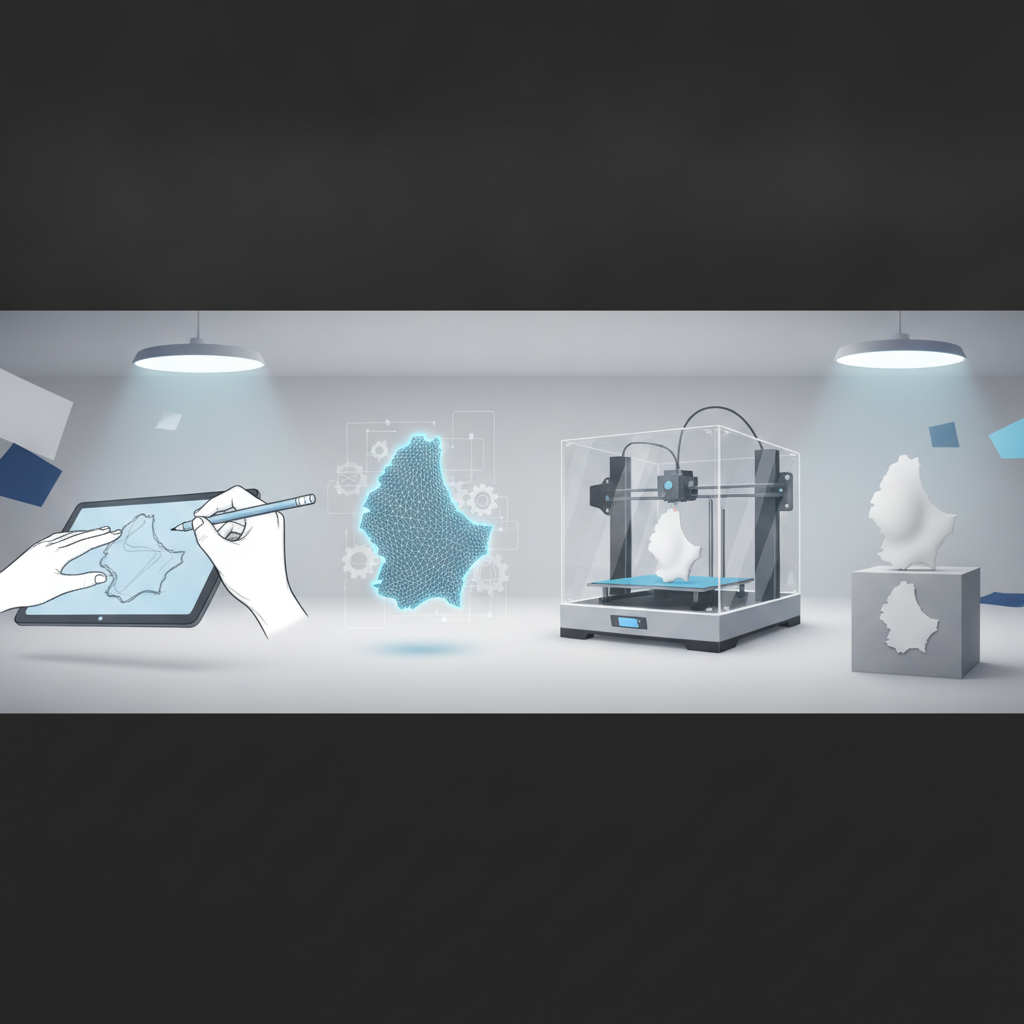
Have you ever had a brilliant idea, a unique concept, or a functional part sketched out on a napkin, only to wonder how to bring it to life? In the fast-evolving world of innovation, transforming a simple sketch or an abstract concept into a tangible, three-dimensional object is no longer a futuristic fantasy. It's a practical reality, especially with professional 3D design services and custom 3D printing in Luxembourg.
This comprehensive guide will walk you through the entire journey, from your initial spark of an idea to holding a fully realised, print-ready 3D model. We understand that not everyone is a CAD expert, nor does every business own a sophisticated 3D printer. That's precisely where specialist services shine. You'll learn the crucial steps involved, how to effectively communicate your vision to a professional design team, and what to expect during the collaborative process. We'll delve into refining your concept, understanding material choices, and finally, witnessing your idea transition from a digital blueprint to a physical product. Whether you're an inventor, an artist, an entrepreneur, or simply someone with a creative project, mastering this process will unlock endless possibilities, providing you with a hassle-free path to innovation right here in Luxembourg.
What You'll Need to Get Started
- Your Core Idea or Concept: The fundamental vision for your 3D model.
- Initial Sketches or Drawings: Even rough doodles from various angles are helpful.
- Reference Images or Existing Objects: Visual aids that inspire or illustrate your concept.
- Desired Dimensions: Approximate or precise measurements for your object.
- Intended Use/Function: How the final 3D print will be used, what forces it needs to withstand, and its environment.
- Material Preferences: Any initial thoughts on what kind of material (e.g., rigid, flexible, heat-resistant) you might need.
- Budget & Timeline: An understanding of your financial and time constraints.
Step 1: Ideation and Initial Sketching – Crystallising Your Vision
Every great 3D print begins with an idea. Before any software is even opened, the most critical step is to clearly define what you want to create. This initial ideation phase involves more than just a fleeting thought; it requires you to articulate your concept, understand its purpose, and begin to visualise its form. Don't worry about artistic perfection or technical precision at this stage. The goal is simply to get your ideas out of your head and onto paper, or into a digital format, in a way that can be shared and understood.
Think about the problem your object solves, the aesthetic you're aiming for, or the functionality it must possess. Sketching is an incredibly powerful tool here. It allows you to explore different angles, proportions, and features rapidly. You might draw multiple variations, each refining the idea further. These sketches serve as the foundational visual language that you'll eventually communicate to a professional 3d design service luxembourg.
- Brainstorm Freely: Let your imagination run wild. Write down keywords, draw concept maps, and consider all potential uses and features of your object.
- Sketch from Multiple Angles: Draw your idea from the top, front, side, and even isometric views. This helps to establish the object's three-dimensional nature.
- Annotate Your Sketches: Add notes directly onto your drawings. Highlight key features, desired functionalities, moving parts, or areas of specific importance.
- Consider Scale and Proportion: Even if you don't have exact dimensions yet, try to draw your object in proportion to familiar items (e.g., "about the size of a phone," "fits in the palm of a hand").
- Gather Visual Inspiration: Collect images of similar products, textures, colours, or architectural styles that align with your vision. This helps in conveying aesthetic preferences.
Tip: Don't be intimidated if you're not an artist. Simple stick figures and basic shapes are perfectly acceptable. The main objective is to convey your concept as clearly as possible, no matter how rudimentary the drawing skills.
Step 2: Defining Details and Gathering Comprehensive Reference Materials
Once your initial concept is sketched out, the next crucial step is to add layers of detail and gather all relevant information. This phase transforms a general idea into a well-defined project brief, reducing ambiguity and ensuring that the 3D designer has everything they need to accurately translate your vision. Precision at this stage saves time and resources later on, guaranteeing that the final création modèle 3d luxembourg meets your exact requirements.
Consider every aspect of your proposed object. What are its exact dimensions? What materials will it interact with? How will it be assembled or connected to other parts? What kind of stresses will it endure? Even seemingly minor details, such as surface texture or the precise radius of a corner, can significantly impact the final design and its printability. The more thorough you are in providing these specifics, the smoother the design process will be.
- Specify Exact Dimensions: If known, provide precise measurements for length, width, height, hole diameters, wall thicknesses, and any critical tolerances. If unsure, offer approximate sizes and mention flexibility.
- Outline Functional Requirements: Clearly state what the object needs to do. Will it hold weight? Is it a moving part? Does it need to fit into another component? Detail any mechanical actions or interactions.
- Indicate Material Preferences: While the designer can advise, having an initial thought on material properties (e.g., rigid plastic, flexible rubber-like, strong, temperature-resistant) helps guide the design towards suitable printing technologies. For instance, PLA vs. PETG offers different properties.
- Consider Environmental Factors: Will the object be used indoors or outdoors? Exposed to sunlight, water, chemicals, or extreme temperatures? This impacts material and design choices.
- Provide Detailed Reference Photos: If your concept is inspired by existing objects or styles, compile a folder of high-quality reference images. Highlight specific features you like or dislike.
- Document Any Constraints: Note any limitations, such as maximum size for a specific printer, weight limits, or regulatory requirements.
Warning: Vague instructions or missing crucial details can lead to multiple design iterations, increased costs, and extended timelines. Invest time upfront to define everything clearly.
Step 3: Partnering with a Professional 3D Design Service in Luxembourg
With your concept well-defined and detailed, the next step is to find the right partner to translate your ideas into a digital format. While many software tools exist for 3D modelling, mastering them requires significant skill and experience. This is where a professional 3d design service luxembourg becomes invaluable. They possess the expertise in CAD (Computer-Aided Design) software, an understanding of design for 3D printing principles, and knowledge of material science to ensure your design is not only aesthetically pleasing but also functional and printable.
Choosing the right service provider is paramount. Look for a company that can offer a seamless experience from design through to custom 3d printing luxembourg. Their ability to understand your vision, provide expert advice, and deliver high-quality, print-ready files will determine the success of your project. Beyond just technical skills, a good design service will act as a collaborative partner, guiding you through the complexities of transforming a sketch into a robust digital model.
- Research Local & Reputable Providers: Look for businesses in Luxembourg or the wider EU/EEA, like PrintIn3D.ie, that specialise in création modèle 3d luxembourg. Check their portfolios, client testimonials (see our reviews), and areas of expertise.
- Communicate Your Project Scope: Clearly articulate your concept, detailed requirements, and any specific deadlines. A detailed brief helps the service provider offer an accurate quote and timeline.
- Inquire About NDAs: If your idea is proprietary or sensitive, ask about the availability of Non-Disclosure Agreements (NDAs) to protect your intellectual property. Reputable services will offer this.
- Discuss Their Design Process: Understand how they approach projects. Do they provide initial sketches, CAD renders, or prototypes? What is their revision policy?
- Ask for Material and Printability Advice: Leverage their expertise. They can advise on the best materials for your application and ensure the design is optimised for service impression 3d luxembourg, considering factors like wall thickness, overhangs, and support structures.
Tip: An integrated service that handles both 3D design and 3D printing streamlines the process significantly, as the designers are already familiar with the printing capabilities and limitations. This ensures a smoother transition from digital file to physical object.
Step 4: The Collaborative 3D Modelling Process – Bringing Your Idea to Life Digitally
Once you've selected a 3d design service luxembourg, the exciting phase of digital creation begins. This isn't a passive process where you hand over your sketches and wait for a finished product. It's a highly collaborative journey that requires your active participation and feedback. The designer will use your brief to create a 3D model using professional CAD software, translating your two-dimensional concepts into a precise, editable digital representation.
During this stage, the designer might produce several iterations, starting with basic forms and progressively adding detail. They'll use their expertise to solve potential design challenges, ensuring structural integrity, optimal functionality, and printability. Your feedback at each stage is crucial to steer the design in the right direction, ensuring it perfectly aligns with your initial vision and requirements. This iterative process is what refines a good idea into an excellent, functional 3D model.
- Review Initial Concepts/Drafts: The designer will often provide early-stage digital renders or basic CAD models. Review these critically for overall shape, proportions, and adherence to your core concept.
- Provide Clear and Constructive Feedback: Be specific about what you like, what needs adjustment, and why. Use annotations, screenshots, or verbal descriptions to convey your points effectively.
- Confirm Critical Dimensions and Features: Double-check that all specified dimensions, clearances for moving parts, and functional elements are accurately represented in the 3D model.
- Discuss Material & Finish Implications: As the design progresses, discuss how the chosen material will affect the final look, feel, and performance of the object. The designer can advise on finishes and post-processing.
- Ask for Different Views: Request renders from various angles, cross-sections, or exploded views to fully understand the internal structure and assembly if relevant.
Tip: Don't be afraid to ask questions or request explanations if you don't understand certain design choices or technical terms. A good designer will be happy to educate you and ensure you're fully informed throughout the création modèle 3d luxembourg process.
Step 5: Thorough Review and Final Approval of Your Print-Ready 3D Model
The collaborative design phase culminates in a refined 3D model that is ready for manufacturing. However, before the actual service impression 3d luxembourg begins, a meticulous final review and approval process are absolutely essential. This is your last opportunity to scrutinise every detail of the digital model, ensuring it perfectly matches your expectations and is free from any errors that could lead to a flawed physical print.
Your chosen 3d design service luxembourg will present you with the final digital files, typically in formats like STL, OBJ, or STEP. They should also provide detailed renders or a 3D viewer that allows you to interact with the model virtually. This thorough check is a critical safeguard against costly re-prints and delays. Once you give your final approval, the model transitions from concept to production, moving closer to becoming a tangible reality.
- Examine the 3D Model from All Angles: Use the provided 3D viewer to rotate, zoom, and inspect every surface and feature of the model. Look for any inconsistencies or deviations from your approved design.
- Verify All Dimensions and Tolerances: Cross-reference the model's dimensions against your original specifications. Pay close attention to critical measurements, hole sizes, and clearances for moving parts.
- Confirm Aesthetic Details: Check for proper curves, angles, surface textures, and overall visual appeal. Ensure that the design aligns with your brand identity or personal aesthetic goals.
- Discuss Printability Concerns: Although the designer should have optimised for printability, it's good practice to discuss potential issues like thin walls, steep overhangs, or intricate details that might pose challenges during usinage rapide 3d luxembourg.
- Approve File Format: Confirm that the final file is provided in a standard, print-ready format (e.g., STL, OBJ). This ensures compatibility with 3D printers and slicing software.
- Provide Final Written Approval: Once completely satisfied, give your formal approval in writing. This signals that the design phase is complete and production can commence.
Warning: Rushing this final review can be a costly mistake. Any error overlooked at this stage will be replicated in the physical print, potentially requiring a complete redesign and re-printing process. Take your time and be thorough.
Step 6: Selecting the Right 3D Printing Material and Finishing Options
Once your 3D model is finalised and approved, the next pivotal decision involves choosing the appropriate material and any desired finishing options for your custom 3d printing luxembourg project. The material you select will profoundly impact the final object's properties, including its strength, flexibility, temperature resistance, surface finish, and even its colour. Making an informed choice at this stage is crucial for the success of your project.
Your service impression 3d luxembourg provider will guide you through the available options, explaining the benefits and limitations of different filaments or resins. Common materials like PLA and PETG are widely used, but specialised filaments exist for specific applications. Beyond the raw material, consider if any post-processing, such as sanding, painting, or coating, is necessary to achieve your desired aesthetic or functional outcome.
- Discuss Material Properties with Your Provider: Explain the intended use of your object in detail. Will it be under stress? Exposed to water or chemicals? Does it need to be flexible or rigid? Your provider can recommend the best filament, such as PLA for general-purpose, aesthetic prints, or PETG for greater durability and heat resistance.
- Consider Colour Choices: Most 3d printer filament bulk buy luxembourg suppliers offer a wide range of colours. Choose a colour that complements your design or brand requirements. Keep in mind that some colours might be more readily available or cost-effective.
- Evaluate Strength and Durability Requirements: For functional parts that will endure wear and tear, opt for stronger materials like PETG or ABS. For decorative items, PLA might suffice.
- Explore Finishing Options: Ask about post-processing services. This could include sanding to remove layer lines, painting for a specific colour not available in filament, clear coating for protection, or assembly of multi-part prints.
- Understand Cost Implications: Different materials and finishing options come with varying costs. Discuss these with your provider to ensure they align with your budget. Premium filaments or extensive post-processing will increase the overall price.
- Review Technical Specifications: If applicable, review the material's data sheet for precise properties like tensile strength, heat deflection temperature, and chemical resistance.
Tip: Always prioritise functionality and durability over aesthetics if the object has a critical purpose. A professional service impression 3d luxembourg can provide samples or show you examples of different materials and finishes to help you make an informed decision.
Step 7: From Digital File to Tangible Object – Expert 3D Printing in Luxembourg
With your 3D model designed, approved, and material selected, the final and most exciting step is the actual usinage rapide 3d luxembourg. This is where your digital concept transcends the screen and becomes a physical reality. Entrusting this stage to an experienced service impression 3d luxembourg provider ensures that your meticulously designed model is produced with precision, quality, and efficiency.
Modern 3D printing technology has advanced significantly, allowing for complex geometries and intricate details to be realised. Your chosen service will use industrial-grade 3D printers and expert technicians to handle the printing process. They will manage everything from preparing the print files (slicing) to operating the machines, quality checking the output, and ensuring timely delivery. This hassle-free approach means you don't need to invest in expensive equipment or develop technical printing expertise yourself.
- Confirm Print Job Details: Double-check all parameters with your service provider, including the final 3D model file, chosen material, colour, print quality settings, and any specific post-processing instructions.
- Understand Lead Times and Delivery: Get a clear estimate of how long the printing process will take and when you can expect your finished object. Providers like PrintIn3D.ie often offer varying speeds for custom 3D printing services, such as 8-hour or 24-hour options.
- Inquire About Quality Control: Ask about the quality assurance process. Reputable services will inspect each print for accuracy, surface finish, and structural integrity before dispatch.
- Arrange for Shipping or Pickup: Coordinate the most convenient method for receiving your printed object. For clients in Luxembourg, efficient shipping options are a key consideration for custom 3d printing luxembourg.
- Prepare for Receipt: Once your print arrives, inspect it carefully against your expectations. If any issues arise, contact your service provider immediately.
- Consider Future Iterations: Keep records of your project. If you plan to make revisions or order more prints, having clear documentation will simplify future offre d'impression 3d luxembourg.
Tip: For urgent projects or rapid prototyping, explicitly communicate your deadline to your service impression 3d luxembourg provider. Many offer expedited services for quicker turnarounds, ideal for businesses needing swift product development.
Common Mistakes to Avoid When Turning Your Concept into a 3D Model
While the journey from concept to 3D print can be incredibly rewarding, certain pitfalls can lead to delays, extra costs, or a less-than-satisfactory outcome. Being aware of these common mistakes can help you navigate the process more smoothly when working with a 3d design service luxembourg.
- Vague or Incomplete Initial Concept: Handing over a vague idea without any sketches, dimensions, or clear functional requirements is a recipe for extensive revisions and misunderstandings. The more detail you provide upfront, the more efficient the design process will be.
- Lack of Specific Dimensions: Assuming the designer can guess the size or critical measurements will almost always lead to an incorrect model. Even approximate dimensions are better than none, but precise measurements are ideal for functional parts.
- Ignoring Material Properties: Not considering how the chosen material will perform in the object's intended environment can lead to a print that breaks, deforms, or doesn't function as expected. Always discuss material suitability with your service impression 3d luxembourg.
- Insufficient Feedback During Design: Being unresponsive or unclear with feedback during the collaborative design phase can cause the project to stray from your vision. Provide specific, timely, and constructive input.
- Overlooking Printability Limitations: Designing a model that is technically impossible or extremely difficult to 3D print (e.g., excessively thin walls, impossible overhangs) without expert guidance will lead to design revisions or failed prints. Rely on your design service for DfAM (Design for Additive Manufacturing) advice.
- Focusing Only on Cost: Opting for the cheapest 3d design service luxembourg or offre d'impression 3d luxembourg without considering quality, experience, and customer support can result in a substandard product or unexpected issues. Quality often saves money in the long run.
- Skipping the Final Review: Rushing or neglecting a thorough final review of the 3D model before printing is a significant risk. Any errors will be physically printed, leading to wasted time and resources.
- Not Protecting Intellectual Property: For unique or commercial ideas, failing to secure an NDA with your design and print service leaves your concept vulnerable.
- Underestimating Turnaround Times: While some services offer usinage rapide 3d luxembourg, complex designs or large print volumes naturally take longer. Set realistic expectations for timelines.
Frequently Asked Questions (FAQ) About 3D Design and Printing in Luxembourg
How much does it cost to turn a sketch into a print-ready 3D model in Luxembourg?
The cost for a 3d design service luxembourg varies significantly depending on the complexity of your concept, the level of detail required, and the estimated design hours. Simple models from clear sketches might cost a few hundred Euros, while intricate, highly functional mechanical parts can range into thousands. Many providers, including PrintIn3D.ie, offer tiered pricing or hourly rates for their custom 3D design services. It's best to request a detailed quote after providing your initial brief and sketches.
How long does it take to get a 3D model designed from a sketch and then 3D printed?
The timeline for a création modèle 3d luxembourg project depends on several factors: the complexity of the design, the number of revisions needed, the responsiveness of your feedback, and the current workload of the design service. A simple design might be completed in a few days, while complex projects can take weeks. Once the design is finalised, custom 3d printing luxembourg typically adds anywhere from a few hours to several days, depending on the object's size, chosen material, and service speed (e.g., standard vs. usinage rapide 3d luxembourg options). PrintIn3D.ie offers expedited printing services for quicker delivery across the EU/EEA.
What if I only have a physical object and no sketch or 3D model?
If you have an existing physical object but no digital file or sketch, you would need 3d scanning luxembourg services. This process uses specialised equipment to capture the exact geometry of your physical object and convert it into a digital 3D model. Once scanned, the digital model can then be edited, refined, and prepared for service impression 3d luxembourg. PrintIn3D.ie also offers 3D scanning services for such needs, allowing you to reverse-engineer parts or digitise heirlooms.
Can I order 3D printer filament in Luxembourg from PrintIn3D.ie?
Absolutely! PrintIn3D.ie provides a wide selection of high-quality 3D printer filaments, including popular options from Bambu Lab and SUNLU, like PLA and PETG. We offer fast delivery across Ireland and the wider EU/EEA, which includes Luxembourg. Whether you need a single spool or are looking for 3d printer filament bulk buy luxembourg options, you can easily achat filament 3d luxembourg directly from our website for your own printing needs.
What file formats are needed for 3D printing, and what does your service provide?
The most common file format for 3D printing is STL (.stl), which stands for stereolithography. Other popular formats include OBJ (.obj) and 3MF (.3mf). Our 3d design service luxembourg will deliver your print-ready model in a suitable format, typically STL, after your final approval. These files are universally compatible with 3D printers and slicing software, ensuring a smooth transition to manufacturing.
Next Steps: Bring Your 3D Dreams to Life in Luxembourg
Ready to transform your sketches and concepts into tangible 3D realities? PrintIn3D.ie is your trusted partner for 3d design service luxembourg, custom 3d printing luxembourg, and 3d scanning luxembourg. Visit PrintIn3D.ie today to get a quote, discuss your project, and experience a hassle-free journey from idea to innovation.