Turn Your Idea into a 3D Printed Prototype in Ireland with Ease
How to Turn Your Idea into a 3D Printed Prototype with Ease in Ireland
Every great product, invention, or artistic creation begins as an idea. But bringing that idea to life, transforming it from a mental image or a rough sketch into something you can hold, test, and refine, is where the real magic happens. For innovators, entrepreneurs, and hobbyists across Ireland and the wider EU, 3D printing offers an unparalleled pathway to rapid prototyping – turning those abstract concepts into tangible, functional models quickly and cost-effectively.
In this comprehensive guide, we'll walk you through every essential step of converting your brilliant idea into a physical 3D printed prototype, focusing on how you can leverage expert services right here in Ireland. Whether you're in Dublin, Cork, Limerick, or anywhere else, and even if you’re a business in the Grand-Duché de Luxembourg seeking a reliable partner for création modèle 3d luxembourg or impression 3d grand-duché de luxembourg, the principles remain the same. We'll demystify the process, from initial concept to final iteration, ensuring you understand how to navigate design, material selection, and choosing the right 3D printing service to bring your vision to life without needing to invest in your own 3D printer.
You’ll learn why a physical prototype is invaluable, how to prepare your idea for 3D printing, and what to expect when collaborating with a professional service like PrintIn3D.ie. Our goal is to empower you to turn your 3D dreams into reality with confidence, providing a hassle-free solution for your prototyping needs. Let's get started on transforming your innovation!
What You'll Need
- A fantastic idea (or several!)
- A way to visualise your idea (sketch, drawing, existing object)
- Access to 3D design software (or a professional 3D design service)
- Understanding of basic material properties (or guidance from an expert)
- A trusted 3D printing partner for efficient prototyping
Step 1: Nurture Your Idea and Define Your Prototype's Purpose
The journey from concept to 3D printed prototype begins not with software or printers, but with a clear understanding of your idea and the role your prototype will play. Before you even think about design, take the time to solidify what you want to create and why. This foundational step is crucial for streamlining the entire process and avoiding costly missteps later on.
Consider the core function of your prototype. Is it for visual demonstration, fit testing, functional testing, or perhaps a combination? Understanding its primary purpose will guide your decisions on design complexity, material choice, and ultimately, the budget. For businesses and individuals across Ireland, defining the prototype's objectives clearly helps any 3D design or printing service provide more accurate advice and quicker turnaround times.
- Clarify Your Concept: Describe your idea in detail. What problem does it solve? What unique features does it possess? Who is it for?
- Identify Prototype Goals: Determine what you want to learn or achieve with this prototype. Is it to test ergonomics, prove a mechanical function, or simply to have a tangible representation for a pitch?
- Outline Key Features: List the absolute must-have features. What aspects of your idea are non-negotiable for this initial prototype?
- Consider Limitations: Think about potential constraints such as size, weight, material properties, or budget. These early considerations can save significant time and resources.
Tip: Create a simple "prototype brief" document. This helps articulate your vision and serves as a valuable reference point when communicating with 3D designers or printing services. A well-defined brief is the first step towards a successful 3D print.
Step 2: Translate Your Idea into Initial Sketches and References
Once your idea is crystal clear, the next step is to get it out of your head and into a visual format. This doesn't require artistic mastery; simple sketches, diagrams, or even collecting reference images can be incredibly powerful. This visual translation forms the bridge between your abstract idea and the detailed 3D model that will eventually be printed. For those requiring création modèle 3d luxembourg or across the EU, these preliminary visuals are vital inputs for a professional designer.
The goal here is to establish the basic shape, proportions, and key components of your future prototype. Think of it as a blueprint, however rudimentary. Even if you plan to use a professional 3D design service, providing clear visual references will significantly speed up the design process and ensure the final model aligns with your vision. This step helps in articulating complex geometries or specific aesthetic requirements that might be hard to describe verbally.
- Sketch Basic Forms: Draw your idea from different angles (front, side, top). Focus on overall shape and size, not intricate details.
- Annotate Your Drawings: Add notes to your sketches indicating dimensions, specific features, materials you envision, or any functional requirements.
- Gather Reference Images: If your idea is similar to existing objects, collect photos or illustrations that capture the style, texture, or functionality you're aiming for. This helps convey your aesthetic preferences.
- Consider Functional Components: If your prototype has moving parts or needs to integrate with other components, sketch how these elements will fit together.
Warning: Don't skip this step, even if you're not an artist. Poorly communicated ideas often lead to prototypes that miss the mark, requiring costly revisions. Visual references are universally understood and significantly reduce misinterpretation.
Step 3: Create a 3D Model: Design Software or Professional Services
This is where your idea truly begins to take digital form. You need a 3D model, typically an STL or OBJ file, to feed into a 3D printer. There are two primary paths to achieve this: designing it yourself using CAD (Computer-Aided Design) software, or engaging a professional 3D design service. For many in Ireland and the EU, especially those without extensive design experience or time, opting for an expert service for création modèle 3d luxembourg or similar across the continent is the most efficient route.
Self-design requires a learning curve with software like Fusion 360, SketchUp, Blender, or SolidWorks. While empowering, it can be time-consuming. Professional services, like those offered by PrintIn3D.ie, take your sketches, ideas, or even existing objects (via 3D scanning) and transform them into precise, print-ready 3D models. This option is particularly beneficial for complex geometries, critical tolerances, or when speed is paramount. If you have an existing physical object but no digital file, a service scan 3d luxembourg or elsewhere in the EU can digitise it for you.
- Choose Your Path:
- DIY Design: If you have CAD skills or are eager to learn, select a software program that suits your needs (e.g., TinkerCAD for beginners, Fusion 360 for advanced users). Spend time learning the basics of 3D modelling, focusing on solid modelling techniques appropriate for 3D printing.
- Professional 3D Design Service: Provide your sketches, reference images, and detailed brief to a service like PrintIn3D.ie. They will work with you to interpret your vision and create an optimised 3D model. This is often the best choice for intricate designs, tight deadlines, or if you lack software expertise. Explore PrintIn3D's 3D Design Services.
- Consider Design for Additive Manufacturing (DfAM): As your model is created, keep in mind how 3D printing works. Think about overhangs, wall thickness, part orientation, and how assembly might occur if your prototype has multiple components. A professional designer will handle these considerations expertly.
- Review and Iterate: If using a service, they will often provide design renders for your approval. Provide clear feedback to ensure the model accurately reflects your intentions before it's finalised.
Tip: For those with existing physical parts needing replication or modification for a prototype, consider 3D scanning services. This quickly creates a digital file from a real-world object, which can then be refined for printing. This is an excellent alternative to manual design for reverse engineering or reproducing existing items.
Step 4: Select the Right Material for Your Prototype
The material you choose for your 3D printed prototype is as crucial as the design itself. Different filaments offer varying properties in terms of strength, flexibility, temperature resistance, and finish. Your material selection should directly align with the prototype's defined purpose from Step 1. PrintIn3D.ie offers a range of high-quality filaments, including popular options like PLA and PETG, catering to diverse prototyping needs across Ireland and the wider EU. For those looking to buy 3d filament luxembourg for their own printers, PrintIn3D.ie also stocks top brands.
While some specialized prototypes might require materials like nylon, ABS, or even metal, for most rapid prototyping, FDM (Fused Deposition Modeling) with plastic filaments like PLA and PETG are excellent starting points. Understanding the pros and cons of each will help you make an informed decision, or guide you in discussions with your 3D printing service.
- PLA (Polylactic Acid):
- Pros: Easy to print, biodegradable, wide range of colours, good for aesthetic models and low-stress parts.
- Cons: Lower temperature resistance, can be brittle under stress, not ideal for outdoor use.
- Best For: Visual prototypes, fit testing, non-functional models, quick concept validation.
- PETG (Polyethylene Terephthalate Glycol):
- Pros: Stronger and more flexible than PLA, good temperature and chemical resistance, durable, often used for functional parts.
- Cons: Can be slightly harder to print than PLA (requires more precise temperature control), sometimes stringier.
- Best For: Functional prototypes, parts requiring some flexibility and impact resistance, outdoor applications, mechanical components.
- Consider Other Materials (if needed): For highly specialised needs, discuss options like TPU (flexible), ABS (strong, heat resistant), or even advanced resins (for high detail, e.g., impression 3d résine luxembourg for specific applications). Be aware that these might incur different costs or require specialised printing processes. PrintIn3D primarily focuses on FDM with robust materials like PLA and PETG, which are excellent for the vast majority of prototypes due to their balance of cost, speed, and functional properties.
- Consult Your Service Provider: If unsure, discuss your prototype's requirements with PrintIn3D.ie. Their experts can recommend the most suitable filament based on your application, ensuring optimal performance and cost-effectiveness.
Warning: Choosing the wrong material can compromise your prototype's effectiveness. A visually perfect prototype made from a brittle material will fail if it's meant to be a functional, load-bearing part. Always match the material to the prototype's intended use.
Step 5: Prepare Your 3D Model File for Printing
Once your 3D model is complete and you've selected your material, the next critical step is to prepare the file for the 3D printer. This involves ensuring the model is watertight, correctly scaled, and optimally oriented for the printing process. While a professional service like PrintIn3D.ie will handle much of this, understanding the basics helps you provide the best possible file and comprehend any recommendations.
Most 3D printing services require your model in STL (Stereolithography) or OBJ format. These formats define the surface geometry of your 3D model using a mesh of triangles. Errors in the mesh, such as non-manifold edges or inverted normals, can lead to printing issues. Even if you're engaging a service for impression 3d grand-duché de luxembourg or elsewhere, a well-prepared file from your side can significantly accelerate the printing process.
- Export to STL/OBJ: Ensure your 3D modelling software exports your design as an STL or OBJ file. Check export settings for resolution – a higher resolution means more detail but larger file size; aim for a balance without excessive polygon count.
- Check for Errors: Use basic 3D model inspection tools (many CAD programs have these, or free online tools exist) to check for "non-manifold" edges, flipped normals, or gaps. These are common issues that prevent a clean print. Professional services will perform more in-depth checks.
- Verify Scale and Units: Double-check that your model is scaled correctly and that the units (mm, cm, inches) are consistent with what your 3D printing service expects. A common mistake is a model being printed at 10x or 0.1x its intended size.
- Consider Orientation (Optional but Helpful): If you have an idea of the best print orientation for your part (e.g., to minimise supports or maximise strength), you can communicate this. However, trust your 3D printing service's expertise as they know their machines best.
- Compress (if necessary): For very large files, consider zipping them before uploading, but always ensure the core STL/OBJ file is intact.
Tip: Always include any specific notes or requirements for your print when submitting the file. This could include desired finish, specific tolerances, or areas that are critical for functionality. Clear communication prevents misunderstandings.
Step 6: Choose Your 3D Printing Partner Wisely
With your 3D model ready, the next step is to select a reliable 3D printing service to bring it to life. For businesses and individuals in Ireland, and even for those seeking a 3d print bedrijf huren luxemburg or a reliable EU partner, the choice of service provider can significantly impact the quality, speed, and cost of your prototype. PrintIn3D.ie stands out as an award-winning, hassle-free solution, offering custom 3D printing services across Ireland and the wider EU/EEA.
Instead of investing in your own 3D printer, which comes with learning curves, maintenance, and material management, outsourcing to a professional service provides immediate access to industrial-grade printers and expert knowledge. This is particularly advantageous for rapid prototyping, where quick turnarounds and consistent quality are paramount. Look for a partner that offers not just printing, but also support and expertise throughout your project.
- Look for Expertise and Experience: Choose a service with a proven track record in custom 3D printing and prototyping. Check their portfolio or customer reviews. PrintIn3D.ie, for example, is a 'Rising Star' award winner, demonstrating their commitment to quality and service. Read customer reviews.
- Verify Material Availability: Ensure they offer the materials you've identified as suitable for your prototype (e.g., PLA, PETG). A good service will also advise if a different material might be better.
- Consider Turnaround Times: For prototyping, speed is often critical. Inquire about their typical lead times. PrintIn3D.ie offers fast turnaround options, including 8, 13, or 28-hour custom printing services for urgent projects.
- Evaluate Support and Communication: A responsive and helpful service is invaluable, especially if you have questions or need design adjustments. PrintIn3D.ie prides itself on friendly WhatsApp support.
- Understand Pricing Structure: Get a clear quote that includes material, print time, and any post-processing. Compare costs, but don't base your decision solely on price; quality and reliability are key. For an initial estimate, visit PrintIn3D's estimates page.
- Geographic Reach: If you're in Ireland, confirm they serve your location. If you're a business in Luxembourg, ensure they offer reliable shipping to the Grand-Duché. PrintIn3D.ie ships across the EU/EEA.
Tip: Don't hesitate to ask for a consultation. A good service will be happy to discuss your project, offer advice, and provide a transparent quote, helping you make the best decision for your 3D printed prototype.
Step 7: Submit Your Order and Review the Quote
Once you've chosen your 3D printing partner, the next step is to formally submit your 3D model file and project details. This is usually done through an online platform, where you'll upload your file, select your desired material and finish, and specify any critical requirements. A robust online quoting system allows you to quickly get a sense of the coût impression 3d luxembourg or anywhere else in the EU.
PrintIn3D.ie provides a straightforward process for submitting your custom 3D printing requests. After submission, you'll typically receive a detailed quote outlining the total cost, estimated print time, and expected delivery date. This is your opportunity to review everything carefully and ensure it aligns with your expectations and budget before production begins.
- Upload Your 3D File: Navigate to the custom 3D printing section of your chosen service's website (e.g., PrintIn3D.ie's Custom 3D Printing Service). Upload your STL or OBJ file.
- Specify Print Parameters: Select your chosen material (e.g., PLA, PETG), desired colour (if available), and any specific infill percentages or layer heights you might require (though for most prototypes, standard settings are fine).
- Add Special Instructions: Include any notes about critical dimensions, fragile areas, assembly considerations, or desired post-processing (e.g., sanding, painting) if offered by the service.
- Review the Instant or Manual Quote: Many services offer instant quotes based on file size and material, while complex projects might require a manual review. Scrutinise the breakdown of costs, lead times, and shipping fees.
- Confirm and Pay: If everything looks correct, confirm your order and proceed with payment. PrintIn3D.ie offers secure payment options and a 30-day risk-free return policy for peace of mind.
Warning: Always double-check your order details before confirming. Mistakes in material choice, quantity, or shipping address can cause delays and additional costs. Clear communication during this stage can prevent issues down the line.
Step 8: Monitoring and Communication During Production
Once your order is placed, your 3D printing partner will begin the production process. While it might seem like a "set it and forget it" stage, staying engaged, especially for critical prototypes, can be beneficial. A good service will keep you informed, but knowing what to expect and how to communicate effectively ensures a smooth process.
Reputable 3D printing services, like PrintIn3D.ie, use advanced FDM printers (such as Bambu Lab models mentioned on their site) to ensure high-quality, precise prints. They manage everything from slicing the model (converting it into layers for the printer) to monitoring the print for any issues. During this phase, if you have any questions or require updates, direct communication with your service provider is key.
- Receive Confirmation: Expect a confirmation email or message detailing your order and projected timeline.
- Stay Accessible for Questions: Be available to answer any questions the service might have, especially for complex designs. Sometimes, minor design tweaks might be suggested for optimal printability.
- Request Updates (if necessary): For longer print jobs or high-priority prototypes, don't hesitate to politely request a status update if you haven't heard anything. Many services provide tracking information as soon as the item is dispatched.
- Prepare for Delivery: Ensure your delivery address is accurate and that someone will be available to receive the package, especially for time-sensitive prototypes. PrintIn3D.ie offers fast delivery across the EU/EEA.
Tip: If your prototype is part of a larger project with strict deadlines, communicate this upfront. While PrintIn3D.ie offers various expedited services (e.g., 8-hour, 13-hour printing), understanding your project's context helps them prioritise and manage expectations effectively.
Step 9: Receive, Inspect, and Test Your 3D Printed Prototype
The moment has arrived! Your 3D printed prototype will be delivered to your doorstep in Ireland (or anywhere in the EU/EEA). This is an exciting milestone, but the process isn't complete until you've thoroughly inspected and tested the physical model against your initial goals and expectations. This critical evaluation phase determines if your idea has been accurately translated into a tangible object.
Upon receiving your prototype, take the time to carefully examine its physical attributes, functional capabilities, and overall quality. This is where the real-world performance validation begins, distinguishing a successful prototype from one that requires further iteration. Remember, PrintIn3D.ie stands behind its quality with a 30-day risk-free return policy, so inspect carefully.
- Carefully Unpack: Remove your prototype from its packaging. Note how well it was protected during transit.
- Visual Inspection:
- Check for overall shape and dimensions against your 3D model or sketches.
- Examine the surface finish, looking for layer lines, imperfections, or warping.
- Verify colour and texture.
- Dimensional Accuracy Check: Use calipers or a ruler to measure critical dimensions, ensuring they match your specifications. This is crucial for fit and assembly.
- Functional Testing:
- If your prototype has moving parts, test their articulation and fit.
- If it's designed to integrate with other components, check for proper mating.
- Subject it to the intended stresses or environmental conditions (within reason) to assess material performance.
- Note Down Observations: Keep a detailed log of your findings, both positive and negative. This feedback is invaluable for the next iteration.
Warning: Do not skip the testing phase. A prototype's true value lies in revealing potential flaws or areas for improvement that were not apparent in the digital model. Early detection of issues saves time and money in later development stages.
Step 10: Iterate and Refine for Perfection
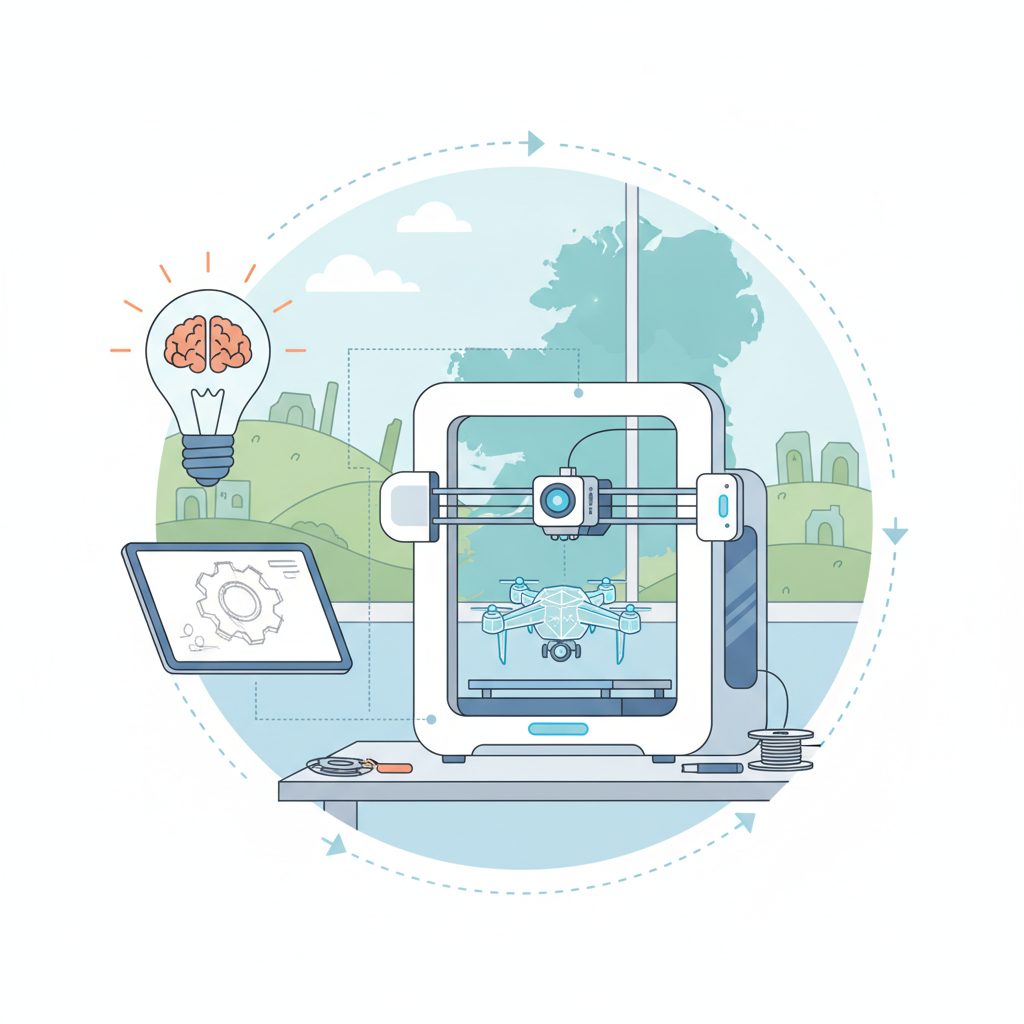
The first prototype is rarely the final product. The true power of rapid prototyping with 3D printing lies in its iterative nature. Based on the insights gained from testing your initial prototype, you’ll undoubtedly identify areas for improvement, new functionalities, or design optimisations. This final step in the cycle is about taking that feedback and implementing it into a revised 3D model, leading to an even better prototype.
This iterative process allows for continuous refinement, bringing you closer to a market-ready product or a fully realised artistic vision. Each iteration builds upon the last, leveraging the speed and flexibility of 3D printing. Whether you're in Ireland refining an industrial part or in the Grand-Duché de Luxembourg working on a consumer gadget, the ability to quickly cycle through design improvements is a game-changer.
- Analyse Feedback: Review all your notes from Step 9. Categorise issues as critical (must fix), important (should fix), or minor (nice to fix).
- Revise Your 3D Model: Based on your analysis, go back to your 3D modelling software (or work with your 3D design service) to implement the necessary changes. This could involve adjusting dimensions, strengthening weak points, optimising aesthetics, or adding new features.
- Consider Material Changes: If the initial material didn't perform as expected, this is the time to reconsider. Perhaps a switch from PLA to PETG is needed for increased durability, or vice-versa for cost reduction.
- Repeat the Process: Once your revised 3D model is ready, submit it for printing again. The cycle of design, print, test, and refine continues until your prototype fully meets your defined goals.
- Document Iterations: Keep track of each prototype version, noting the changes made and the results of testing. This creates a valuable development history.
Tip: Don't be afraid to make significant changes between iterations. The relatively low cost and speed of 3D printing make it ideal for exploring different design avenues without massive investment. Embrace the opportunity to learn and evolve your idea.
Common Mistakes to Avoid When Prototyping
Bringing an idea to life through 3D printing is an exciting process, but it's easy to stumble upon common pitfalls. Being aware of these traps can save you time, money, and frustration, ensuring a smoother journey from concept to a successful 3D printed prototype.
- Skipping the Planning Phase: Diving straight into 3D design without a clear idea of your prototype's purpose, key features, or intended testing can lead to a prototype that doesn't meet your needs, requiring complete redesigns.
- Ignoring Design for Additive Manufacturing (DfAM): Designing a model without considering the limitations and strengths of 3D printing technology (e.g., unsupported overhangs, excessively thin walls, complex internal geometries) can result in unprintable files or weak, flawed prototypes.
- Underestimating Material Selection: Choosing a material based solely on cost or colour, rather than its functional properties for your specific application, can lead to prototypes that break, warp, or simply don't perform as intended.
- Poor File Preparation: Submitting a 3D model with errors (non-manifold geometry, incorrect scale, open meshes) can cause print failures, delays, or unexpected results. Always ensure your file is "watertight" and scaled correctly.
- Neglecting Post-Processing Needs: Assuming a print comes perfectly smooth off the printer. Many prototypes require some degree of sanding, painting, or assembly to achieve the desired finish or functionality. Account for this in your planning.
- Failing to Test Thoroughly: Receiving your prototype and only giving it a cursory glance. Comprehensive testing against your initial goals is paramount to identifying flaws and gathering actionable feedback for iteration.
- Not Documenting Changes: Creating multiple iterations without keeping track of what changes were made in each version. This makes it difficult to learn from past mistakes and efficiently progress.
- Over-Complicating the First Prototype: Trying to incorporate every single feature and functionality into the very first prototype. Start simple, validate core concepts, and add complexity in subsequent iterations.
- Choosing the Wrong Partner: Selecting a 3D printing service based purely on the lowest price without considering their expertise, customer support, quality, or turnaround times can lead to poor quality prints and missed deadlines.
- Lack of Communication: Not providing clear instructions to your 3D design or printing service, or not being available to answer their questions. Clear and concise communication is the backbone of a successful outsourced project.
Frequently Asked Questions (FAQ)
What is the typical cost for 3D printing a prototype in Ireland or Luxembourg?
The cost of 3D printing a prototype varies significantly based on several factors: the size and complexity of your model, the chosen material (e.g., PLA is generally more affordable than PETG or specialised resins), the desired print quality (layer height), and the required turnaround time. Small, simple prototypes can be very economical, while large, intricate designs using premium materials will naturally incur higher costs. For specific needs regarding coût impression 3d luxembourg, or any location in the EU, services like PrintIn3D.ie offer instant online quotes or custom estimates. We strive to provide transparent pricing for all our custom 3D printing services, offering excellent value for quality and speed. You can get an estimate for your project on our 3D Print Estimates page.
How long does it take to get a 3D printed prototype?
The turnaround time for a 3D printed prototype depends on the complexity of the 3D model, its size, the material used, and the current workload of the 3D printing service. At PrintIn3D.ie, we understand the importance of speed for prototyping. We offer various expedited services, including 8-hour, 13-hour, and 28-hour custom 3D printing options for urgent projects. Standard delivery across Ireland typically takes 2 working days after dispatch, and 5-7 working days for Europe, including the Grand-Duché de Luxembourg. We aim for same-day dispatch for filament orders placed before 4 PM, and prompt processing for custom prints.
Can PrintIn3D.ie help with 3D design if I only have a sketch or an idea?
Absolutely! Many of our clients, both in Ireland and across the EU, come to us with just an idea, a sketch, or even a physical object they want to replicate or modify. Our expert 3D design services are specifically tailored to transform your concepts into print-ready 3D models. Whether you need a simple part designed from a drawing or a complex model created from scratch, our team can assist. We also offer 3D scanning services if you need to digitise an existing physical object – a valuable service scan 3d luxembourg or wherever you are located, ensuring we can work with any starting point to create your perfect prototype. Visit our 3D Design page to learn more.
What types of filaments do you recommend for prototyping, and do you offer specialised options like resin printing?
For most FDM 3D printed prototypes, we primarily recommend PLA (Polylactic Acid) and PETG (Polyethylene Terephthalate Glycol). PLA is excellent for visual prototypes, fit testing, and models where ease of printing and aesthetics are key. PETG offers greater strength, flexibility, and temperature resistance, making it ideal for functional prototypes and parts that require more durability. We stock high-quality filaments from brands like Bambu Lab and SUNLU. While FDM is our primary focus for robust and cost-effective prototypes, we can discuss specific needs for specialised materials if your project demands it. For those looking to achat filament 3d luxembourg or elsewhere in the EU for their own printers, we also offer a range of filaments with fast delivery. For advanced applications requiring extreme detail or specific material properties, some services offer impression 3d résine luxembourg; however, FDM usually suffices for the majority of prototyping needs.
What if I need to make changes after receiving my first prototype?
Making changes and iterating is a fundamental part of the prototyping process! It's rare for the first prototype to be perfect. Based on your testing and feedback, you'll likely identify areas for improvement. You can then revise your original 3D model (or have our design team do it) and submit the updated file for a new print. This iterative cycle of "design, print, test, refine" is precisely what makes 3D printing so powerful for product development. We encourage this process to help you achieve the best possible final product. Our aim is to be your long-term 3D printing partner, supporting you through every iteration.
Next Steps: Bring Your Ideas to Life with PrintIn3D.ie
Ready to transform your idea into a tangible 3D printed prototype? Let PrintIn3D.ie be your trusted partner. Whether you need expert 3D design, efficient 3D printing, or even 3D scanning services, we offer hassle-free solutions for individuals and businesses across Ireland and the wider EU. Upload your file today for a quick quote or contact us to discuss your design needs – let's print your 3D dreams!