Turn Your Idea into a Prototype with UK 3D Printing Service
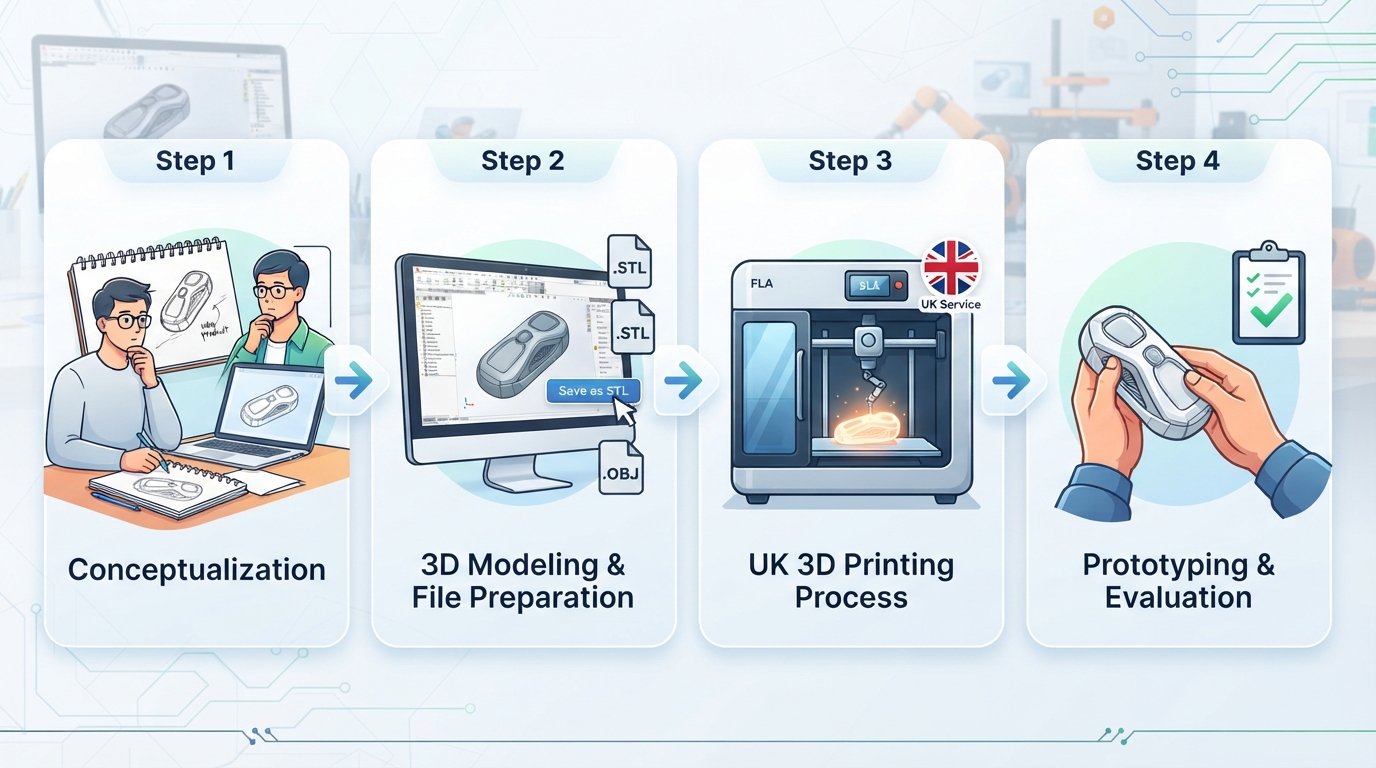
In the dynamic world of product development, bringing an idea from concept to a tangible object quickly and efficiently is crucial. Whether you're an ambitious entrepreneur, an innovative startup, or an established business looking to refine a new product, the ability to create a physical prototype can significantly accelerate your journey. This comprehensive guide will walk you through every essential step of how to turn your product idea into a physical prototype using a UK 3D printing service, ensuring you leverage the power of additive manufacturing to validate your vision.
Gone are the days when prototyping was a slow, expensive, and often cumbersome process. With advancements in technology and the accessibility of expert 3d printing service uk providers like PrintIn3D, transforming your sketches, CAD models, or even existing objects into high-quality prototypes has become remarkably straightforward. You'll learn how to articulate your vision, prepare your digital assets, choose the right materials and service provider, and avoid common pitfalls, all while focusing on efficiency and quality. By the end of this guide, you'll have a clear roadmap to bringing your innovative ideas to life, making the most of a professional 3d prototype printing partner.
Who This Is For
- Entrepreneurs and Startups seeking to validate new product ideas.
- Product Designers and Engineers needing quick, accurate iterations.
- Inventors looking to create proof-of-concept models.
- Businesses aiming to develop functional prototypes or small-batch production.
- Anyone without their own 3D printer who needs a physical object from a digital file.
Step 1: Refine Your Product Idea and Define Prototype Requirements
Before you even think about 3D printing, the most critical first step is to thoroughly define your product idea and what you expect from your prototype. This isn't just about what it looks like; it's about its purpose, functionality, and the specific questions you want it to answer. A well-defined idea will guide all subsequent decisions, from design to material selection, ensuring your investment in 3d prototype printing yields valuable insights.
Consider the core problem your product solves, its target audience, and its unique selling proposition. Outline the key features and functionalities that must be present in the prototype. Is it purely for aesthetic evaluation, or does it need to withstand stress, fit with other components, or even be tested in real-world conditions? Documenting these requirements meticulously will help you communicate effectively with your 3d printing service uk provider and set realistic expectations for the outcome.
- Clarify the Prototype's Purpose: Determine if it's for visual representation, functional testing, fit and assembly checks, marketing demonstrations, or a combination.
- Identify Key Features: List all essential features and dimensions that must be accurately represented.
- Consider Material Properties: Think about the desired strength, flexibility, surface finish, and environmental resistance. This will inform your material choice later.
- Define Tolerances and Precision: How accurate does your prototype need to be? Specify critical dimensions and acceptable variations.
- Outline Post-Processing Needs: Will the prototype require sanding, painting, or assembly after printing?
Tip: Create a detailed brief document for your project. This will serve as a foundational reference throughout the prototyping process and can be shared directly with a professional 3D printing service to ensure clarity and alignment.
Step 2: Develop Your 3D Model (CAD Design)
Once your idea and prototype requirements are clearly defined, the next crucial step is to translate them into a digital 3D model. This is typically done using Computer-Aided Design (CAD) software. A high-quality 3D model is the blueprint for your prototype; its accuracy and detail directly impact the success of the 3d prototype printing process.
If you have CAD design expertise, you can create the model yourself using software like SolidWorks, Fusion 360, SketchUp, or Blender. Ensure your design adheres to the specified dimensions, tolerances, and functional aspects identified in Step 1. Pay close attention to wall thickness, overhangs, and small features, as these can affect printability.
However, if you lack CAD skills or simply prefer to focus on your core business, outsourcing your 3D design is an excellent option. Many custom 3d design service uk providers specialise in transforming sketches, drawings, existing objects, or even vague concepts into precise, print-ready 3D models. This is particularly valuable for complex designs or if you need to iterate quickly without investing in design software and training.
- Design from Scratch: If you have CAD skills, create your model from your detailed brief.
- Outsource 3D Design: Engage a professional custom 3d design service uk to convert your idea, sketches, or 2D drawings into a 3D model. This is often the most efficient path for non-designers.
- Utilise 3D Scanning for Reverse Engineering: If you have an existing physical object that you want to replicate, modify, or integrate into a new design, consider a 3d scan to cad service. This process involves digitally capturing the geometry of a physical object, then converting the scan data into a parametric CAD model for editing and 3d printing for reverse engineering. This is invaluable for recreating legacy parts or improving existing designs.
- Optimise for 3D Printing: Ensure your model is "manifold" (watertight with no gaps or overlapping surfaces) and that all features are printable within your chosen technology's limitations.
Warning: Poorly designed 3D models can lead to failed prints, inaccurate prototypes, or significantly increased costs and delays. Investing in professional design or meticulously checking your own work is crucial.
Step 3: Choose the Right UK 3D Printing Service
Selecting the right partner for your 3d prototype printing needs is paramount. The UK boasts a growing number of excellent 3D printing services, each with varying specialisations, technologies, and pricing structures. Your choice should align with your project's specific requirements, budget, and desired turnaround time.
Consider whether you need a local service for quicker pickups or specific consultations, or if an online service offers better convenience and potentially competitive pricing. Reputable services will offer a range of technologies (FDM, SLA, SLS, etc.) and materials, alongside expertise to guide your choices. Look for a service that clearly communicates lead times, costs, and material options.
PrintIn3D, for example, offers a hassle-free solution for individuals and businesses across the UK, providing high-quality custom 3D printing, 3D design, and 3D scanning services. We focus on being your reliable 3d printing service gb filament uk partner, ensuring your journey from idea to prototype is smooth and successful. You can find more details about our services and what makes us a great choice for your UK prototyping needs on our 3D Printing Service GB guide.
- Research Service Providers: Look for UK-based companies with strong reputations, positive customer reviews, and expertise in rapid prototyping.
- Evaluate Technologies Offered: Different 3D printing technologies are suited for different prototype needs. FDM (Fused Deposition Modelling) is cost-effective for functional parts; SLA (Stereolithography) offers high detail and smooth finishes; SLS (Selective Laser Sintering) produces strong, complex parts.
- Consider Turnaround Times: If you're on a tight schedule, inquire about rapid printing options. Some services may offer same day 3d printing uk or expedited services for an additional cost.
- Assess Expertise and Support: A good service will offer advice on design optimisation, material selection, and potential post-processing. Friendly WhatsApp support is a definite plus.
- Request Quotes: Obtain multiple quotes to compare pricing, services included, and estimated delivery times. Ensure transparency in pricing.
Tip: Don't hesitate to contact the service provider directly with questions about their capabilities or to discuss your project. This interaction can reveal a lot about their expertise and customer service.
Step 4: Select the Best Material for Your Prototype
The choice of material for your 3d prototype printing project is as critical as the design itself. The material dictates the prototype's physical properties – its strength, flexibility, temperature resistance, surface finish, and even its colour. Making the right choice ensures your prototype accurately reflects the intended performance and aesthetics of your final product.
Commonly available 3D printing filaments, especially for FDM technology, include PLA (Polylactic Acid) and PETG (Polyethylene Terephthalate Glycol-modified). PLA is easy to print, biodegradable, and ideal for aesthetic models and non-functional prototypes. PETG offers greater strength, flexibility, and temperature resistance, making it suitable for functional prototypes that need to withstand more stress.
Your chosen 3d printing service uk will likely offer a range of materials, including these popular options and more specialised ones like ABS, Nylon, or flexible TPU. Discuss your prototype's intended use and required properties with the service provider. They can offer expert advice on the best filament for 3d printing uk specifically for your application, balancing performance with cost-effectiveness.
- Match Material to Function: For visual models, PLA is often sufficient. For functional parts requiring durability, consider PETG or ABS. For flexibility, TPU is ideal.
- Consider Environmental Factors: Will the prototype be exposed to heat, moisture, or UV light? These factors influence material stability.
- Evaluate Post-Processing Needs: Some materials are easier to sand, paint, or glue than others.
- Discuss with Your Service Provider: Leverage their expertise. Provide details on your product's intended use, and they can recommend the optimal material and technology.
- Check Material Availability: Ensure your chosen material is readily available from your preferred 3d printing service gb filament uk provider.
Warning: Selecting an inappropriate material can compromise the functionality, durability, or appearance of your prototype, leading to inaccurate test results and potentially costly rework.
Step 5: Prepare Your 3D File for Printing
Once your 3D model is complete and you've selected your material and service, the next step is to prepare your file for the 3d prototype printing process. This involves converting your CAD model into a format that 3D printers can understand, typically an STL (Stereolithography) file, and ensuring it's optimised for printing.
An STL file represents your 3D model as a mesh of interconnected triangles. It's crucial that this file is "watertight" or "manifold," meaning it has no holes, gaps, or inverted normals, which can cause errors during slicing and printing. Most CAD software has an export option for STL, and often includes settings to control the resolution of the mesh – a finer mesh results in a more accurate print but a larger file size.
Before sending your file to the 3d printing service uk, it's good practice to perform a final check using a free STL viewer or repair tool. Many services also offer file repair or optimisation as part of their offering, but a clean file from the outset can save time and prevent potential issues.
- Export to STL: Convert your CAD model to an STL file. Set appropriate resolution to balance detail and file size.
- Check for Errors: Use software to check for manifold errors, inverted normals, or unwanted gaps. Most CAD programs have tools for this, or you can use free online services.
- Consider Scaling and Orientation: Ensure your model is at the correct scale (e.g., millimetres) and consider the optimal printing orientation. The service provider can often assist with this for best results.
- Compress Large Files: If your STL file is very large, consider compressing it before sending, but ensure data integrity is maintained.
- Provide Supplementary Information: Include your brief from Step 1 and any specific instructions for critical dimensions or finishes.
Tip: If your prototype has multiple interlocking parts, supply them as separate STL files, clearly labelled. This allows the service provider to assess and print them individually for best accuracy.
Step 6: Submit Your Project and Get a Quote
With your refined idea, ready 3D model, and a chosen 3d printing service uk, you're ready to submit your project and get a precise quote. This is where your detailed preparation pays off, as clear communication leads to accurate pricing and a smooth production process.
Most professional 3D printing services offer an online platform where you can upload your STL file(s), select your desired material and finish, and often get an instant quote. If not instant, they will typically review your file and provide a custom quote within a short timeframe. This quote will detail the cost of printing, material, post-processing (if requested), and shipping. Services like PrintIn3D streamline this process, making it easy to turn your concept into reality with just a few clicks.
This is also your opportunity to discuss any final questions or specific requirements with the service provider. For instance, if you require a fast turnaround or have specific concerns about small features or tolerances, communicate these clearly at this stage. Transparency and clear dialogue are key to a successful partnership, especially for rapid prototyping for UK startups.
- Upload Your File: Use the service provider's online platform to upload your STL file.
- Specify Print Parameters: Select your chosen material, colour, desired infill (if applicable), and any required post-processing (e.g., sanding, painting).
- Review the Quote: Carefully examine the detailed quote, checking all costs, estimated production time, and shipping fees.
- Ask Questions: Clarify any uncertainties about the quote, timeline, or printing process.
- Approve and Order: Once satisfied, approve the quote and proceed with your order.
Warning: Always double-check the quoted specifications against your requirements before approving the order. Discrepancies found later can lead to delays and additional costs.
Step 7: Review and Approve Your Prototype
Once your prototype has been printed and delivered, it's time for the critical review and approval stage. This is where you compare the physical prototype against your initial requirements and design specifications. This step is crucial for validating your design and identifying any areas for improvement, enabling efficient iteration.
Carefully inspect the prototype for accuracy, functionality, and aesthetics. Does it meet the specified dimensions? Do all parts fit together as intended? Does the surface finish and material strength match your expectations? This feedback is invaluable for refining your product idea and informing subsequent design iterations. If adjustments are needed, you can go back to Step 2, modify your 3D model, and initiate a new round of 3d prototype printing.
Remember, prototyping is often an iterative process. It's rare for the first prototype to be perfect. The goal is to learn and improve with each version. Your 3d printing service uk partner can provide valuable insights during this review, especially if you encountered any unexpected results or need advice on design modifications for printability.
- Conduct a Thorough Visual Inspection: Check for any visual defects, layer lines, warping, or inaccuracies in features.
- Verify Dimensions: Use calipers or other measuring tools to ensure critical dimensions are within specified tolerances.
- Test Functionality: If it's a functional prototype, test its intended use. Do moving parts articulate correctly? Does it withstand expected loads?
- Assess Fit and Assembly: If it's part of a larger assembly, test how it integrates with other components.
- Gather Feedback: Share the prototype with colleagues, target users, or stakeholders to gather diverse perspectives.
- Document Findings: Keep a detailed record of what worked, what didn't, and what needs to be changed for the next iteration.
Tip: Don't be afraid to iterate. Rapid prototyping via 3D printing services is designed to make this process cost-effective and fast, allowing you to refine your product quickly.
Step 8: Receive Your Prototype & Plan Next Steps
After your prototype has been meticulously printed and, if necessary, post-processed, it will be dispatched to your location. For UK customers, services like PrintIn3D pride themselves on efficient delivery, ensuring your physical prototype arrives promptly and securely. You might even find options for same day 3d printing uk, depending on the service and complexity of your project, further accelerating your product development cycle.
Upon receiving your prototype, conduct a final inspection to ensure it matches the agreed-upon specifications and survived transit. This marks the culmination of the initial prototyping phase, but often, it's just the beginning of your product's journey. With a physical prototype in hand, you can confidently move forward with user testing, investor presentations, market validation, or further design refinements.
Consider the insights gained from your prototype. Do you need to refine the design? Test different materials? Or are you ready to explore small-batch manufacturing? Your 3d printing service uk provider can continue to be a valuable partner for these next stages, offering services from further design modifications to scaling up production. Leveraging their expertise for ongoing custom 3d printing services online will ensure a consistent and high-quality outcome as your product evolves.
- Unpack and Inspect: Carefully unpackage your prototype and inspect it for any shipping damage or final defects.
- Final Documentation: Add the received prototype to your project documentation, including photos and any final measurements.
- Begin Testing: Put your prototype through its paces. Conduct user trials, stress tests, or integration tests as planned.
- Gather Feedback and Iterate: Use the results from your testing to inform design changes for future versions.
- Plan for Production: If your prototype is successful, begin planning for small-batch production or full-scale manufacturing, potentially with the help of your 3D printing partner.
Tip: Keep open communication with your 3D printing service. They can often provide advice on further iterations, material changes, or even assist with scaled-up production if needed.
Common Mistakes to Avoid
Navigating the prototyping process can be straightforward with the right partner, but certain missteps can lead to delays, increased costs, and subpar results. Being aware of these common mistakes can save you time and resources when working with a 3d prototype printing service.
- Insufficient Idea Definition: Jumping into design without a clear understanding of the prototype's purpose and requirements. This leads to aimless iterations.
- Poor Quality 3D Models: Submitting CAD files with errors (non-manifold geometry, incorrect scaling) that require extensive repair by the service, increasing costs and lead times.
- Incorrect Material Choice: Selecting a material based solely on cost or availability, without considering the prototype's functional needs, leading to a prototype that doesn't perform as expected.
- Lack of Communication: Not clearly articulating specific requirements, critical dimensions, or desired finishes to the 3d printing service uk. Assume nothing; specify everything.
- Skipping Iterations: Believing the first prototype will be perfect. Product development is iterative; embrace the process of refining and re-testing.
- Ignoring Printability Constraints: Designing features that are too small, too thin, or too complex for the chosen 3D printing technology and material, resulting in failed prints or compromised quality.
- Overlooking Post-Processing: Forgetting to account for potential sanding, painting, or assembly requirements, which can add significant time and cost.
- Not Backing Up Files: Losing your 3D design files can be catastrophic. Always keep secure backups.
FAQ
What file format do I need to submit for 3D printing my prototype?
The most common and widely accepted file format for 3d prototype printing is STL (Stereolithography). Most CAD software can export designs in this format. Some services may also accept OBJ, STEP, or other formats, but STL is usually the preferred choice due to its universal compatibility with 3D printing software. Always ensure your STL file is "watertight" and free of errors for optimal results.
How long does it take to get a 3D printed prototype in the UK?
The turnaround time for a 3d printing service uk prototype can vary significantly depending on several factors: the complexity and size of your model, the chosen material and technology, the service provider's current workload, and your selected shipping speed. Many services offer standard lead times of a few days to a week. For urgent projects, options like same day 3d printing uk or expedited services are often available, albeit usually at a premium. It's best to discuss your timeline directly with your chosen service provider.
Can a 3D printing service help me design my prototype if I only have sketches?
Absolutely! Many professional 3d printing service uk providers also offer comprehensive 3d design services. If you only have sketches, 2D drawings, or even just a concept, a dedicated custom 3d design service uk can translate your ideas into a precise, print-ready 3D model. This is an invaluable service for innovators who lack CAD expertise, ensuring your vision is accurately captured and optimised for additive manufacturing.
What is the cost of 3D prototype printing?
The cost of 3d prototype printing varies widely. Factors influencing the price include the size and complexity of your model, the material chosen (e.g., PLA is generally cheaper than engineering-grade resins), the specific 3D printing technology used (FDM is typically less expensive than SLA or SLS), any required post-processing, and the lead time. Most services provide online quote tools or custom quotes based on your uploaded file and specifications. Remember that the value of rapid prototyping often outweighs the cost, as it helps prevent expensive mistakes in later production stages.
How do I know which filament is the best for my specific prototype?
Choosing the best filament for 3d printing uk depends entirely on your prototype's intended application. If you need a basic visual model, PLA is a great, affordable choice. For functional parts requiring more strength and durability, PETG is often recommended. If flexibility is key, TPU might be suitable. For parts needing high heat or impact resistance, materials like ABS or Nylon could be considered. The best approach is to clearly communicate your prototype's functional requirements to your 3D printing service provider, who can offer expert guidance on material selection and help you choose from their range of 3D printer filaments.
Next Steps: Bring Your Ideas to Life with PrintIn3D
Ready to transform your innovative product idea into a tangible prototype? Let PrintIn3D be your trusted partner. Our expert team and state-of-the-art facilities are here to provide hassle-free custom 3D printing services online, comprehensive 3D design assistance, and even 3D scanning, ensuring your vision becomes a reality. Get started on your 3D printing journey today and experience the difference of working with an award-winning service.