3D Printing Spearheads Germany's Circular Economy Drive
3D Printing Spearheads Germany's Circular Economy Drive with Focus on Sustainability
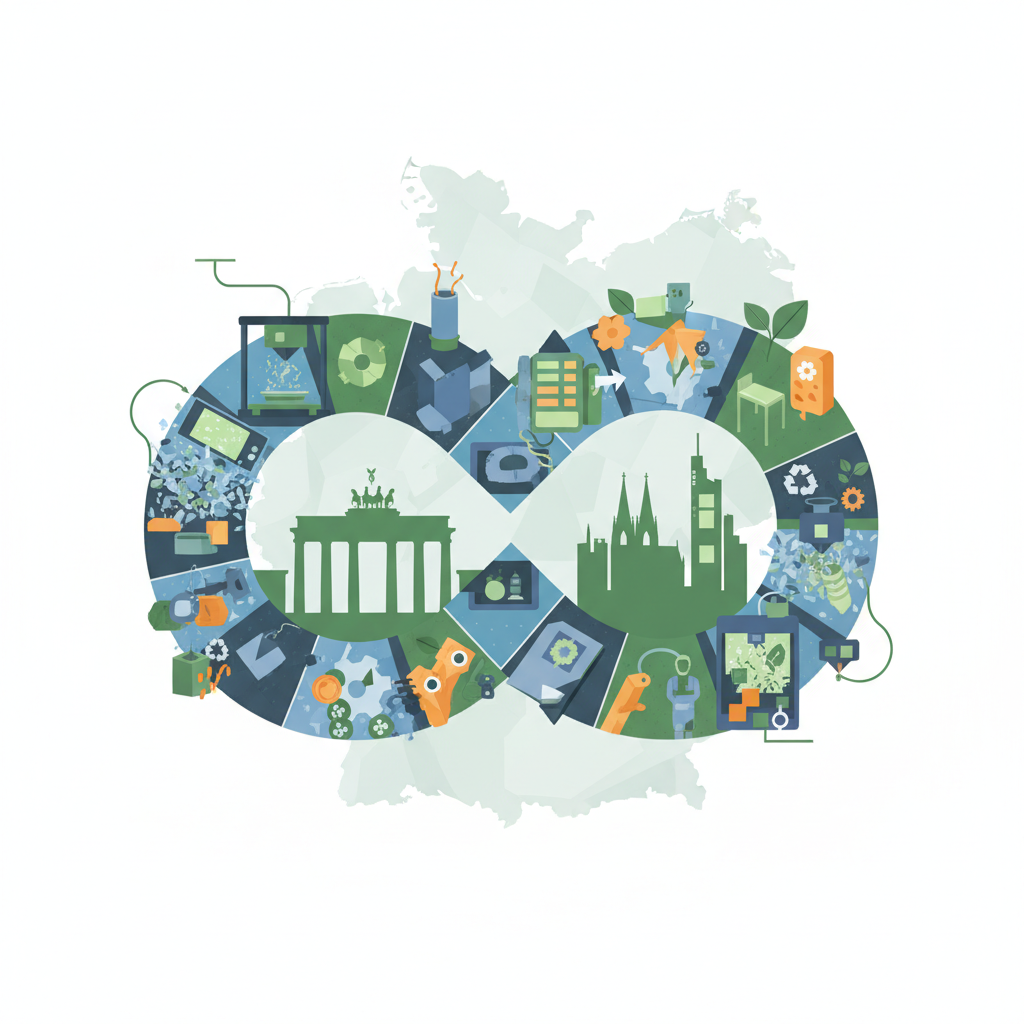
In a significant move towards greater environmental responsibility, 3D printing technology is increasingly being recognised as a pivotal driver for Germany's burgeoning circular economy. While no single major event in the past 48 hours has shaped this narrative, ongoing industry trends and expert insights from sources like 3DDruckMuenchen and Sabori Immobilien highlight a sustained focus on sustainability, on-demand production, and innovative materials. These developments signify a shift towards more eco-conscious manufacturing practices, poised to become standard by 2026 and beyond.
Sustainable Materials: A Core Pillar of Circularity
At the heart of 3D printing's contribution to the circular economy is the emphasis on sustainable materials. German industry experts are increasingly championing the use of recyclates, bio-based polymers, and durable high-performance plastics. This focus allows for the creation of components that are not only robust and long-lasting but also align with principles of reuse and recycling at the end of their lifecycle. For businesses and makers, this means an expanding range of environmentally friendly 3D printer filaments, moving beyond traditional options to embrace a greener future.
The innovation in materials extends to various applications, including the construction sector, where 3D printing offers the distinct advantage of using eco-friendly materials and significantly minimising waste. This approach ensures that the entire product lifecycle, from initial design to eventual disposal or recycling, is considered, leading to a much lower environmental footprint. Companies like PrintIn3D are already stocking popular choices such as Bambu Lab and SUNLU PLA and PETG filaments, with an eye on these evolving material trends to offer sustainable solutions to our customers.
On-Demand Production and Waste Reduction
One of the most profound impacts of 3D printing on the circular economy is its inherent ability to facilitate on-demand production. Unlike traditional manufacturing, which often relies on mass production with inherent waste from overstocking or minimum order quantities, 3D printing allows for the creation of precise parts exactly when and where they are needed. This significantly reduces material waste and energy consumption associated with warehousing and transportation.
The trend towards scalable, economic applications rather than just "spectacular individual pieces" underscores a strategic shift. Businesses are leveraging 3D printing for rapid prototyping service and producing functional components, where efficiency and sustainability go hand-in-hand. This model is particularly beneficial for small to medium-sized enterprises and individuals who require custom parts without the overheads and environmental impact of large-scale manufacturing. Whether it's a unique Etsy 3D printed product or a critical industrial component, the ability to print only what's necessary is a game-changer.
Enhancing Circularity Through Traceability and Design
The future of 3D printing in Germany, as projected for 2026, includes a standardisation of process monitoring and traceability. This means that printing processes will be overseen, parameters meticulously documented, and components marked for full traceability. Such rigorous control is vital for a truly circular economy, enabling easier recycling, repair, and reuse of parts by providing complete information about their origin and composition. This level of detail is invaluable for professional CAD design for manufacturing and ensuring longevity.
Furthermore, the role of 3D product design services is becoming increasingly critical. Designing for circularity means creating objects that are easy to disassemble, repair, and recycle. This forward-thinking approach, often supported by services that convert a CAD file to 3D print, ensures that sustainability is embedded from the very first concept. The ability to perform 3D scanning also plays a vital role, allowing for reverse engineering of existing parts to improve their design for circularity or to recreate components that would otherwise be discarded due to lack of availability.
Local Initiatives and Future Outlook
The commitment to sustainability in 3D printing is also evident at a local level. For instance, a "sustainability day" in Rheinpfalz featured 3D printers and environmental themes, showcasing how this technology can engage communities in eco-friendly practices. Looking ahead, events like the 3D printing application forum hosted by Zentrum Ilmenau Digital, scheduled for October 2026, underscore the ongoing dialogue and innovation within the German industry. These forums serve as crucial platforms for discussing future trends, sharing best practices, and fostering collaborations that will further advance the circular economy.
What This Means for PrintIn3D's Audience
For individuals and businesses across Ireland and the EU/EEA, these developments signal a future where 3D printing is not just about innovation but also about responsibility. PrintIn3D.ie, as your dedicated 3D printing partner, is committed to staying at the forefront of these sustainable trends. We offer hassle-free solutions for custom 3D printing, 3D design, and 3D scanning, enabling you to bring your ideas to life with a conscious approach to the environment. From providing professional CAD design for manufacturing to stocking a diverse range of 3D printer filaments with same-day dispatch, we ensure that you have access to the tools and expertise to contribute to a more sustainable future. Contact us today to learn how we can help you integrate sustainable 3D printing practices into your projects, whether you need affordable 3D printing near you or a bulk filament supplier in Ireland.