Circular 3D Printing Accelerates in the Netherlands
Pioneering Innovations Propel Circular 3D Printing in the Netherlands
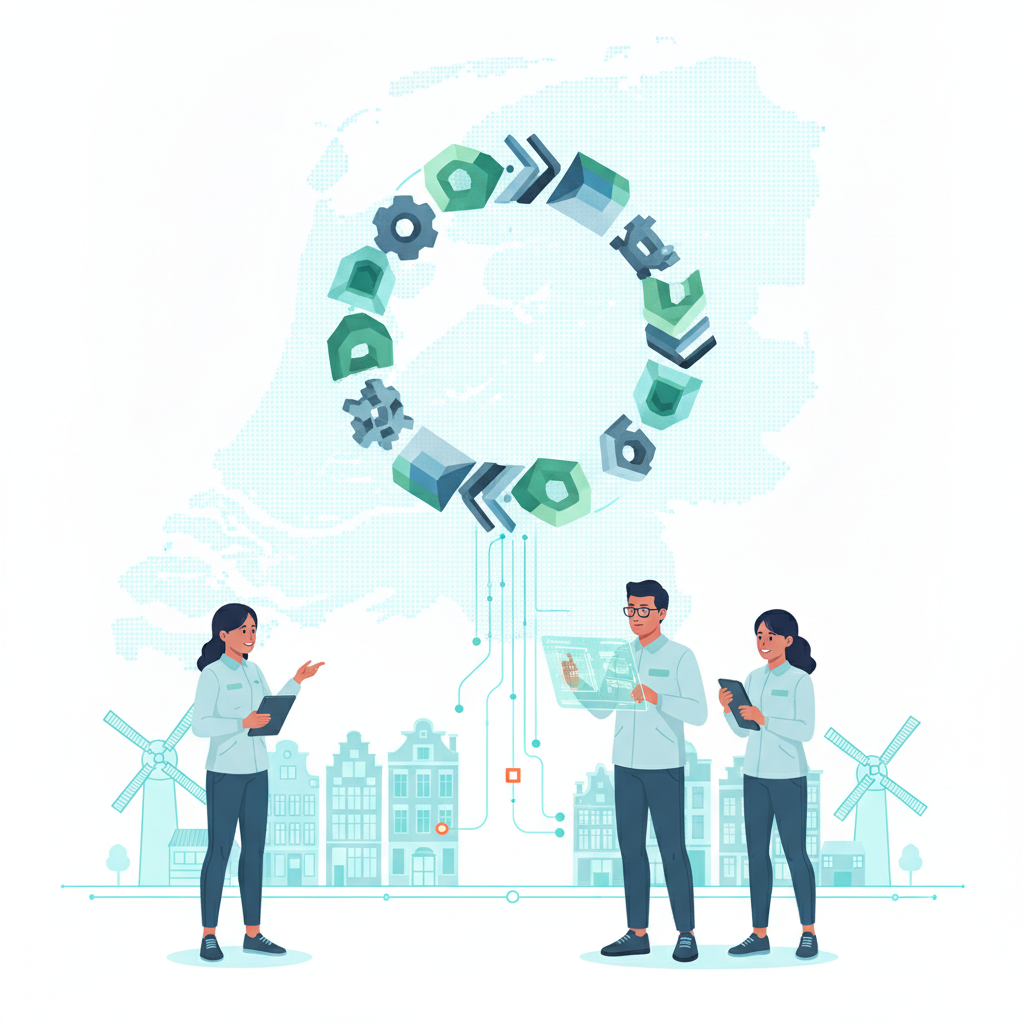
Recent developments in material science and strategic initiatives within the Netherlands are rapidly advancing the integration of 3D printing into a more sustainable, circular economy. From groundbreaking reversible polymers developed at Heidelberg University to large-scale recycling efforts in Rotterdam and Groningen, these innovations are setting a new standard for sustainable manufacturing, offering exciting prospects for industries and hobbyists alike across the Netherlands and wider EU/EEA region.
Revolutionary Materials Pave the Way for True Circularity
At the forefront of this shift is the development of a novel "light-based" 3D printing material that promises a truly closed-loop manufacturing cycle. Announced on August 18, 2026, by Heidelberg University, this innovative polymer can be broken down into its original molecular building blocks within seconds using a chemical trigger. "A chemical ‘key’ causes already printed material to break down into its molecular building blocks within seconds," researchers revealed. This means printed objects can be completely disassembled, their components recovered, and then reused in a continuous manufacturing process. This breakthrough offers immense potential for reducing waste and making 3d print onderdelen kopen a fundamentally more sustainable choice, enabling infinite reuse rather than just recycling.
Dutch Efforts Tackle Recycling Challenges and Drive Green Chemistry
While the material innovation comes from Germany, the Netherlands is deeply committed to circular economy principles, actively pursuing initiatives to scale up sustainable practices. A recent update from Rotterdam Botlek, also dated August 18, 2026, highlighted Europe's ongoing struggle to effectively scale plastic recycling, despite ambitious goals to increase the use of recycled raw materials and reduce reliance on fossil-based feedstocks. This challenge underscores the critical need for advanced material solutions like those from Heidelberg, which can simplify the recycling process and ensure higher material recovery rates.
Complementing these efforts, the Dutch circular chemistry project BioBTX in Groningen is making significant strides. Their plant is projected to annually recycle approximately 20,000 tons of waste, producing around 10,000 tons of renewable aromatic oil and 8,000 tons of sustainable by-products. This process is expected to slash greenhouse gas emissions of the resulting chemical building blocks by an impressive 70% to 80% compared to conventional, fossil-based production. Such initiatives are vital for providing the sustainable raw materials needed for future 3D printer filaments, directly benefiting companies like ours which offer a wide range of 3D printer filaments.
The Netherlands' dedication to a circular future extends to broader collaborations, as evidenced by a reported partnership with Bangladesh focused on creating a circular textile economy. Although textile-specific, this initiative reflects the national commitment to waste reduction, recyclable production systems, and green technologies across various industrial sectors.
Implications for 3D Printing in the Netherlands
These upstream material developments are set to revolutionize the 3D printing market in the Netherlands. For any forward-thinking 3d print bedrijf nederland, embracing these eco-friendly materials is paramount. The ability to reclaim and reuse materials from custom 3d print service nederland projects will significantly reduce environmental impact and operational costs.
This shift also presents new opportunities for businesses and individuals seeking 3d printen op maat nederland. Soon, customers will be able to procure parts with the assurance that they are contributing to a healthier planet. From initial CAD ontwerp 3d printen to final production, the entire lifecycle is being reconsidered, placing a greater emphasis on designing for circularity. This also means new and exciting possibilities for 3d ontwerp service nederland, which can now focus on creating models that are not only functional but also inherently designed for disassembly and reuse.
These advancements are not just for large industries; they are also bringing exciting new possibilities for 3d printen voor hobbyisten. As more sustainable and recyclable filaments become available, hobbyists can experiment and create with a clearer conscience, knowing their creations are part of a closed-loop system.
A Sustainable Future for Your 3D Printing Needs
The push towards circularity, driven by innovative materials and robust Dutch recycling infrastructure, signifies a bright and sustainable future for 3D printing. As demand for sustainable practices grows, businesses and individuals in the Netherlands looking to 3d print offerte aanvragen will increasingly prioritize partners who can demonstrate a commitment to circularity and offer access to these advanced, eco-friendly materials.
For individuals and businesses in the Netherlands and across the EU/EEA, these developments mean that custom 3D printing is becoming more sustainable than ever. As your dedicated 3D printing partner, we at PrintIn3D.ie are committed to staying at the forefront of these material innovations, ensuring our services and filament offerings align with the vision of a circular economy. Let us help you bring your 3D dreams to life with environmentally conscious solutions.