Dutch Startups Lead Sustainable 3D Printing with Recycled Filament
The Netherlands is rapidly becoming a hub for sustainable innovation in additive manufacturing, with recent developments highlighting a strong embrace of recycled materials in 3D printing. On September 3, 2026, Dutch 3D-printing company 3devo made headlines with the launch of its Filament Maker X10, a groundbreaking machine designed to transform various recycled and mixed feedstocks into custom 3D printer filament. This initiative, coupled with Materialise's advancements in powder reuse and significant public-sector funding for circular innovations, signals a pivotal shift towards a more eco-friendly and decentralised 3D printing landscape across the Netherlands.
3devo's Filament Maker X10: Revolutionising Waste-to-Worth
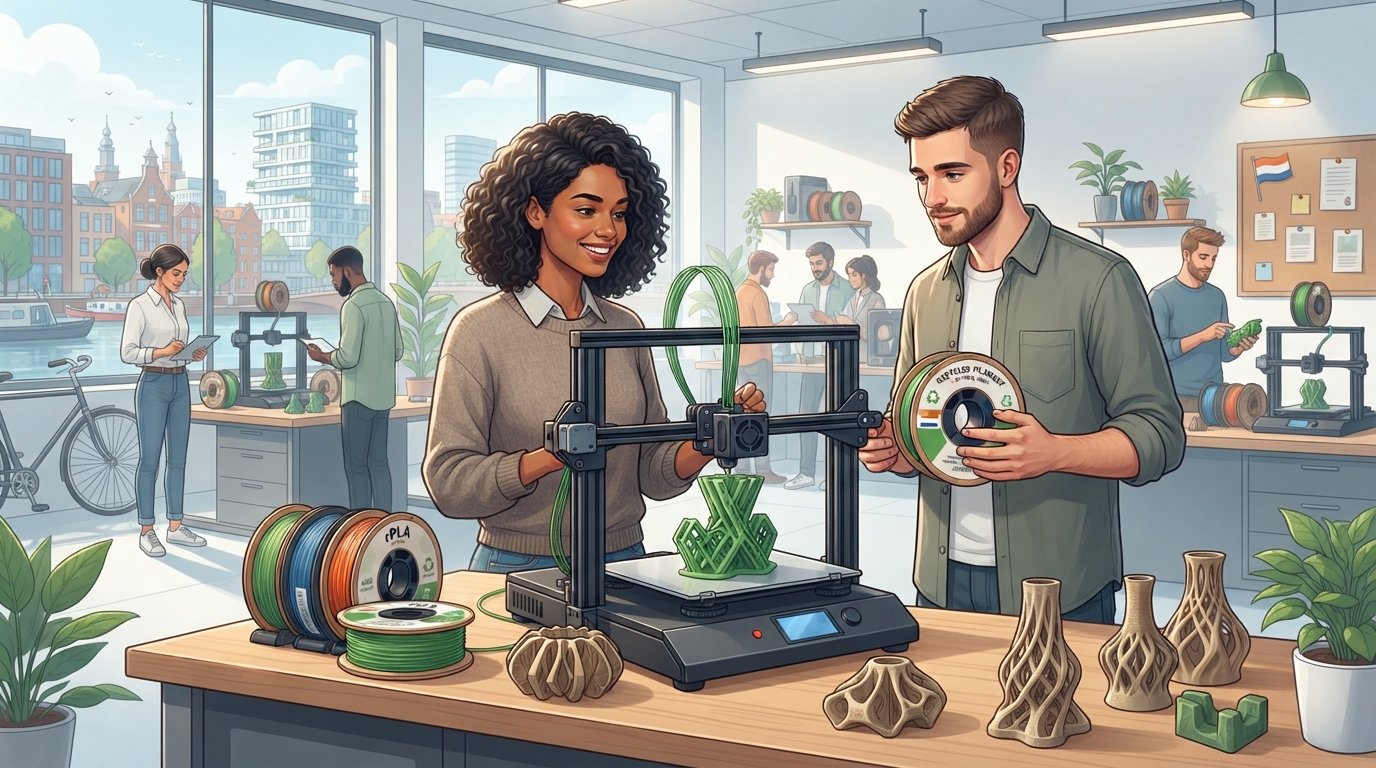
3devo's new Filament Maker X10 is set to redefine how labs and production environments approach material sourcing. The company's core philosophy is simple yet powerful: "Waste becomes worth recovering rather than worth disposing of." This cutting-edge machine enables users to produce custom filament directly from waste streams, offering a tangible solution for businesses and individuals looking to reduce their environmental footprint and operational costs. For instance, the Filament Maker X10 can turn common items like PETG bottles into high-quality prototyping filament or combine coffee grounds with PLA to create unique new materials.
The economic benefits are substantial. With virgin PLA filament costing approximately €10/kg and more advanced materials like PA12 powder ranging from €50–100/kg, the ability to recover and reuse these materials offers quick returns. 3devo has already demonstrated this potential by successfully converting 2,000 kg of MJF PA12 powder waste into usable 3D printed parts, showcasing a clear path for waste recovery to pay back quickly in various settings. This innovation offers exciting possibilities for those needing 3d printen op maat nederland, allowing for material specialisation previously unavailable.
Central to 3devo’s vision is a world where "recycling is economically viable, material innovation is accessible, and production is decentralised – where polymer doesn’t travel across the planet to reach a printer standing twenty metres from the waste it came from." This local, circular material production approach is particularly appealing for 3d printen voor hobbyisten and small businesses, making customised and sustainable filament production a reality close to home.
Materialise and Broader Dutch Sustainability Efforts
Further solidifying the Netherlands' commitment to sustainable 3D printing, Materialise, another key player in the Dutch additive manufacturing sector, has introduced Bluesint PA12. This innovative powder allows for printing with up to 100% reused powder, significantly reducing material waste in the production process. Materialise aims to reuse more than five tons of powder in the initial phase alone, underscoring the potential for large-scale environmental impact.
Beyond filament and powder innovation, the Netherlands continues to show its inventive spirit in additive manufacturing through diverse projects. A compelling example is a small Dutch company leveraging 3D printing technology to restore damaged marine ecosystems by creating artificial reefs. While not directly filament-specific, this initiative reflects the nation's broader commitment to using 3D printing for ecological benefit and continuous innovation in the field.
Funding and Opportunities for Circular Innovation
The Dutch public sector is also actively fostering circular innovation. The Netherlands Enterprise Agency (RVO) recently announced new funding opportunities for circular-economy projects, making €2.5 million available under EKOO: Circulaire Economie and an additional €1.85 million under EKOO: Kritieke grondstoffen. These subsidies are crucial for startups and established businesses looking to invest in sustainable practices and develop new closed-loop material workflows, from waste collection and shredding to compounding and local filament production.
What This Means for Dutch Startups and 3D Printing Enthusiasts
The current landscape presents tremendous opportunities for Dutch startups and businesses involved in 3D printing, 3D design, 3D scanning, and filament sales. The move towards productised tooling for circular feedstock processing means that creating a closed-loop material workflow is becoming more accessible and economically viable than ever before. This includes everything from developing waste collection schemes to establishing local filament production facilities, ultimately leading to more sustainable 3d print onderdelen kopen.
For those looking to bring their ideas to life, whether it's developing unique products from recycled materials or simply needing high-quality prints, the emphasis on customisation and sustainability is key. Services like cad ontwerp 3d printen become even more vital when working with innovative recycled filaments, ensuring designs are optimised for the unique properties of these materials. Moreover, the availability of advanced recycled materials provides unique avenues for those seeking a 3d ontwerp service nederland that prioritises environmental responsibility without compromising quality.
The developments in the Dutch 3D printing sector underscore a clear path towards a more sustainable and resource-efficient future. For individuals and businesses in the Netherlands, this means increased access to environmentally friendly printing options and the ability to contribute to a circular economy. If you're ready to explore how these advancements can benefit your projects or need a 3d print offerte aanvragen for custom solutions, the time to embrace sustainable 3D printing is now.