German Medical Sector Advances with 3D Printing
German Medical Sector Embraces 3D Printing for Personalized Implants and Surgical Guides
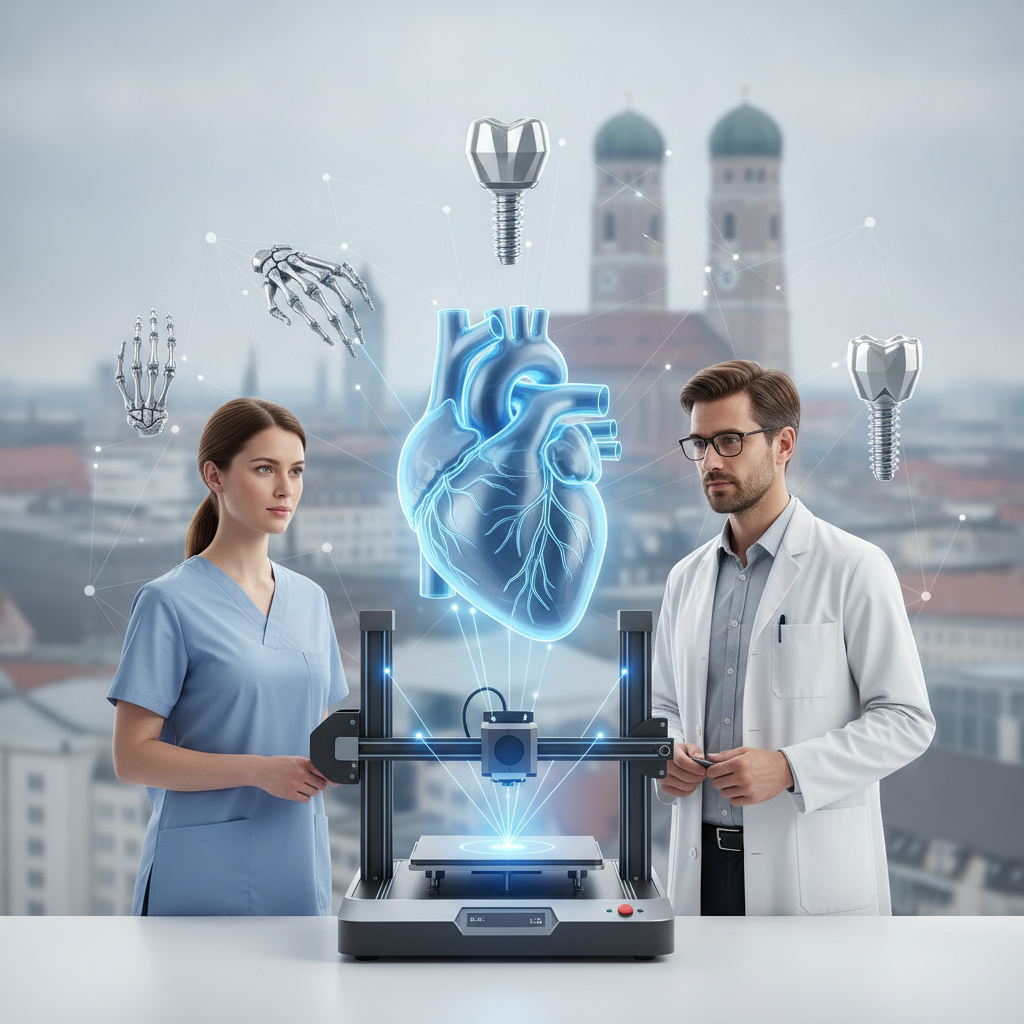
The German medical sector is rapidly advancing patient care through the widespread adoption of 3D printing technologies, revolutionizing everything from personalized implants to highly precise surgical guides. Recent developments highlight Germany's strong commitment to integrating additive manufacturing into healthcare, evidenced by groundbreaking research from Hannover and innovative dental workflows that promise enhanced precision and patient-specific solutions across Europe.
This surge in adoption underscores a broader trend towards custom-made medical devices, where patient-specific needs are met with unparalleled accuracy. Whether it's creating bespoke surgical instruments or personalized prosthetics, 3D printing is proving to be a game-changer for healthcare professionals and patients alike.
Innovations from Hannover: A Leap in Medical Engineering
A significant highlight comes from Hannover, where recent research has unveiled a new 3D membrane designed to improve oxygen supply for artificial lungs and ECMO (Extracorporeal Membrane Oxygenation) machines. Dated August 18, 2026, this report signifies the continued advancement of complex 3D fabrication within medical engineering. Such innovations are crucial for developing next-generation life-support systems, offering hope for patients with severe respiratory conditions. The ability to prototype and produce such intricate components demonstrates the sophisticated capabilities that 3D printing brings to critical medical applications.
Dental and Implantology: Precision Through Digital Workflows
The dental sector in Germany is also at the forefront of this revolution. An update from August 20, 2026, details a sophisticated digital full-arch workflow that integrates patient avatar modeling, AI-assisted planning, photogrammetry, and 3D printing for the production of dental bridges. This comprehensive approach ensures that each dental restoration is perfectly tailored to the individual patient, enhancing comfort and functionality. For those needing custom dental solutions, the ability to have 3d-modelle für 3d-druck erstellen lassen from such precise digital data is invaluable.
A prime example of personalized treatment comes from the use of EndolIF spinal implants. This technology has already benefited 200 patients across 600 surgeries in Europe, including Germany, providing custom solutions for spinal fusion procedures. These kinds of 3d-druck ersatzteile are transforming orthopedic care, offering tailored options that improve surgical outcomes and patient recovery.
Surgical Guides: Enhancing Accuracy and Efficiency
One of the most impactful applications of 3D printing in the medical field is the creation of surgical guides. These 3D-printed templates fit precisely over a patient's teeth or tissue, directing drill placement during implant surgery with remarkable accuracy. This minimizes risks, reduces surgery time, and improves predictability of results.
Market figures from August 18, 2026, indicate that these indispensable tools are priced from €80 per jaw, varying up to €450 depending on complexity. Typical turnaround times are around 48 hours, with express 24-hour service available at a 30% premium. This rapid production capability makes 3D printing an ideal solution for urgent medical needs. The process often begins with a detailed 3d-scan service of the patient's anatomy, followed by precise cad design für 3d-druck to generate the stl datei erstellen lassen, ensuring a perfect fit and optimal surgical plan.
Regulatory Compliance: Ensuring Safety and Quality
As 3D printing becomes more prevalent in clinical settings, regulatory compliance is paramount. A European regulatory article from August 19, 2026, emphasizes that any medical device manufactured using 3D printing for clinical use in Europe must adhere to Regulation (EU) 2017/745 on medical devices (EU MDR). Custom-made devices, such as surgical guides, are subject to specific rules under this regulation, highlighting the stringent requirements for safety and efficacy.
The responsibility for these devices extends beyond just printing; it encompasses the entire process from digital design to post-processing, cleaning, final photopolymerization, and delivery to the healthcare professional. This comprehensive oversight ensures that 3D-printed medical devices meet the highest standards, providing confidence to both practitioners and patients.
The Future is Customized and Accessible
The ongoing advancements in Germany's medical sector demonstrate a clear path towards personalized medicine, where 3D printing plays a central role in creating custom implants, surgical guides, and innovative medical devices. For businesses and individuals across Germany and the wider EU/EEA, access to expert 3D printing, 3d-design service, and objekte 3d scannen lassen capabilities is more crucial than ever.
Whether you're developing medical 3d-druck prototypen, needing precise 3d-scan für ersatzteile for industrial applications, or simply looking to experiment with various materials like pla filament kaufen, petg filament kaufen deutschland, or tpu filament kaufen deutschland, understanding the power of additive manufacturing is key. Companies like PrintIn3D.ie are at the forefront, offering hassle-free solutions and expert support to help bring your 3D ideas to life, ensuring that these advanced technologies are within reach for everyone.