German Mittelstand Strengthens Supply Chains, Accelerates Innovation
German Mittelstand Embraces 3D Printing for Enhanced Supply Chains and Rapid Innovation
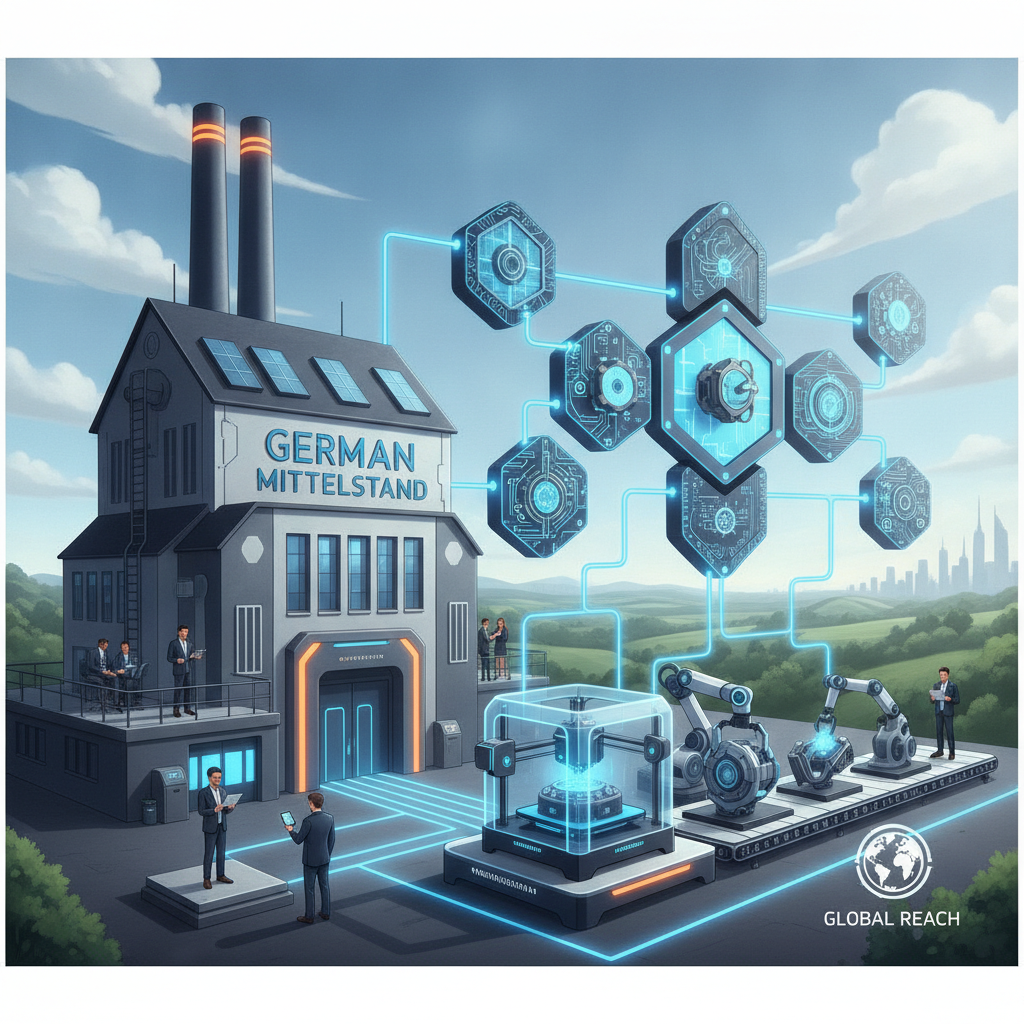
In a significant move signalling a strategic shift within one of Europe's economic powerhouses, Germany's Mittelstand (SMEs) are increasingly harnessing the power of industrial 3D printing services to fortify their supply chains and dramatically accelerate product development. This comes amidst renewed policy support for innovation and digitalization from the German government, coupled with exciting advancements in 3D scanning hardware and additive manufacturing capacity across the nation.
3D Printing: A Strategic Tool for Resilience and Agility
Recent industry discussions highlight 3D printing as a pivotal strategic tool for managing spare parts and transforming concepts "vom Prototyp zum Geschäftsmodell" (from prototype to business model). This is particularly crucial for the Mittelstand, allowing them to shorten lead times for essential components and low-volume production, thereby enhancing supply chain resilience. While recent reports indicate an improvement in material availability, with shortages falling across various sectors, the ongoing risk posed by low water levels on key inland waterways underscores the need for localized, on-demand manufacturing solutions.
By leveraging a reliable 3D-Druck-Service (3D printing service), German businesses can proactively counter potential disruptions. Instead of relying solely on distant suppliers, they can secure individuelle 3D-Druck Teile (custom 3D printed parts) rapidly, whether for critical machinery or bespoke product components. This agility is invaluable, allowing companies to pivot quickly and maintain operational continuity even in challenging logistical environments.
Government Backing Fuels Digital Transformation
The German government is actively championing this digital transformation. The cabinet recently approved a draft ERP economic plan for 2027, earmarking approximately 12 billion euros from the ERP special fund, with a significant increase of 600 million euros compared to 2026. This substantial funding is specifically designed to strengthen startups, innovations, and investments, with a clear focus on digitalization financing for the Mittelstand. As one German official stated, "Mit rund 12 Mrd. Euro aus dem ERP-Sondervermögen stärken wir 2027 gezielt Gründungen, Innovationen und Investitionen."
This policy support creates an opportune environment for businesses looking to embrace new technologies. It empowers them to invest in expert services for CAD Design für 3D-Druck (CAD design for 3D printing) and comprehensive 3D-Druck Design Service, transforming sketches or existing components into print-ready 3D-Datei erstellen lassen (3D files created). Such support lessens the financial burden of adopting these advanced manufacturing techniques, making them more accessible to a broader range of German SMEs.
Advancements in 3D Scanning and Manufacturing Capacity
The additive manufacturing landscape in Germany is also experiencing significant growth and technological advancements. A recent highlight includes FARO's new MetraSCAN BLACK2, a groundbreaking 3D scanning device capable of capturing up to 2.8 million measurement points per second – approximately 56% faster than its predecessor. This innovation drastically reduces data capture times, providing German businesses with unparalleled speed for reverse engineering, quality control, and faster iteration in their manufacturing workflows. The ability to quickly 3D-Objekt scannen lassen (have 3D objects scanned) can streamline development from concept to Prototypen aus dem 3D-Druck (prototypes from 3D printing) at an unprecedented pace.
Furthermore, AMCM, a German provider of custom metal 3D printing systems and a subsidiary of EOS, recently opened a new production facility in Weilheim. This expansion signals a robust and growing additive manufacturing ecosystem within Germany, ensuring that businesses have access to cutting-edge production capabilities and fostering a climate of continuous innovation.
Practical Applications for German Businesses
For German Mittelstand, these developments mean more than just technological novelty; they translate into tangible business advantages. The ability to rapidly produce individuelle 3D-Druck Teile anfertigen lassen (have custom 3D printed parts manufactured) reduces dependence on complex global supply chains. It also fosters a faster route from 3D-Druck Ideen (3D printing ideas) to market-ready products. Whether it's producing functional prototypes or end-use parts, the flexibility offered by external 3D printing services is unparalleled.
Moreover, the increasing demand for high-quality 3D-Druck-Filament für Bambu Lab (3D printer filament for Bambu Lab) and other leading brands, including the opportunity to PETG Filament kaufen (buy PETG filament) or TPU Filament kaufen locally, further supports the domestic manufacturing trend. Businesses looking to expand their in-house capabilities or simply explore options to 3D-Drucker Filament im Großhandel (wholesale 3D printer filament) will find a dynamic and supportive market.
A Clear Path Forward for German Innovation
The confluence of strategic industrial 3D printing adoption, robust government funding, and advancing technology creates a compelling narrative for Germany's Mittelstand. It positions them to not only navigate existing supply chain challenges but also to lead in innovation and digital transformation. For businesses and individuals across the EU/EEA, including Germany, this means easier access to cutting-edge 3D printing, 3D design, and 3D scanning services, transforming concepts into reality without the need for personal 3D printers or extensive in-house expertise. It's about hassle-free partnership, ensuring that your 3D dreams can be printed with confidence and care.