PLA vs PETG: Choosing Your Best 3D Printing Filament
Introduction: PLA vs PETG – Making the Right Filament Choice
In the vibrant world of 3D printing, selecting the right filament is paramount to the success of your project. Two of the most popular and versatile choices for hobbyists, designers, and engineers alike are Polylactic Acid (PLA) and Polyethylene Terephthalate Glycol (PETG). Both have carved out significant niches, but understanding their unique properties is key to unlocking your creative potential, whether you're a maker in Ireland, searching for 3d printing ísland services, or simply looking to prenta 3d hlut from anywhere in the EU/EEA.
At PrintIn3D.ie, your trusted 3D printing partner, we understand this dilemma. Our goal is to provide hassle-free solutions, from expert custom 3D printing to supplying premium filaments. We've even been recognised as a 'Rising Star' at the Irish Print Awards 2026, so you know you're in expert hands. This comprehensive guide will delve deep into the characteristics of PLA and PETG, helping you make an informed decision for your next project.
Quick Overview: PLA and PETG
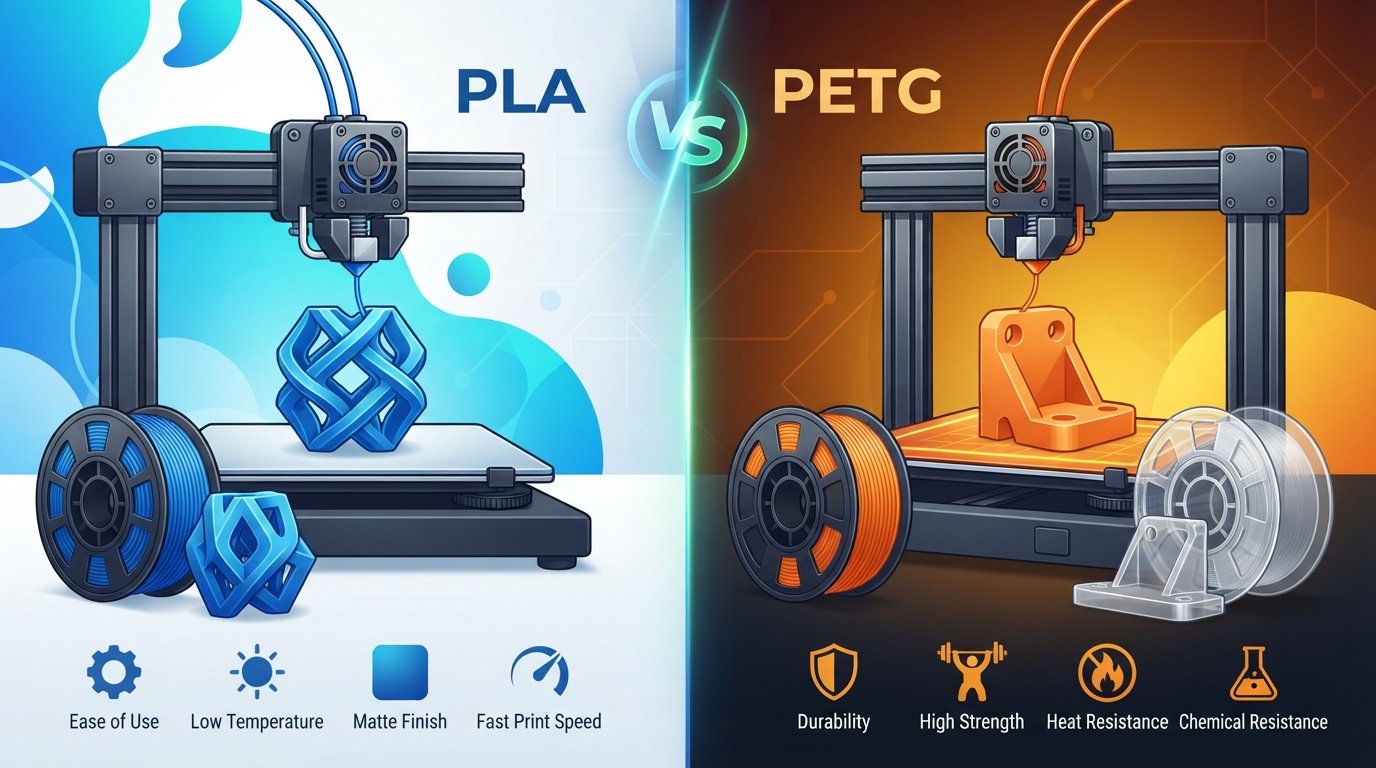
PLA (Polylactic Acid): Often hailed as the beginner-friendly filament, PLA is a biodegradable thermoplastic derived from renewable resources like corn starch or sugarcane. It's known for its ease of printing, excellent aesthetic qualities, and minimal warping, making it a go-to for decorative items, prototypes, and models where visual appeal is a priority. PLA is a fantastic starting point for anyone new to 3D printing, offering a smooth entry into the craft.
PETG (Polyethylene Terephthalate Glycol): PETG combines the best attributes of PLA and ABS, offering a robust, durable, and highly functional material. It's an amorphous thermoplastic that’s known for its strength, chemical resistance, and good heat resistance, without the warping issues typically associated with ABS. PETG is increasingly popular for functional parts, mechanical components, and items that require greater resilience than PLA can provide.
Feature-by-Feature Comparison: PLA vs PETG Filament
To help you weigh your options, let’s break down the key characteristics of PLA and PETG across several critical criteria. This detailed comparison will highlight where each filament truly shines and where its limitations lie, guiding your choice for the perfect 3d prentunarþjónusta outcome.
| Criterion | PLA (Polylactic Acid) | PETG (Polyethylene Terephthalate Glycol) |
|---|---|---|
| Ease of Printing | Generally considered the easiest filament to print. Low printing temperatures, minimal warping, and no heated bed usually required (though recommended). Odourless printing. Very forgiving for beginners. | Moderately easy to print, but can be trickier than PLA. Requires higher printing temperatures and a heated bed is essential to prevent warping and ensure good bed adhesion. Can be stringy, requiring careful retraction settings. |
| Strength & Durability | Good tensile strength, but can be brittle. It's stiff and will snap rather than bend under stress. Not ideal for parts that require significant impact resistance or flexibility. | Excellent strength and durability. Offers good impact resistance and is more flexible than PLA, making it less prone to snapping. Ideal for functional parts that need to withstand stress. |
| Temperature Resistance | Low heat deflection temperature (around 50-60°C). Parts can deform in direct sunlight or hot environments, limiting its use for outdoor or high-temperature applications. | Higher heat deflection temperature (around 70-80°C) compared to PLA. Can withstand moderate temperatures and is suitable for parts that might experience some heat exposure. |
| Adhesion (Layer & Bed) | Excellent layer adhesion, resulting in strong bonds between layers. Good bed adhesion with minimal fuss, especially with common bed adhesives. | Strong layer adhesion, which contributes to the overall part strength. Bed adhesion can be very strong, sometimes too strong, leading to parts sticking firmly to the print bed. Release agents might be necessary. |
| Post-Processing | Relatively easy to sand, paint, and machine. Can be easily glued. Annealing can improve heat resistance and strength slightly, but often introduces warping. | More challenging to sand and machine due to its toughness and flexibility. Painting can be effective, but adhesion might require specific primers. Can be smoothed with specific chemical treatments, but less common than with ABS. |
| Environmental Impact | Biodegradable and derived from renewable resources, making it a more environmentally friendly option compared to most other plastics. Can be composted in industrial facilities. | Recyclable (often categorised as #1 plastic), but not biodegradable. While not as eco-friendly as PLA, its durability means parts have a longer lifespan, potentially reducing waste. |
| Moisture Absorption | Moderate moisture absorption. Can become brittle and difficult to print if left exposed to humidity, leading to inconsistent prints. | Higher moisture absorption than PLA. Must be stored in a dry environment (e.g., dry box) to maintain print quality. Wet PETG can cause bubbling, stringing, and weakened parts. |
| Applications | Prototyping, decorative items, models, toys, educational tools, artistic prints, low-stress enclosures. | Functional prototypes, mechanical parts, enclosures, protective components, outdoor applications, medical and food-safe containers (check specific filament certifications). |
Pros & Cons of PLA Filament
Understanding the distinct advantages and disadvantages of PLA can significantly impact your project's outcome, especially if you're exploring 3d prentun eftir pöntun or looking to purchase filament for your own printer.
PLA Pros:
- User-Friendly: Incredibly easy to print, making it ideal for beginners and those new to desktop 3D printing. It requires lower temperatures and is less prone to warping.
- Aesthetic Quality: Produces visually appealing prints with a smooth finish and excellent detail, making it perfect for models, prototypes, and decorative items.
- Minimal Odour: Printing with PLA produces a barely noticeable, often pleasant, sweet smell, making it suitable for use in home or office environments.
- Biodegradable: Made from renewable resources and is compostable in industrial facilities, offering a more environmentally conscious choice.
- Wide Colour Range: Available in a vast array of colours and finishes, including metallic, silk, glow-in-the-dark, and transparent options, allowing for extensive creative expression.
PLA Cons:
- Low Temperature Resistance: Parts can soften and deform at relatively low temperatures (around 50-60°C), making it unsuitable for applications exposed to heat or direct sunlight.
- Brittleness: While strong, PLA is quite rigid and can be brittle, meaning parts might snap under impact rather than flexing.
- UV Degradation: Prolonged exposure to UV light can cause PLA to degrade and become more brittle over time, limiting its outdoor suitability.
- Limited Chemical Resistance: Not resistant to many chemicals, which can be a drawback for certain industrial or functional applications.
Pros & Cons of PETG Filament
For those seeking robust and reliable prints, particularly in areas like 3d prentun reykjavík where functional components might be in demand, PETG offers a compelling set of benefits and some considerations.
PETG Pros:
- Durability and Strength: Offers significantly better strength, impact resistance, and flexibility than PLA, making it excellent for functional parts, tools, and mechanical components.
- Temperature Resistance: Withstands higher temperatures than PLA, making it suitable for parts that may experience some heat exposure.
- Water and Chemical Resistance: Provides good resistance to water, many chemicals, and UV light, enhancing its suitability for outdoor or harsher environments.
- Transparency: Naturally transparent, PETG can produce clear or translucent prints, opening up possibilities for unique aesthetic and functional designs.
- Recyclable: PETG is a widely recyclable plastic, contributing to a more sustainable lifecycle for your prints, even if it's not biodegradable.
PETG Cons:
- More Challenging to Print: Requires higher extrusion temperatures and a heated bed. It is also prone to stringing and oozing, which demands careful printer calibration and retraction settings.
- Strong Bed Adhesion: Can sometimes adhere too well to the print bed, potentially causing damage to the bed surface if not removed carefully.
- Hygroscopic: Absorbs moisture from the air more readily than PLA, requiring diligent storage in dry conditions to maintain print quality and material properties.
- Less Detail/Glossy Finish: While strong, PETG prints can sometimes have a slightly less refined surface finish compared to PLA, often appearing a bit more glossy and less crisp in fine details.
Who Should Choose Each Filament?
The choice between PLA and PETG ultimately hinges on your project's specific requirements, your experience level, and the desired final properties of your prenta 3d hlut.
Choose PLA if:
- You're a Beginner: Its ease of use and forgiving nature make it the perfect filament to start your 3D printing journey. You'll spend less time troubleshooting and more time creating.
- Your Project is Aesthetic or for Prototyping: If you're designing decorative items, scale models, low-stress prototypes, or anything where visual appeal and fine detail are paramount, PLA is your go-to. Think detailed figurines, architectural models, or artistic pieces.
- Environmental Friendliness is a Priority: Its biodegradable nature makes it a more eco-conscious choice for single-use items or projects where long-term durability isn't the primary concern.
- You Need Speed and Simplicity: For quick iterations or projects that don't require high strength or temperature resistance, PLA offers a fast and straightforward printing experience.
- You're on a Budget: PLA is generally more affordable than PETG, making it a cost-effective choice for many applications.
Choose PETG if:
- Your Project Requires Durability and Strength: For functional parts that need to withstand impact, bending, or general wear and tear, PETG excels. This includes mechanical components, protective housings, tool handles, or drone parts.
- Temperature Resistance is Important: If your print will be exposed to moderate heat, such as components inside an engine bay (not direct heat), or outdoor conditions, PETG's higher temperature resistance makes it a better option.
- You Need Chemical or Water Resistance: For parts that will come into contact with water, certain chemicals, or cleaning agents, PETG's resistance will ensure longevity. This is crucial for things like medical devices (if certified), food containers (if certified), or parts used in harsh environments.
- You're an Experienced Maker: If you're comfortable with adjusting printer settings to mitigate stringing and optimize adhesion, you'll be able to harness PETG's superior mechanical properties effectively.
- You're Looking for 3d prentunarþjónusta for Functional Prototypes: Businesses seeking robust, functional prototypes for testing or end-use parts will find PETG an invaluable material. If you're in 3d printing ísland or wider Europe looking to test robust designs, consider PETG.
Verdict: Your 3D Printing Partner's Recommendation
Ultimately, there's no single "best" filament; it entirely depends on the demands of your specific project. For those just starting their journey into 3D printing, or for projects prioritising aesthetics, intricate details, and ease of printing, PLA is your champion. It's forgiving, versatile, and delivers beautiful results right off the bat.
However, when your project calls for strength, durability, moderate heat resistance, and resilience against wear and tear, PETG steps up as the clear winner. It's the go-to for functional parts, outdoor applications, and anything that needs to last and perform under stress. While it demands a bit more experience and careful calibration from your printer, the superior mechanical properties are often well worth the effort.
At PrintIn3D.ie, we're here to be your trusted 3d printing ísland partner, whether you're looking for filaments or comprehensive 3d prentun eftir pöntun. We offer both PLA and PETG filaments from top brands like Bambu Lab and SUNLU, ensuring you have access to high-quality materials for every project. If you're in 3d prentun reykjavík or anywhere else and need expert advice or want to outsource your printing to avoid the filament decision altogether, our award-winning service is ready to assist.
Don't want to worry about choosing the right filament, optimising printer settings, or even owning a 3D printer? With our custom 3D printing services, you simply upload your design, and we take care of the rest. We ensure your 3d hlut is printed with the ideal material and settings, delivered right to your door, backed by our 30-Day Risk-Free Return policy and friendly WhatsApp support.
Ready to bring your 3D dreams to life? Explore our range of 3D printer filaments or get an instant quote for our custom 3D printing service online today!