PLA vs PETG: Choosing Your Ideal Plastic Filament for 3D Printing in the UK
PLA vs. PETG: Choosing Your Ideal Plastic Filament for 3D Printing in the UK
Embarking on a 3D printing project in the UK, whether for hobby or professional use, always starts with a crucial decision: selecting the right material. For many, this often boils down to two popular contenders in the FDM world – PLA and PETG. Both are widely used as plastic filament 3d printer UK users rely on, offering unique properties that make them suitable for different applications. But which one is best for your specific needs? Here at PrintIn3D, your award-winning 3D Printing Partner, we’re here to help you navigate this choice with ease and expertise.
Understanding the distinctions between PLA and PETG is essential for anyone looking to create high-quality 3d printed parts UK-wide, whether you're crafting intricate aesthetic models or robust, functional components. This comparison will delve into their characteristics, helping you make an informed decision and print your 3D dreams into reality.
Quick Overview: PLA and PETG
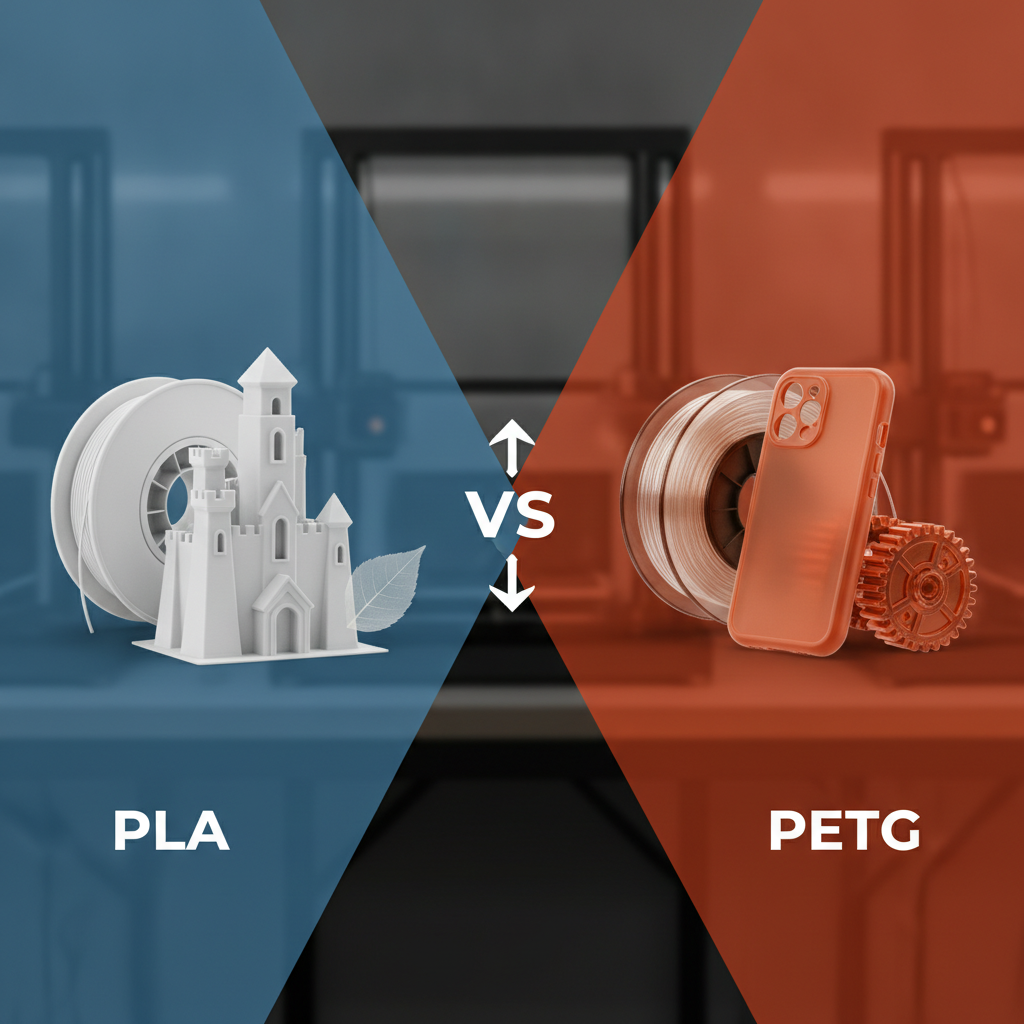
PLA (Polylactic Acid): PLA is often hailed as the beginner-friendly champion of 3D printing. Derived from renewable resources like corn starch or sugarcane, it's biodegradable and emits a sweet, subtle odour during printing, making it pleasant to work with in home or office environments. Its low warping tendency and forgiving nature mean it's incredibly easy to achieve successful prints, making it the go-to choice for those just starting out or focusing on visually appealing models, prototypes, and decorative items. If you're looking for a hassle-free start to your 3D printing journey, PLA is an excellent choice for a plastic filament for your 3D printer.
PETG (Polyethylene Terephthalate Glycol): Think of PETG as a bridge between the ease of PLA and the strength of more advanced engineering plastics like ABS. It shares the same chemical composition as the plastic used in water bottles (PET) but has been modified with glycol (the 'G' in PETG) to prevent crystallisation, making it clearer, less brittle, and easier to 3D print. PETG offers excellent impact resistance, durability, and a higher temperature resistance than PLA, making it ideal for functional parts that need to withstand more stress, outdoor exposure, or higher temperatures. For those requiring tougher custom 3d printing UK solutions, PETG often comes out on top.
Feature-by-Feature Comparison
To provide a clear picture, let's break down the key characteristics of PLA and PETG in a detailed comparison table:
| Criterion | PLA (Polylactic Acid) | PETG (Polyethylene Terephthalate Glycol) |
|---|---|---|
| Ease of Printing | Generally considered the easiest filament to print with. It requires lower printing temperatures, has minimal warping, and adheres well to various build surfaces without needing an enclosure. This makes it perfect for beginners and for quickly iterating prototypes. | More challenging than PLA but easier than ABS. Requires higher extrusion and bed temperatures, can be prone to stringing and oozing, and benefits from careful calibration. However, once dialled in, it offers reliable performance. |
| Strength & Durability | Good tensile strength but is quite brittle. It can snap under sudden impact or bending. Not ideal for functional parts that will experience stress, frequent handling, or require custom replacement parts 3d printing for high-wear items. | Excellent strength, very good impact resistance, and is much less brittle than PLA. It has a good balance of hardness and flexibility, making it highly durable and suitable for functional components and 3d printing service GB custom parts UK needs that demand resilience. |
| Flexibility | Rigid and stiff. While some specialised PLAs offer slight flexibility, standard PLA has virtually no give before breaking. This can be a limitation for parts requiring any degree of bending or springiness. | Offers a good degree of flexibility and elasticity compared to PLA, allowing it to absorb impacts without breaking. This characteristic is valuable for snap-fit parts, hinges, or components that need to flex under load. |
| Heat Resistance | Low heat deflection temperature (HDT), typically around 50-60°C. Parts can start to soften, deform, or melt in hot environments, such as inside a car on a sunny day or near heat sources. | Significantly higher heat resistance than PLA, with an HDT typically between 70-80°C. This makes it a much better choice for components that might be exposed to moderate heat, broadening its range of practical applications. |
| UV & Chemical Resistance | Poor UV resistance, causing it to become brittle and discolour over time when exposed to sunlight. Limited chemical resistance, making it susceptible to degradation from certain solvents and chemicals. | Good UV resistance, making it suitable for outdoor applications without significant degradation. It also boasts good chemical resistance against water, many acids, alkalis, and solvents, enhancing its utility for functional parts. |
| Post-Processing | Easy to sand, paint, and bond with adhesives. Can be susceptible to melting with excessive friction during sanding. Annealing can slightly increase heat resistance but might cause warping. | More challenging to sand due to its ductility and stickiness; it tends to gum up sandpaper. Can be painted, but its strong layer adhesion can make supports harder to remove cleanly without marring the surface. |
| Environmental Impact | Biodegradable and derived from renewable resources, making it a more environmentally friendly option, though industrial composting facilities are often required for proper degradation. | Recyclable (often categorised as Type 1 plastic, like PET bottles) but not biodegradable. Its production process is less eco-friendly than PLA, but its durability can lead to longer-lasting 3d printed parts UK residents can depend on, reducing replacement frequency. |
| Applications | Prototypes, display models, educational projects, miniatures, cosplay props, low-stress jigs, aesthetic parts, and quick iterations. | Functional prototypes, mechanical parts, enclosures, outdoor components, automotive parts, food-safe containers (check specific filament), RC parts, and robust tools. |
Pros & Cons
PLA (Polylactic Acid)
- Pros:
- Easy to Print: Requires lower temperatures, less prone to warping, and generally more forgiving, making it ideal for beginners.
- Excellent Detail: Capable of producing very fine details and smooth finishes, perfect for aesthetic models.
- Wide Colour Range: Available in an extensive array of colours, finishes, and special effects (silks, glitter, glow-in-the-dark).
- Low Odour: Emits a slight, often pleasant, sweet smell during printing, which is less intrusive than other plastics.
- Biodegradable: Derived from renewable resources and is compostable under industrial conditions, offering a more eco-conscious choice.
- Less Stringing: Generally produces fewer strings and blobs compared to PETG, resulting in cleaner prints.
- Cons:
- Brittle: Lacks flexibility and can snap easily under impact, limiting its use for functional parts.
- Low Heat Resistance: Softens and deforms at relatively low temperatures (around 50-60°C), making it unsuitable for high-temperature environments.
- Poor UV Resistance: Degrades and becomes brittle when exposed to sunlight over time, making it unsuitable for long-term outdoor use.
- Limited Chemical Resistance: Susceptible to degradation from various solvents and chemicals.
- Not Food Safe: While made from food-safe plastics, the printing process can introduce bacteria in layer lines, making it generally unsuitable for food contact.
PETG (Polyethylene Terephthalate Glycol)
- Pros:
- High Strength & Durability: Offers excellent impact resistance, making parts tough and long-lasting, ideal for custom replacement parts 3d printing.
- Good Flexibility: More flexible than PLA, allowing it to bend slightly under stress rather than immediately breaking, useful for snap-fit mechanisms.
- Higher Heat Resistance: Withstands higher temperatures (up to 80°C), expanding its application to more demanding environments.
- Good UV & Chemical Resistance: Suitable for outdoor use and exposure to various chemicals, making it versatile for industrial or practical applications.
- Excellent Layer Adhesion: Layers bond very strongly, resulting in robust parts that are less likely to delaminate.
- Recyclable: Can be recycled with other PET plastics, contributing to a circular economy.
- Cons:
- Prone to Stringing/Oozing: Its sticky nature can lead to more stringing and blobs, requiring careful retraction settings and calibration.
- More Challenging to Print: Requires higher temperatures and is less forgiving than PLA, demanding more experience from the user.
- Hygroscopic: Absorbs moisture from the air, which can degrade print quality if not properly stored and dried before use.
- Difficult Post-Processing: Sanding can be tricky due to its sticky nature, and supports can be harder to remove cleanly.
- Less Aesthetic Finish: Can sometimes result in a less polished or shiny finish compared to PLA, especially with stringing issues.
Who Should Choose Each?
Choose PLA if you are:
- A Beginner to 3D Printing: Its ease of use and forgiving nature make it the perfect starting point to learn the ropes of your plastic filament 3d printer UK.
- Creating Aesthetic Models or Prototypes: For decorative items, display pieces, figurines, or early-stage concept models where visual appeal and quick iteration are key.
- Working in a Home or Office Environment: The low odour and easy printing reduce environmental impact and make it pleasant for indoor use.
- Looking for Quick and Easy Prints: Ideal for projects where speed and simplicity are prioritised over extreme durability or heat resistance.
- On a Budget: PLA tends to be slightly more affordable per spool than PETG, making it cost-effective for larger or multiple prints.
- Considering Biodegradability: If environmental impact is a significant concern, PLA offers a more eco-friendly option for disposable or short-term parts.
Choose PETG if you are:
- Creating Functional Parts: For components that need to be strong, durable, and withstand mechanical stress, like gears, brackets, or tool handles.
- Making Custom Replacement Parts 3D Printing for Appliances or Vehicles: When you need a part that can endure impact, temperature fluctuations, or general wear and tear, PETG is a robust choice.
- Designing Outdoor Components: Its UV and weather resistance make it suitable for garden accessories, outdoor enclosures, or drone parts exposed to the elements.
- Requiring Heat or Chemical Resistance: For parts that will be near moderate heat sources or exposed to certain chemicals, where PLA would fail.
- An Experienced User Seeking Durability: If you're comfortable with adjusting print settings and troubleshooting, PETG offers superior mechanical properties for demanding projects.
- Looking for a 3D Printing Company Near Me for Robust Prototypes: If you're a business needing durable prototypes or small-batch production for a 3d printing service GB custom parts UK needs, PETG is often preferred.
Verdict: Your 3D Printing Partner's Recommendation
The choice between PLA and PETG ultimately depends on the specific requirements of your project. There isn't a single "best" plastic filament 3d printer UK material; rather, there's the right material for the job.
- For beginners, hobbyists, or projects focused on aesthetics and quick prototyping, PLA is the clear winner. It's incredibly user-friendly, produces beautiful results, and is perfect for learning the nuances of 3D printing without frustration.
- For those needing robust, functional, and durable parts that can withstand more rigorous conditions, PETG is your go-to material. While it requires a bit more skill and calibration to print successfully, its superior strength, flexibility, and resistance to heat and UV light make it invaluable for practical applications, including same day 3d printing UK for urgent prototypes that need to perform.
At PrintIn3D, we understand that sometimes you need the properties of PETG but might not have the time, equipment, or expertise to print it yourself. Perhaps you need a professional 3d modelling service UK to turn your concept into a print-ready file, or even a 3d scan to cad service to replicate an existing part. We offer expert 3d print files design service and custom 3D printing using a wide range of materials, including PLA and PETG, ensuring you get the perfect 3d printed parts UK businesses and individuals demand. As a 'Rising Star' at the Irish Print Awards 2026, we pride ourselves on delivering hassle-free, high-quality solutions with fast turnaround times and friendly support.
Whether you choose to print yourself or leverage our expertise, understanding these filaments is your first step towards successful 3D printing. And remember, if you're looking to buy 3d printer filament GB for your own machine, we offer fast delivery of quality brands like Bambu Lab and SUNLU.
Print Your 3D Dreams with PrintIn3D
Ready to bring your ideas to life with the perfect filament? Explore our custom 3D printing services and filament selection today, and let us be your trusted 3D Printing Partner.