PLA vs. PETG Filament: Choosing for Professional 3D Printing in Germany
PLA vs. PETG Filament: Choosing for Professional 3D Printing in Germany
When it comes to bringing your 3D designs to life, choosing the right material is paramount, especially for professional projects in Germany where precision, durability, and specific application requirements are critical. Among the most popular FDM 3D printing filaments, PLA (Polylactic Acid) and PETG (Polyethylene Terephthalate Glycol) stand out as versatile options. Both offer unique strengths, making the decision between them a key factor in the success of your project.
As your dedicated 3D printing partner, PrintIn3D is here to help you navigate these choices. Whether you're a startup looking for custom prototype manufacturing, an engineer needing robust functional parts, or a designer bringing innovative concepts to life, understanding the nuances of PLA vs. PETG filament is essential. Let's delve into their characteristics, helping you decide which material is the best filament for 3D printing your next project.
Quick Overview: PLA and PETG Filaments
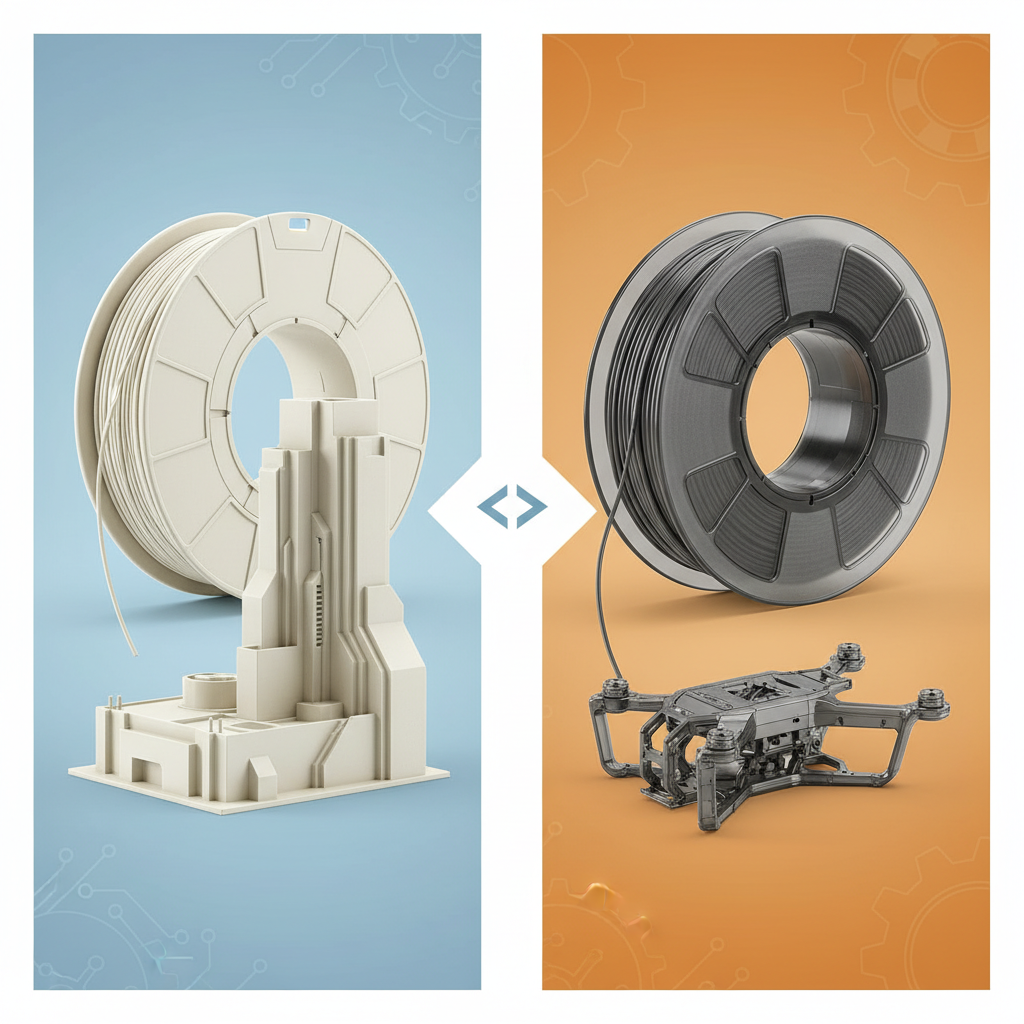
PLA (Polylactic Acid) is a biodegradable thermoplastic derived from renewable resources like corn starch or sugarcane. It's renowned for its ease of use, making it a favorite for beginners and a go-to for rapid prototyping and decorative models. PLA prints with excellent detail and minimal warping, though its mechanical properties are generally considered less robust for high-stress or outdoor applications.
PETG (Polyethylene Terephthalate Glycol) is a thermoplastic polyester known for blending the best qualities of ABS (Acrylonitrile Butadiene Styrene) and PLA. It offers impressive strength, durability, and a good balance of flexibility and stiffness, along with higher temperature resistance than PLA. PETG is increasingly popular for functional parts and prototypes that require more resilience than PLA can provide, making it a strong contender for industrial 3D printing services.
Feature-by-Feature Comparison: PLA vs. PETG Filament
To help you make an informed decision for your professional projects in Germany, let's compare PLA and PETG across several critical criteria:
| Criterion | PLA (Polylactic Acid) | PETG (Polyethylene Terephthalate Glycol) |
|---|---|---|
| Ease of Printing | Generally easier to print, requiring lower temperatures and exhibiting less warping. Good bed adhesion and minimal odor. Ideal for intricate details and beginners. | Slightly more challenging than PLA, requiring higher temperatures and careful retraction settings to avoid stringing. Good bed adhesion, but prone to oozing without proper settings. |
| Mechanical Strength & Durability | Good tensile strength, but more brittle. Less impact resistance and prone to snapping under stress. Suitable for static parts and models where strength isn't critical. | Excellent tensile strength, high impact resistance, and more flexible than PLA, making it much more durable. Resists cracking and shattering, ideal for functional components. |
| Temperature Resistance | Low heat deflection temperature (around 50-60°C). Parts can soften or deform in warm environments or direct sunlight. Not suitable for applications exposed to heat. | Higher heat deflection temperature (around 70-80°C), offering better performance in warmer conditions. Can withstand more thermal stress than PLA without deforming. |
| Flexibility & Toughness | Rigid and brittle. Minimal flexibility, making it susceptible to breaking rather than bending. | Considerably more flexible and tough. It can bend significantly before breaking, absorbing impacts better. This makes it excellent for parts requiring some give. If you're looking to buy flexible TPU filament Ireland, PETG offers a good mid-ground between rigidity and true flexibility. |
| Post-Processing | Easy to sand, paint, and machine. Bonds well with various adhesives. Can be annealed for increased strength, but this also increases brittleness. | More challenging to sand due to its flexibility and stickiness. Can be painted, but surface preparation is crucial. Chemical smoothing with solvents like ethyl acetate is possible. |
| Moisture Absorption | Moderate moisture absorption. Can lead to degraded print quality if not stored properly. | Relatively low moisture absorption compared to some other hygroscopic filaments, but still benefits from dry storage to maintain optimal print quality. |
| Chemical Resistance | Limited resistance to many chemicals, soluble in solvents like chloroform. | Good resistance to water, acids, alkalis, and some solvents, making it suitable for functional parts that might come into contact with various substances. |
| Environmental Impact | Biodegradable and derived from renewable resources, making it a more environmentally friendly choice among thermoplastics. | Recyclable, but not biodegradable. Derived from petroleum, similar to other plastics. Its recyclability contributes to sustainability efforts, aligning with Germany's focus on a circular economy. |
Pros & Cons: PLA Filament
Pros of PLA:
- User-Friendly: Incredibly easy to print with, offering consistent results with minimal fuss. This makes it ideal for rapid iteration and quickly producing custom prototype manufacturing Ireland.
- Excellent Detail: Capable of producing highly detailed models with sharp corners and smooth surfaces.
- Low Warping: Less prone to shrinking and lifting from the print bed, leading to higher success rates for complex geometries.
- Aesthetic Appeal: Available in a vast array of colors and finishes, including matte, glossy, and silk. PrintIn3D offers options like SUNLU PLA filament for your projects.
- Biodegradable: A more sustainable choice, breaking down under industrial composting conditions.
- No Odor: Emits a sweet, non-toxic smell during printing, making it suitable for indoor environments.
Cons of PLA:
- Low Heat Resistance: Easily deforms under moderate heat, limiting its use for parts in warm environments.
- Brittle: Lacks toughness and impact resistance, making it unsuitable for functional parts that will endure stress or impacts.
- UV Degradation: Can become brittle and discolored with prolonged exposure to UV light, limiting outdoor applications.
- Moderate Durability: Not the best choice for parts requiring long-term structural integrity in challenging conditions.
Pros & Cons: PETG Filament
Pros of PETG:
- High Strength & Durability: Offers impressive mechanical strength, impact resistance, and toughness, making it excellent for functional custom 3d printed parts Ireland.
- Temperature Resistance: Higher heat tolerance than PLA, suitable for parts exposed to warmer conditions without deforming.
- Flexibility: Possesses a degree of flexibility that allows it to bend rather than break, enhancing its resilience.
- Good Chemical Resistance: Resists many chemicals, oils, and solvents, broadening its application possibilities.
- Food Safe: Many PETG filaments are considered food-safe, making them suitable for containers or kitchen items (always verify with specific manufacturer data).
- Recyclable: Can be recycled, contributing to a more circular economy, which is a significant factor for industrial 3D printing services in Germany.
Cons of PETG:
- Printing Challenges: Can be prone to stringing and oozing due to its stickiness, requiring careful calibration of retraction settings.
- Surface Finish: Can sometimes result in a less pristine surface finish compared to PLA, with more visible layer lines or imperfections if not optimized.
- Hygroscopic: While less so than nylon, PETG can absorb moisture, which can degrade print quality if the filament is not properly stored.
- Adhesion Issues: Can sometimes adhere too strongly to print beds, potentially damaging the bed surface if not removed carefully.
Who Should Choose Each Filament?
Understanding the strengths and weaknesses of PLA vs. PETG helps tailor your material choice to your project's specific needs:
Choose PLA if you need:
- Rapid Prototyping: For quick design iterations and visual models where dimensional accuracy and ease of printing are priorities. If you're looking for affordable 3d printing near me for initial concepts, PLA is an excellent choice.
- Aesthetic Models: Excellent for figurines, decorative items, architectural models, or educational tools where visual appeal and intricate details matter more than mechanical strength.
- Beginner-Friendly Projects: Its forgiving nature makes it perfect for those new to 3D printing or for straightforward tasks.
- Eco-Conscious Projects: If biodegradability is a key concern, especially for short-term use items.
- Low-Stress Parts: Ideal for enclosures, non-load-bearing components, or parts that won't experience significant temperature fluctuations or impact.
Choose PETG if you need:
- Functional Prototypes: For creating prototypes that need to withstand real-world testing, moderate stress, or some flexibility. This is crucial for custom prototype manufacturing in Ireland or Germany.
- End-Use Parts: Excellent for components that require durability, impact resistance, and moderate heat resistance, such as tool handles, machine parts, protective covers, or drone components.
- Outdoor Applications: Its UV and weather resistance make it a better choice than PLA for items used outdoors (though other materials might be even better for extreme conditions).
- Mechanical Components: For parts requiring a balance of strength and flexibility, such as snap-fit connectors, living hinges (for light-duty), or protective casings.
- Industrial 3D Printing Services: When your German business needs robust, reliable parts that bridge the gap between simple prototypes and injection-molded components. PrintIn3D offers custom 3D printing services in Berlin and across the EU, utilizing materials like PETG for demanding projects.
- Containers & Liquid Contact: Due to its chemical resistance and potential food-safe properties, it's suitable for certain containers.
Verdict: Making Your Material Choice for Professional 3D Printing in Germany
Ultimately, the "best filament for 3D printing" depends entirely on your project's specific requirements. For professional projects in Germany, a pragmatic approach to material selection is key. If your project prioritizes ease of printing, fine detail, and cost-effectiveness for visual prototypes or low-stress parts, PLA is an excellent choice. It allows for rapid iteration and a quick turnaround, especially beneficial for initial design validation.
However, if your parts demand higher mechanical strength, impact resistance, flexibility, and a greater tolerance for heat and chemicals, then PETG is the clear winner. It's the go-to for functional prototypes, durable end-use parts, and components that will face more demanding environments, aligning perfectly with the robust needs of many industrial 3D printing services. While slightly more challenging to print, its superior material properties often justify the extra effort for critical applications.
Don't have a 3D printer or the expertise to handle complex filament settings? That's where PrintIn3D steps in as your reliable partner. We offer hassle-free custom 3d printed parts Ireland and across the EU, including Germany. Whether you need an industrial-grade PETG component or a detailed PLA prototype, our expert team can guide you through material selection and 3D design services to ensure your project's success. We understand the nuances of each filament and have state-of-the-art equipment to deliver high-quality prints, quickly and efficiently. Plus, for those who prefer to print themselves, we offer various filaments and even provide same-day filament delivery Ireland for quick restocking.
Print Your 3D Dreams with PrintIn3D
Ready to turn your innovative concepts into tangible realities? Upload your 3D model today and let PrintIn3D provide you with the custom 3D printed parts you need, with the right material, right here in Ireland and delivered across Germany.