PLA vs PETG Filament: Choosing for Your Irish 3D Print
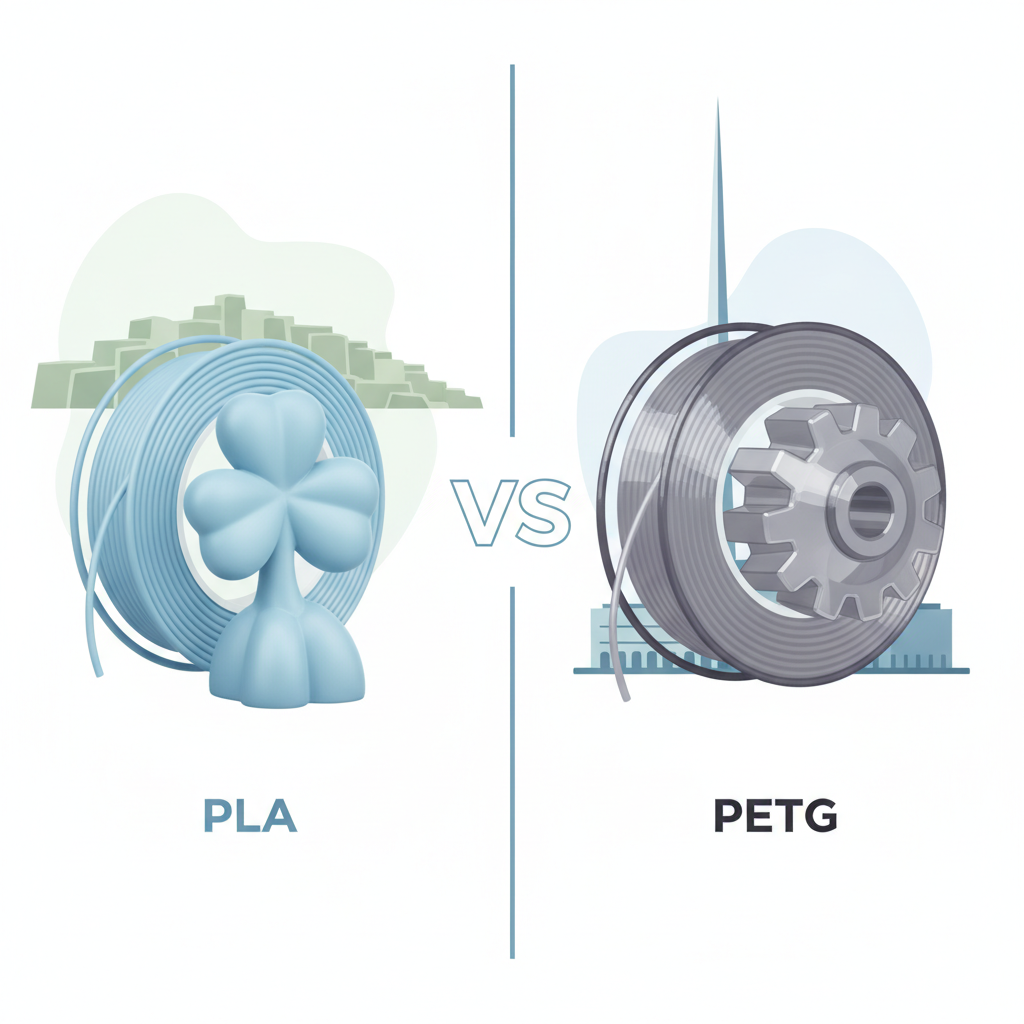
PLA Filament vs PETG Filament: Which is Best for Your Irish 3D Print Project?
Embarking on a 3D printing project in Ireland, whether for a personal hobby, a business prototype, or functional parts, often brings up a crucial question: which filament should I use? Among the most popular choices for Fused Deposition Modeling (FDM) 3D printers are PLA (Polylactic Acid) and PETG (Polyethylene Terephthalate Glycol). Both offer unique advantages and disadvantages, and understanding these differences is key to ensuring your project's success. At PrintIn3D.ie, your trusted 3D printing partner, we're here to guide you through this decision, making your journey from concept to creation as hassle-free as possible.
Choosing the right material isn't just about aesthetics; it impacts printability, durability, specific application performance, and even how much does 3d printing cost Ireland for your particular design. By the end of this comprehensive comparison, you'll have a clear understanding of whether PLA or PETG is the superior choice for your next Irish 3D print.
Quick Overview
PLA Filament: Polylactic Acid, or PLA, is a biodegradable thermoplastic derived from renewable resources like corn starch or sugarcane. It's renowned for its ease of use, making it a favourite among beginners and hobbyists. PLA prints at relatively low temperatures, exhibits minimal warping, and generally produces visually appealing models with smooth finishes. It's often considered the entry point into the world of 3D printing.
PETG Filament: Polyethylene Terephthalate Glycol, commonly known as PETG, is a thermoplastic polyester. It's essentially a modified version of PET (the plastic used in water bottles) with glycol added to prevent crystallisation, making it more flexible and durable. PETG offers a fantastic balance between the ease of use of PLA and the strength and durability of ABS, making it a versatile choice for a wide range of functional applications.
Feature-by-Feature Comparison
Let's dive into the specifics, comparing PLA and PETG across several critical criteria that matter for your 3D printing projects.
| Criterion | PLA Filament | PETG Filament |
|---|---|---|
| Ease of Printing | Generally considered the easiest filament to print with. Requires lower print temperatures, has minimal warping, and adheres well to print beds without much fuss. Perfect for those asking which filament is best for beginners. | Moderately easy to print with. Requires higher temperatures than PLA and can be stringy, but still manageable for intermediate users. Less prone to warping than ABS. |
| Strength & Durability | Good for decorative and non-functional parts. Can be brittle and shatter under stress. Offers decent tensile strength but lacks flexibility. | Significantly stronger and more durable than PLA. Offers good impact resistance, flexibility, and is less brittle, making it suitable for functional parts. |
| Temperature Resistance | Low temperature resistance. Objects can soften and deform at temperatures as low as 50-60°C. Not suitable for parts exposed to heat. | Good temperature resistance, typically with a glass transition temperature around 80-85°C. Maintains structural integrity in warmer environments. |
| Flexibility | Very rigid and stiff. Not suitable for parts that require any degree of flex or give. | More flexible and less brittle than PLA. Can withstand some bending and compression without breaking, which is a major advantage for certain applications. |
| Outdoor/Chemical Resistance | Poor resistance to UV light and moisture. Degrades over time when exposed to the elements, making it unsuitable for outdoor use. Limited chemical resistance. | Good resistance to UV light, water, and various chemicals. A better choice for outdoor applications and parts that might come into contact with certain solvents. |
| Post-Processing | Relatively easy to sand, paint, and finish. Can be glued easily. Not ideal for chemical smoothing (e.g., with acetone). | Can be more challenging to sand due to its ductility. Adheres well to itself, making solvent welding difficult. Can be painted, but surface preparation is crucial. |
| Food Safety (General) | Often marketed as food-safe due to its plant-based origins, but the printing process itself (micro-gaps, dyes, nozzles) can compromise this. Generally not recommended for direct food contact. | Similar to PLA, while the raw material is often food-safe, 3D printed PETG objects generally aren't considered food-safe due to printing conditions and porous surfaces. |
| Applications | Prototypes, display models, toys, artistic pieces, low-stress jigs and fixtures. Ideal for learning the ropes of 3D printing. | Functional prototypes, mechanical parts, enclosures, protective components, outdoor parts, bottle holders, jigs, and fixtures requiring more durability. |
PLA Filament: Pros & Cons
Let's break down the advantages and disadvantages of using PLA filament for your Irish 3D printing projects.
Pros of PLA Filament:
- User-Friendly: Hands down, PLA is the easiest filament to work with. It prints at lower temperatures (typically 180-220°C for the hotend and 0-60°C for the bed), which reduces issues like warping and lifting from the print bed. This makes it the go-to answer for "which filament is best for beginners".
- Low Odour: Unlike some other filaments, PLA emits a very mild, often sweet, odour during printing, making it suitable for use in homes or offices without strong ventilation.
- Good Aesthetics: PLA produces prints with a smooth, often shiny finish and excellent detail resolution. It's great for intricate models and decorative items.
- Wide Colour Range: You'll find PLA filament in an enormous variety of colours and finishes, including matte, silk, glitter, and glow-in-the-dark, giving you vast creative freedom. If you're looking to buy Bambu Lab filament Ireland or buy Sunlu PLA filament Ireland, you'll have plenty of options.
- Minimal Warping: Its low thermal expansion coefficient means less shrinkage during cooling, resulting in fewer warping issues compared to other materials.
- Biodegradable: Derived from renewable resources, PLA is considered more environmentally friendly, breaking down under commercial composting conditions.
Cons of PLA Filament:
- Lower Strength & Brittleness: While good for many applications, PLA is more brittle than other plastics. Functional parts under stress are prone to cracking or breaking.
- Poor Heat Resistance: It has a low glass transition temperature, meaning objects can deform or melt in hot environments, like a car on a sunny day or near a heat source.
- Poor UV & Moisture Resistance: Not ideal for outdoor use or applications where it will be exposed to sunlight and humidity, as it will degrade over time.
- Limited Flexibility: Prints are stiff and rigid, making it unsuitable for parts that require any give or bending.
PETG Filament: Pros & Cons
Now, let's explore the benefits and drawbacks of PETG filament, a material that offers a compelling blend of properties.
Pros of PETG Filament:
- Excellent Strength & Durability: PETG is much stronger and more impact-resistant than PLA, making it ideal for functional parts that need to withstand abuse.
- Good Flexibility: It offers a degree of flexibility, allowing parts to bend slightly without breaking, which is crucial for snap-fit connectors, clips, or protective gear.
- Higher Temperature Resistance: PETG can withstand higher temperatures than PLA, making it suitable for parts that might encounter moderate heat.
- UV & Water Resistance: Its resistance to UV light and moisture makes it a viable option for outdoor applications or parts that will be exposed to the elements.
- Adhesion & Layer Bonding: PETG boasts excellent layer adhesion, resulting in very strong, durable prints. This strong bonding also contributes to its water-resistant properties.
- Translucency: Many PETG filaments are naturally transparent or translucent, allowing for unique visual effects and applications where light transmission is desired.
- Chemical Resistance: It resists a variety of chemicals, adding to its versatility for industrial or everyday use.
Cons of PETG Filament:
- More Challenging to Print: While not as difficult as ABS, PETG requires higher print temperatures (typically 220-250°C for the hotend and 60-80°C for the bed) and can be prone to stringing and oozing. Calibrating retraction settings is crucial.
- Surface Adhesion: PETG can adhere *too* well to some print surfaces, potentially damaging the bed if not properly prepared. Using a release agent or specific build surfaces is often recommended.
- Hygroscopic: PETG absorbs moisture from the air more readily than PLA, which can degrade print quality. Proper storage in a dry environment is essential, and filament drying may be required.
- Post-Processing: Its tougher, more flexible nature can make sanding and other post-processing steps more difficult than with PLA.
Who Should Choose Each Filament?
Understanding the strengths and weaknesses of each filament helps in deciding which one is right for your specific project.
Choose PLA Filament if:
- You are a Beginner: If you're new to 3D printing and want a smooth, forgiving experience, PLA is your best friend. It helps you master the basics without constant frustration. You can easily buy PLA filament Ireland to get started.
- You're Making Decorative Items or Art: For models, figurines, prototypes for visual inspection, or anything that prioritizes aesthetics and intricate details over mechanical strength, PLA shines. Think of desktop ornaments, cosplay props, or non-functional parts.
- Your Prints Won't Experience Stress or Heat: If the object won't be exposed to high temperatures, direct sunlight, or significant physical force, PLA is a cost-effective and easy choice.
- You Prioritize Print Speed and Ease: When you need quick, reliable prints with minimal hassle, PLA's straightforward printing characteristics make it ideal.
- You need a bulk filament supplier Ireland for prototyping: For iterating design concepts quickly and affordably, PLA is excellent.
Choose PETG Filament if:
- You Need Strong, Functional Parts: For mechanical components, enclosures, jigs, fixtures, tool handles, or anything that requires durability and impact resistance, PETG is a superior choice. This is where the strength of your 3D design really comes to life.
- Your Prints Will Be Used Outdoors or in Warm Environments: PETG's resistance to UV light, moisture, and higher temperatures makes it suitable for outdoor garden accessories, car parts (non-critical), or components exposed to moderate heat.
- You Require Some Flexibility: If your design benefits from a material that can bend or flex slightly without breaking, like phone cases or protective covers, PETG is the way to go.
- You're Looking for a Balance: If you want the best of both worlds – prints that are relatively easy but offer much greater strength and durability than PLA – PETG hits the sweet spot. When you're ready, it's easy to buy PETG filament Ireland from PrintIn3D.ie.
- You're creating a CAD file to 3D print service project: When working with engineers or designers to convert a CAD file into a robust physical part, PETG is often recommended for its reliability and mechanical properties.
Verdict: Making the Right Choice for Your Project
Ultimately, the "best" filament depends entirely on your specific project needs. There isn't a single winner, but rather a choice that aligns with your priorities for aesthetics, strength, environmental factors, and ease of printing.
For most casual users, hobbyists, or those primarily focused on visual models and low-stress prototypes, PLA remains the king. Its ease of use, wide range of colours, and excellent surface finish make it incredibly forgiving and satisfying for beginners. If you're exploring 3D printing for the first time or creating decorative pieces for your home, PLA is an excellent starting point.
However, if your project demands more – if it needs to withstand impact, operate in warmer conditions, be used outdoors, or endure general wear and tear – then PETG steps up as the clear victor. It offers a significant upgrade in durability and functionality while still being relatively accessible to print for intermediate users. For functional prototypes, strong enclosures, or parts that need to last, PETG is the intelligent choice.
At PrintIn3D.ie, we understand that sometimes the choice isn't so clear, or perhaps you just want your idea brought to life without worrying about filament types or printer settings. Whether you're in Dublin looking for a 3D printing service Dublin, or anywhere else in Ireland needing an expert to handle your 3D design and printing, we're here to help. We offer custom 3D printing services using a variety of materials, ensuring your cad file to 3d print service or any other concept comes to life with the optimal material and quality. We can even assist with reverse engineering 3d scan service to replicate existing objects in the perfect material.
No matter which filament you choose, or if you prefer to let the experts handle the technicalities, PrintIn3D.ie is your reliable partner for bringing your 3D dreams to life. We also offer fast delivery on Bambu Lab and SUNLU PLA and PETG filament for those who prefer to print themselves, including options for a bulk filament supplier Ireland.
Ready to turn your ideas into reality? Visit PrintIn3D.ie today for hassle-free 3D printing, expert design, and quality filament delivered fast across Ireland and the EU.