PLA vs PETG Filament: Choosing Your 3D Printing Material
PLA vs. PETG Filament: Your Ultimate Guide for 3D Printing Projects
In the exciting world of 3D printing, choosing the right filament is crucial for bringing your ideas to life. It's not just about getting a print; it's about getting the right print, one that matches your project's needs in terms of strength, durability, aesthetics, and functionality. For many makers and businesses, the decision often comes down to two of the most popular and versatile thermoplastic filaments: PLA (Polylactic Acid) and PETG (Polyethylene Terephthalate Glycol-modified).
Whether you're crafting intricate prototypes, functional parts, or decorative items, understanding the unique characteristics of each material is key. This comprehensive comparison will help you navigate their differences, ensuring you make an informed choice that leads to successful and satisfying 3D prints. From ease of use to environmental impact, we'll break down everything you need to know to select the best filament for your specific application, especially if you're looking for an entreprise impression 3d luxembourg that understands these nuances.
Quick Overview: PLA vs. PETG
Let's start with a snapshot of these two filament titans:
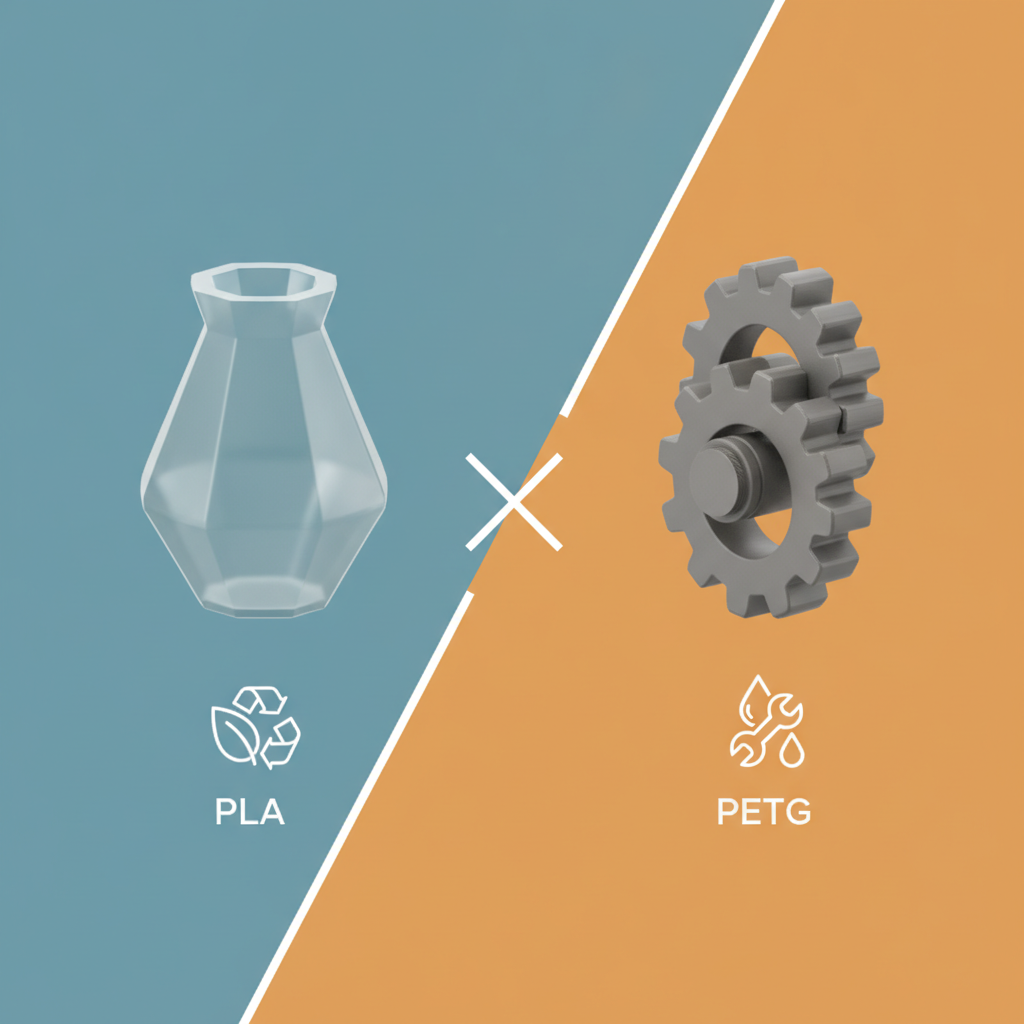
- PLA (Polylactic Acid): Often considered the "default" filament for most 3D printers, PLA is a biodegradable thermoplastic derived from renewable resources like corn starch. It's incredibly easy to print with, boasts excellent aesthetic qualities, and is perfect for beginners or for projects where high strength and temperature resistance aren't the primary concerns. If you're looking to achat filament pla luxembourg, you'll find it widely available and a fantastic starting point for many creative endeavours.
- PETG (Polyethylene Terephthalate Glycol-modified): PETG takes the popular PET plastic (used in water bottles) and modifies it with glycol to make it more suitable for 3D printing. It offers a powerful combination of strength, flexibility, and temperature resistance, placing it squarely between PLA and ABS in terms of properties. While slightly trickier to print than PLA, its robust nature makes it ideal for functional parts that need to withstand a bit more punishment. When considering filament petg luxembourg prix, its enhanced properties justify a slightly higher cost for many applications.
Feature-by-Feature Comparison
To help you decide, here's a detailed breakdown of how PLA and PETG stack up against each other across several critical categories:
| Criterion | PLA (Polylactic Acid) | PETG (Polyethylene Terephthalate Glycol-modified) |
|---|---|---|
| Ease of Printing | Very Easy: Low warping, no heated bed often required (though recommended), prints at lower temperatures, minimal odour. Perfect for beginners. | Moderate: Prone to stringing and oozing, requires higher print temperatures and a heated bed. Needs careful calibration but is manageable with experience. |
| Strength & Durability | Good: Strong and rigid, but brittle. Can snap under stress or impact. Great for static models and prototypes. | Excellent: Much stronger and more durable than PLA. Offers good impact resistance and flexibility. Ideal for functional parts and enclosures. |
| Temperature Resistance | Low: Starts to soften around 60-70°C. Not suitable for parts exposed to high heat or direct sunlight. | High: Withstands temperatures up to 80°C or even higher, making it suitable for automotive parts or objects exposed to varying environments. |
| Flexibility / Toughness | Rigid: Very little flexibility, which contributes to its brittleness. | Tough & Flexible: Offers a degree of flexibility, allowing it to bend rather than break, which significantly increases its toughness and longevity. |
| Adhesion (Layer & Bed) | Excellent: Bonds well to itself (good layer adhesion) and easily to various build surfaces (e.g., glue stick, painter's tape). | Good: Strong layer adhesion, sometimes too strong, leading to potential damage to some build surfaces. Requires specific bed adhesives (e.g., PEI, glue stick, hairspray). |
| Surface Finish & Aesthetics | Excellent: Produces smooth, often glossy prints with fine detail. Available in a vast array of colours and special finishes (silks, metallics). | Good: Can produce glossy, translucent prints. May show more stringing or imperfections if not perfectly dialled in. Often has a more industrial look. |
| Environmental Impact | Biodegradable: Derived from renewable resources and can compost under industrial conditions. Generally considered more environmentally friendly. | Recyclable: While not biodegradable, PETG is theoretically recyclable (though local facilities vary) and considered food-safe in its pure form. |
| Fumes & Odour | Low: Produces a faint, sweet smell, generally not bothersome. | Low: Generally low odour, but some users report a slight, plastic-like smell during printing. Good ventilation is always recommended. |
Pros & Cons: PLA Filament
PLA Pros:
- User-Friendly: Incredibly easy to print, making it ideal for beginners.
- Excellent Aesthetics: Produces sharp details and smooth surfaces, often with a glossy finish.
- Wide Colour Range: Available in an extensive palette of colours and unique blends (e.g., silk, glitter, wood-filled).
- Low Warping: Less prone to lifting from the print bed, leading to higher success rates.
- Biodegradable: Made from renewable resources, making it a more environmentally conscious choice.
- Low Odour: Minimal and often pleasant smell during printing.
PLA Cons:
- Brittle: Can be fragile and easily break under stress or impact.
- Low Heat Resistance: Not suitable for outdoor use or parts exposed to elevated temperatures (e.g., inside a car on a sunny day).
- Limited Chemical Resistance: Susceptible to degradation from certain solvents and UV light over time.
- Not Food Safe: While made from natural materials, the printing process and potential additives make it generally not recommended for direct food contact.
Pros & Cons: PETG Filament
PETG Pros:
- High Strength & Durability: Much tougher and more resistant to impact than PLA.
- Good Flexibility: Bends before breaking, making it suitable for parts that need a degree of give.
- High Temperature Resistance: Ideal for components that will encounter heat or direct sunlight.
- Chemical Resistance: Good resistance to water, many acids, and solvents.
- Food Safe (Pure Form): In its pure form, PETG is considered food-safe, though printer conditions and colourants can affect this.
- Recyclable: Can be recycled, contributing to a circular economy.
PETG Cons:
- More Challenging to Print: Requires higher temperatures and is prone to stringing and oozing, demanding more fine-tuning of printer settings.
- Strong Bed Adhesion: Can sometimes adhere too strongly to the build plate, potentially causing damage to surfaces like glass.
- Glossier Finish: While sometimes desirable, the glossy finish can highlight layer lines and imperfections more than matte PLA.
- Hygroscopic: Tends to absorb moisture from the air, which can negatively affect print quality if not properly stored.
Who Should Choose Each Filament?
Choosing between PLA and PETG ultimately depends on your project's specific requirements and your experience level.
Choose PLA if you are:
- A Beginner to 3D Printing: Its forgiving nature makes it the perfect filament to learn the ropes.
- Printing Prototypes & Models: For concept validation, aesthetic models, figurines, or decorative items where high strength isn't critical.
- Looking for Ease of Use: You want a hassle-free printing experience with minimal tweaking.
- Creating Indoor Decor or Gifts: Statues, vases, desk organisers, or toys that won't see rough handling or extreme conditions.
- Prioritising Cost-Effectiveness: Generally more affordable than PETG, especially for casual use or large models.
- Focused on Aesthetics: The smooth finish and wide range of colours are ideal for visually appealing prints.
If your project falls into these categories, and you're curious about the coût impression 3d luxembourg for such items, PLA is often the most economical and straightforward choice.
Choose PETG if you are:
- Printing Functional Parts: Gears, brackets, enclosures, protective cases, or anything that needs to be tough and resilient.
- Creating Parts for Outdoor Use: Items that will be exposed to sunlight, moderate heat, or varying weather conditions.
- Needing Chemical Resistance: For components that might come into contact with certain chemicals or solvents.
- Producing Mechanical Components: Parts that require flexibility, impact resistance, and layer adhesion for longevity.
- An Experienced Maker: Someone comfortable with fine-tuning print settings to overcome stringing and achieve optimal results.
- Considering a 3d design service luxembourg for robust items: If you're working with professionals on custom parts, PETG is a strong candidate for durability.
For those in Luxembourg requiring durable, professional-grade prints, our service impression 3d luxembourg often recommends PETG for its superior mechanical properties. If you need a design 3d professionnel luxembourg for a functional prototype, PETG is likely the material of choice.
Verdict: Making Your Decision
Ultimately, there's no single "best" filament; there's only the best filament for *your* specific project. If you're just starting your 3D printing journey or your project prioritises aesthetics and ease of printing, PLA is your reliable go-to. It's incredibly versatile for a vast array of common 3D printing tasks and offers fantastic results with minimal fuss.
However, if your print needs to withstand greater forces, higher temperatures, or offer a degree of flexibility without breaking, then PETG steps up as the superior choice. It demands a bit more attention during the printing process but rewards you with significantly enhanced mechanical properties and durability, making it perfect for functional parts and applications where longevity is key.
Remember, at PrintIn3D, we're your 3D printing partner, dedicated to helping you "Print Your 3D Dreams" with ease and expertise. We offer high-quality filaments like SUNLU PLA and SUNLU PETG for those who print themselves. For those who prefer a hassle-free solution, our custom 3D printing services are ready to bring your designs to life using the optimal material for your needs, serving the entire EU/EEA, including the impression 3d grand-duché de luxembourg. We're here to provide expert advice, whether you're buying achat filament 3d luxembourg or outsourcing your print jobs.
Ready to bring your ideas to life? Explore our range of filaments or upload your model for a custom print today!