Rapid Prototyping UK: Your Guide to 3D Printing Services
In today's fast-paced world of product development, speed and precision are paramount. Whether you're an ambitious startup, an established engineering firm, or an independent inventor, bringing your ideas to life quickly and efficiently can be the difference between market success and being left behind. This is where a professional 3d printing service gb prototypes uk becomes an invaluable partner. It offers a streamlined, cost-effective, and highly flexible solution for creating physical models from your digital designs.
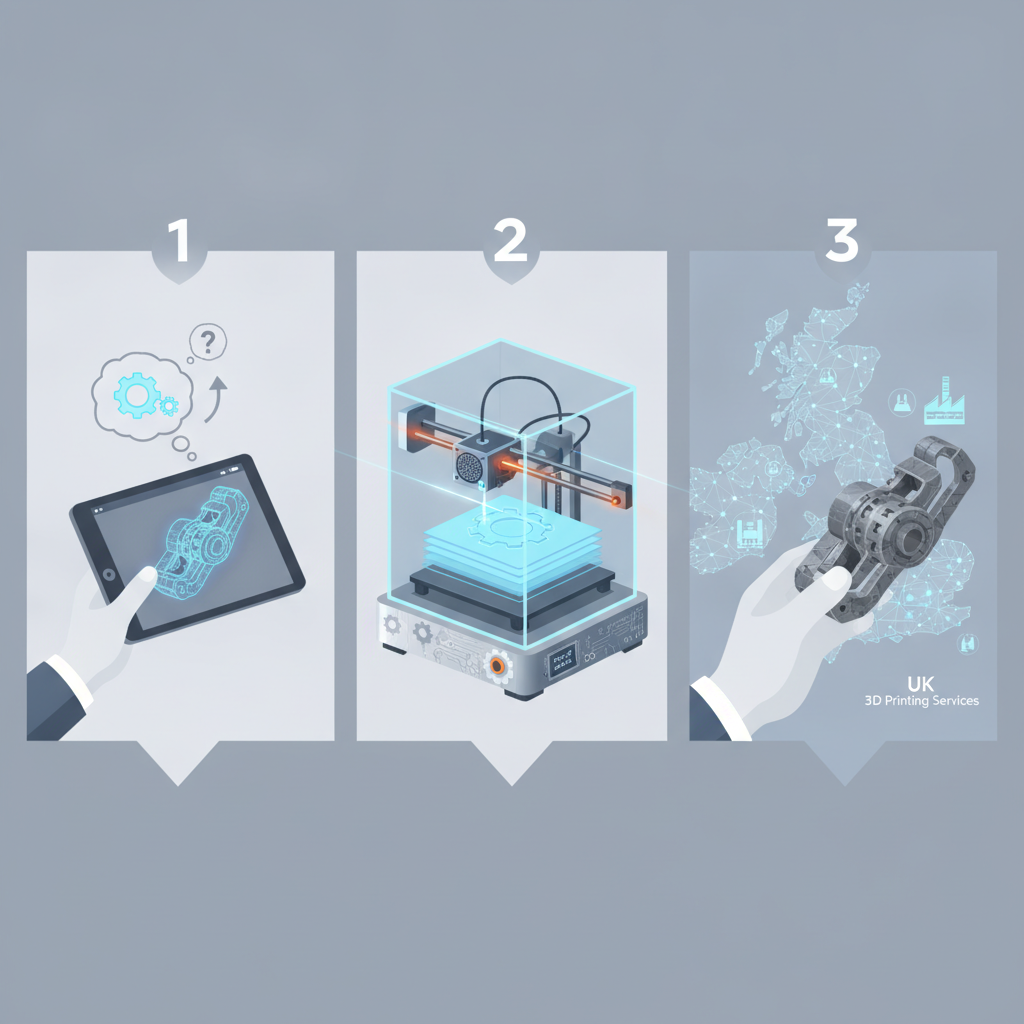
This comprehensive guide will walk you through everything you need to know about leveraging 3D printing for rapid prototyping across the UK. We'll demystify the process, from initial concept to receiving your finished prototype, ensuring you understand how to make the most of this transformative technology. You'll learn how to define your project needs, choose the right materials, prepare your designs, and ultimately select the perfect 3d printing uk service for your specific requirements. We'll also cover crucial aspects like managing costs, avoiding common pitfalls, and understanding turnaround times, empowering you to navigate the world of custom 3D printing with confidence. Get ready to turn your innovative concepts into tangible realities faster than ever before!
Who This Is For
- Entrepreneurs and Startups seeking quick, affordable product iteration.
- Engineers and Product Designers needing functional prototypes or proof-of-concept models.
- Small to Medium-sized Businesses (SMBs) without in-house 3D printing capabilities.
- Inventors looking to validate designs before mass production.
- Anyone requiring custom replacement parts 3d printing or unique components.
Step 1: Define Your Prototype's Purpose and Requirements
Before you even think about design or materials, the most critical first step is to clearly define what your prototype needs to achieve. A prototype isn't always a finished product; it's a tool for learning. Is it a visual model to present to investors? A functional part to test assembly? Or a form-and-fit test for a complex enclosure? Understanding its primary purpose will guide every subsequent decision, from design complexity to material choice and desired finish.
Consider the environment your prototype will operate in, the stresses it will endure, and any specific functionalities it must demonstrate. For example, a prototype for a drone part will have vastly different requirements than a static architectural model. Jot down a list of essential criteria, including dimensional accuracy, strength, flexibility, heat resistance, aesthetic quality, and expected lifespan. This clarity will save you time and money in the long run by helping you choose the most appropriate 3d printing rapid prototyping uk solution.
- Identify the core function: Will it be a visual mock-up, a functional test piece, or both?
- Specify performance requirements: Does it need to withstand impact, heat, or certain chemicals?
- Determine critical dimensions and tolerances: How accurate does the part need to be?
- Consider aesthetic needs: Is surface finish, colour, or transparency important?
- Set a budget and timeline: How much are you willing to spend, and when do you need the prototype?
Step 2: Design Your 3D Model (or Utilise a Custom 3D Design Service)
With your prototype's requirements clearly defined, the next step is to translate your vision into a digital 3D model. This is typically done using Computer-Aided Design (CAD) software. Popular choices include SolidWorks, Fusion 360, Onshape, and Blender. If you have in-house CAD expertise, you can design the model yourself. Ensure your design adheres to 3D printing best practices, such as appropriate wall thickness, minimal overhangs (depending on the print method), and structural integrity.
However, if you lack the software or the expertise, don't despair! Many 3d printing uk service providers also offer a custom 3d design service. This can be an invaluable resource, allowing you to provide sketches, 2D drawings, or even just a detailed description of your idea, and have a professional designer create a print-ready 3D model for you. This often speeds up the process and ensures the model is optimised for successful printing, avoiding common design-related print failures. For those in the UK, dedicated services for this are increasingly accessible. You can explore how professional services like PrintIn3D can take your ideas from concept to a tangible 3D model by visiting our guide on custom 3d design services in the UK.
- Choose your CAD software: Select a program suitable for your design complexity and skill level.
- Adhere to design principles: Pay attention to wall thickness, support structures, and tolerances.
- Export in the correct format: Most 3D printing services accept STL files, but OBJ and 3MF are also common.
- Consider a custom 3D design service: If you don't have design capabilities, outsource this step to experts who can turn your concepts into print-ready files.
Step 3: Choose the Right Material for Your Prototype
The material you choose for your prototype is as crucial as the design itself. Different 3d printer filament uk options offer varying properties in terms of strength, flexibility, heat resistance, surface finish, and cost. For 3d printing rapid prototyping uk, the most common materials are plastics like PLA, PETG, and ABS, but more advanced options like Nylon, TPU, and even resin-based materials are available for specific applications.
PLA Filament UK: Polylactic Acid (PLA) is perhaps the most popular and easiest-to-print filament. It's biodegradable, rigid, and available in a vast array of colours. Ideal for visual prototypes, conceptual models, and parts that don't require high strength or heat resistance. PETG Filament: Polyethylene Terephthalate Glycol (PETG) offers a good balance of strength, flexibility, and temperature resistance, making it suitable for functional prototypes that need to withstand more stress than PLA. It's also food-safe in its pure form. TPU Filament UK: Thermoplastic Polyurethane (TPU) is known for its incredible flexibility and durability. If your prototype needs to be soft, rubber-like, or absorb impact (e.g., gaskets, phone cases, flexible connectors), TPU is the go-to material. ABS: Acrylonitrile Butadiene Styrene (ABS) is strong, durable, and more heat-resistant than PLA, often used for functional prototypes and end-use parts, but it can be challenging to print and requires good ventilation.
Many 3d printing uk service providers will offer guidance on material selection based on your prototype's defined requirements. Don't hesitate to consult with them to ensure you're making the optimal choice for performance and cost.
- Match material properties to prototype needs: Consider strength, flexibility, temperature resistance, chemical resistance, and aesthetics.
- Common choices: PLA for aesthetics/basic function, PETG for balanced performance, TPU for flexibility.
- Discuss with your service provider: Leverage their expertise in material selection.
Step 4: Selecting a Professional 3D Printing Service in the UK
Finding the right 3d printing service gb prototypes uk is crucial for a successful project. With many options available, both online and local, it's important to evaluate them based on several factors. While a "3d printing near me uk" search might yield local hobbyists, for professional rapid prototyping, you'll want a reliable service with industrial-grade equipment and expertise.
Consider the range of materials they offer, their printing technologies (FDM, SLA, SLS, etc.), turnaround times, customer support, and pricing structure. Look for services that specialise in prototypes and offer consulting on design optimisation and material selection. A good service will have clear communication channels and provide transparent quoting. Read reviews and look for testimonials, especially regarding speed and quality for prototyping projects.
PrintIn3D, for example, offers custom 3D printing services with fast turnaround times, high-quality 3d printer filament uk options, and friendly support, catering to businesses and individuals across the UK. Our award-winning service ensures you get hassle-free prototyping from concept to reality.
- Evaluate service offerings: Check available materials, printing technologies, and any additional services like design assistance.
- Assess turnaround times: For rapid prototyping, speed is often critical. Look for services offering quick print times (e.g., 24-hour options).
- Review customer support and communication: Good communication is key, especially for complex projects.
- Compare pricing and quoting transparency: Understand how costs are calculated (material, print time, post-processing).
- Check for certifications or quality assurance: Especially important for 3d printing engineering uk applications.
Step 5: Preparing Your Files and Requesting a Quote
Once your 3D model is finalised and you've identified a potential 3d printing uk service, the next step is to prepare your files for submission and request a quote. Most services will require your 3D model in a standard format, typically an STL file (STereoLithography). Ensure your STL is 'watertight' (no open edges or holes) and that its scale is correct (e.g., millimetres vs. inches).
When you're ready to upload stl for 3d printing, many online services offer instant quoting tools where you can upload your file, select your desired material, colour, and finish, and immediately see an estimated cost and turnaround time. For more complex projects, or if you require a custom 3d design service, you may need to submit a detailed request and await a custom quote. Be prepared to provide as much information as possible about your project requirements, including:
- The purpose of the prototype (from Step 1).
- Desired material and colour (from Step 3).
- Quantity of parts needed.
- Any specific tolerances or critical dimensions.
- Required surface finish or post-processing (e.g., sanding, painting).
- Your deadline.
The more detail you provide, the more accurate the quote will be, helping you manage your budget for 3d printing rapid prototyping uk effectively. For insights into how pricing works, refer to our guide on why 3D printing costs what it costs.
- Validate your STL file: Use online tools or CAD software to check for errors and ensure it's manifold.
- Specify print settings: Clearly communicate desired layer height, infill percentage (if you have preferences for strength), and any supports that might be needed.
- Use online quoting tools: For immediate estimates on standard prints.
- Provide detailed project brief: For custom quotes or complex requirements.
Step 6: Reviewing and Iterating Your Prototype
Once your 3D printed prototype arrives, the real work of validation begins. This step is where the "rapid" in 3d printing rapid prototyping uk truly pays off. Thoroughly inspect the prototype for accuracy, functionality, and aesthetic quality against the requirements you established in Step 1. Does it fit as expected? Does it perform the intended function? Are the dimensions correct?
Gather feedback from relevant stakeholders – engineers, designers, marketing teams, or even potential end-users. Document all observations, both positive and negative. If modifications are needed (which is often the case with prototypes), use this feedback to revise your 3D model. The beauty of 3D printing is that these design changes can be implemented quickly, and a new iteration can be printed and delivered within days, not weeks or months. This iterative cycle is fundamental to efficient product development and helps refine your design towards its optimal form.
This process of testing, feedback, and refinement is what makes custom 3d printing such a powerful tool for innovation, significantly reducing the time and cost associated with traditional manufacturing methods.
- Thoroughly inspect the prototype: Check dimensions, fit, finish, and functionality.
- Gather feedback: Involve all relevant stakeholders in the evaluation process.
- Document changes: Keep a clear record of revisions made to the 3D model.
- Iterate quickly: Use the feedback to refine your design and order subsequent prototypes.
Step 7: Scaling Up and Finalising for Production
After several iterations, you'll reach a point where your prototype perfectly meets your requirements. This refined 3D model is now ready to move towards final production. For many, this means transitioning from 3D printed prototypes to mass manufacturing methods like injection moulding or CNC machining. However, 3D printing isn't just for prototypes; it's increasingly used for low-volume production, custom tools, jigs, fixtures, and even end-use parts, especially for custom replacement parts 3d printing.
Your 3d printing uk service partner can often advise on the next steps beyond prototyping. They might offer higher-volume 3D printing capabilities or recommend specialist manufacturers for larger runs. If your finalised design still requires 3D printing for small batches or on-demand parts, maintaining a relationship with a reliable service ensures consistent quality. Consider their capacity for handling larger orders and if they offer different technologies that might be more suitable for increased production volumes.
The journey from an initial concept to a market-ready product is significantly accelerated and de-risked by effective 3d printing rapid prototyping uk. By following these steps and partnering with experienced professionals, you can confidently bring your innovations to life.
- Assess production needs: Determine if 3D printing is viable for low-volume production or if traditional manufacturing is needed.
- Leverage service provider expertise: Ask for advice on scaling up.
- Maintain design files: Ensure all finalised design files are well-organised for future production.
Common Mistakes to Avoid in 3D Printing Prototyping
- Underestimating the Importance of Design: A poor 3D model, even with the best 3d printing service uk, will yield a poor prototype. Invest time or engage a custom 3d design service.
- Ignoring Material Properties: Choosing the wrong material for the prototype's intended use (e.g., using PLA for a high-strength, high-temperature part) will lead to misleading test results.
- Skipping Iterations: The "rapid" in rapid prototyping is about quick cycles of design, print, test, and revise. Trying to perfect the first print often leads to more costly delays later.
- Lack of Clear Requirements: Without a clear understanding of what the prototype needs to achieve, you risk aimless printing and wasted resources.
- Not Communicating with Your Service Provider: Withholding critical information about your project or being unclear about your expectations can lead to misunderstandings and unsatisfactory results.
- Focusing Solely on Cost: While budget is important, choosing the cheapest 3d printing near me uk service without considering quality, experience, and turnaround time can lead to false economies.
- Incorrect File Preparation: Uploading corrupted or incorrectly scaled STL files will cause delays or failed prints. Always double-check your files before you upload stl for 3d printing.
FAQ
Can I get a custom 3D model designed if I only have sketches or ideas?
Absolutely! Many 3d printing uk service providers, including PrintIn3D, offer comprehensive custom 3d design services. You can provide sketches, 2D drawings, photos, or even just a detailed description of your concept. Expert designers will then translate your vision into a print-ready 3D CAD model, ready for rapid prototyping.
What are the typical turnaround times for 3D printing rapid prototypes in the UK?
Turnaround times for 3d printing rapid prototyping uk can vary significantly based on the complexity of the part, chosen material, post-processing requirements, and the service provider's capacity. Many services offer options ranging from a few days for standard prints to expedited 24-hour or 48-hour services for urgent projects. It's best to discuss your specific deadline with your chosen 3D printing service, such as those offering our 8-hour custom 3D printing service or 24-hour custom printing service.
Which 3D printer filament is best for functional prototypes?
For functional prototypes, materials like PETG, ABS, and Nylon are generally preferred over PLA. PETG offers a good balance of strength, flexibility, and temperature resistance. ABS is known for its durability and heat resistance, often used in automotive parts. Nylon provides excellent strength and wear resistance. If your prototype requires significant flexibility or impact absorption, tpu filament uk is the ideal choice. The "best" choice depends heavily on the specific functional requirements of your prototype, and your 3d printing engineering uk partner can offer tailored advice.
How much does a 3D printed prototype cost?
The cost of a 3D printed prototype varies widely. Factors influencing the price include the size and complexity of your 3D model, the chosen material (e.g., pla filament uk is often cheaper than technical filaments), the print time, the quantity of parts, and any required post-processing (e.g., sanding, painting). Many online 3d printing service uk providers offer instant quote tools where you can upload stl for 3d printing and get an immediate estimate. For a detailed breakdown, please see our guide on why 3D printing costs what it costs.
Can I get custom replacement parts 3D printed through a service?
Yes, custom replacement parts 3d printing is one of the most popular applications for 3D printing services. Whether you need a specific broken component replicated, an improved version of an existing part, or a completely new custom part, 3D printing offers a flexible solution. You would typically need to provide an existing 3D model of the part, or utilise a custom 3d design service to recreate it from the physical object or drawings. This makes it a perfect solution for niche, discontinued, or highly specialised components.
Next Steps
Ready to transform your ideas into tangible prototypes with unparalleled speed and efficiency? PrintIn3D is your trusted partner for 3d printing service gb prototypes uk. Explore our services, upload your 3D model, or connect with our expert team to discuss your custom design and printing needs today. Let's bring your 3D dreams to life!