Your Guide to Custom 3D Design Services in the UK
In today's fast-paced world of innovation, the ability to transform a fleeting idea into a tangible product is invaluable. Whether you're an entrepreneur with a groundbreaking concept, a small business looking to optimise production, or an individual hobbyist seeking to bring a personal project to life, a professional custom 3D design service UK is your gateway to making that happen. Gone are the days when sophisticated design and manufacturing were exclusive to large corporations. With advancements in 3D printing technology and accessible design expertise, anyone can now leverage these powerful tools.
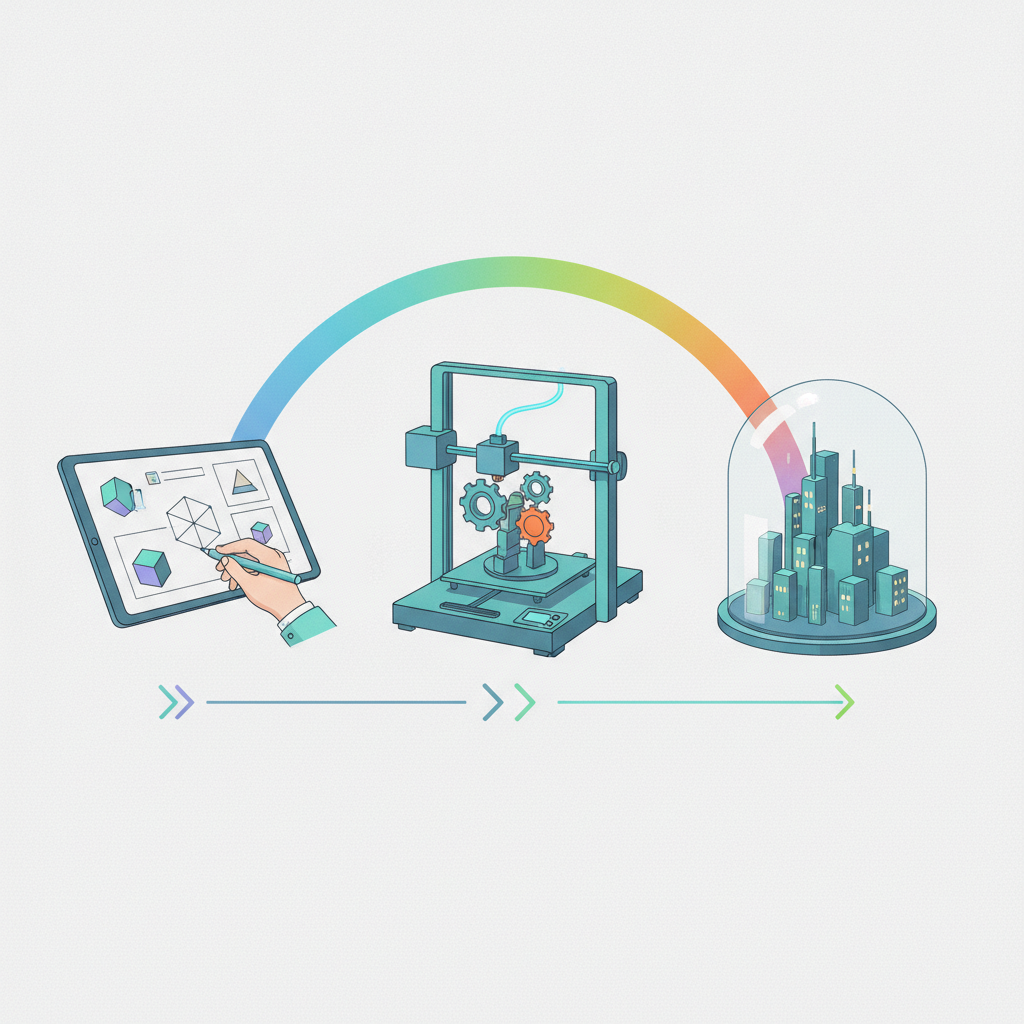
This comprehensive guide will walk you through everything you need to know about engaging a custom 3D design service in the UK. From refining your initial concept to selecting the right design partner and navigating the collaborative process, you'll learn how to effectively translate your vision into a print-ready 3D model. We'll cover crucial considerations like material selection, prototyping, and preparing your design for seamless 3D printing services, ensuring your project moves smoothly from imagination to reality. Get ready to unlock the full potential of your ideas!
Who This Is For
- Entrepreneurs and startups needing 3d design services for prototypes uk.
- Small businesses looking for 3d printing for small businesses solutions, custom tools, or product enhancements.
- Inventors with a sketch or concept that needs to be digitally modelled.
- Product developers requiring complex part design or reverse engineering.
- Hobbyists and creators who need assistance with intricate designs or technical aspects of 3D modelling.
- Anyone without CAD software knowledge or the time to learn it.
Step 1: Conceiving Your Vision – From Idea to Initial Concept
Every great 3D print begins with a clear idea. Before you even think about engaging a custom 3D design service, it's essential to thoroughly develop your initial concept. This foundational step ensures that when you communicate with a designer, you have a solid starting point, which helps streamline the process and minimise misunderstandings. Think of this as the brainstorming phase, where you gather all your thoughts, inspirations, and rough ideas.
Start by asking yourself what problem your object solves, what purpose it serves, or what aesthetic it needs to achieve. Sketching is a powerful tool here – it doesn't matter if you're an artist; simple drawings can convey shapes, proportions, and features far more effectively than words alone. Collect reference images, look at existing products, and consider the emotional connection you want your design to evoke. The more detail you can capture at this stage, the easier it will be for your chosen expert custom 3d design service UK to understand and execute your vision.
- Brainstorm freely: Jot down all ideas, no matter how outlandish they seem initially.
- Sketch your concepts: Use pen and paper to draw multiple angles, key features, and overall shapes.
- Gather inspiration: Collect images, photos, or even physical objects that represent the look, feel, or function you're aiming for.
- Define the core purpose: Clearly articulate what the object is, what it does, and who it's for.
Step 2: Defining Project Requirements – Functionality, Aesthetics, and Materials
Once you have a general concept, the next critical step is to specify its detailed requirements. This moves beyond 'what it is' to 'how it works' and 'what it's made of'. Precise specifications are the bedrock of any successful custom 3D design project, especially when you're working with 3D design services for prototypes UK where accuracy is paramount. Without clear requirements, designers might make assumptions that lead to costly revisions or, worse, a final product that doesn't meet your needs.
Consider the object's dimensions, tolerances (how tight or loose fittings need to be), moving parts, and assembly requirements. Aesthetics are equally important: what style, texture, or finish do you envision? Crucially, think about the materials. Will it need to be flexible (like with tpu filament UK), rigid (like PLA), or durable and heat-resistant (like petg filament UK)? The choice of material significantly impacts the design, as different plastics have different shrinkage rates, strength characteristics, and printability requirements. Outline the environment it will be used in (e.g., indoors, outdoors, high temperature) and any specific regulations or standards it must meet.
- Specify dimensions: Provide exact measurements where possible (length, width, height, hole diameters, wall thicknesses).
- Outline functionality: Describe how the part will move, interact with other components, or perform its intended task.
- Detail aesthetic preferences: Include desired shapes, curves, textures, and overall style.
- Consider material properties: Research and suggest potential materials based on the object's use case (strength, flexibility, temperature resistance, chemical resistance).
- Define tolerances: Specify how precise fits need to be, especially for interlocking or moving parts.
- Identify environmental factors: Note where the object will be used (e.g., indoors, outdoors, exposure to water, UV, heat).
Step 3: Selecting the Right Custom 3D Design Service UK
Finding the ideal custom 3D design service UK is a pivotal step that can make or break your project. The UK market offers a diverse range of design firms and individual freelancers, each with their own specialities. It's not just about finding someone who can use CAD software; it's about finding a partner who understands your vision, communicates effectively, and has a proven track record in projects similar to yours. Whether you're in a major hub like London or Manchester, or anywhere else in the UK, a little research goes a long way.
Begin by searching for reputable services, specifically looking for companies that offer 3d design services for prototypes UK if that's your need. Check their portfolios for examples of previous work – does their style align with yours? Read client testimonials and reviews to gauge their professionalism, communication, and ability to deliver on time and within budget. Consider their expertise in specific industries or materials. For example, if your product needs intricate mechanical parts, seek out a service with strong engineering design capabilities. Don't hesitate to contact several providers to discuss your project and compare their approaches, estimated timelines, and pricing structures. While PrintIn3D is based in Ireland, we proudly serve clients across the UK, offering the same award-winning service and seamless collaboration.
- Research providers: Look for businesses specialising in custom 3d design service UK, including those offering 3d printing service GB design UK.
- Review portfolios: Examine past projects for quality, style, and relevance to your needs.
- Check testimonials and reviews: Look for feedback on communication, reliability, and design expertise.
- Inquire about specialisations: Does the service have experience with your industry, material type (e.g., flexible designs using tpu filament UK), or complexity level?
- Consider geographical convenience: While many services operate remotely, some clients prefer local options like a 3d printing service London UK, 3d printing service Manchester UK, or a 3d printing service Scotland UK, though online services like ours are highly effective.
- Request quotes and proposals: Obtain detailed estimates that break down costs and timelines.
Step 4: Crafting Your Comprehensive Design Brief
Once you've narrowed down your choices, the next crucial step is to prepare a detailed design brief. This document is your primary communication tool with the design service, encapsulating all the information gathered in steps 1 and 2. A well-written brief acts as a roadmap for the designer, ensuring they have all the necessary context, constraints, and aspirations to accurately translate your vision into a 3D model. It minimises ambiguity and sets clear expectations for both parties.
Your brief should include a clear project overview, target audience, intended use of the object, and any critical functionality. Attach all relevant reference materials: sketches, photos, mood boards, existing product examples, and even links to videos if they help explain motion or interaction. Crucially, specify your desired deliverables (e.g., STL files, CAD files, renderings) and any deadlines. If you're designing 3d design services for prototypes UK, state this clearly, along with any intentions for mass production. Also, mention your budget and any specific material preferences, such as wanting the design optimised for durability with PETG filament UK, or flexibility with TPU filament UK.
- Project Overview: A concise summary of your project, its purpose, and key goals.
- Target Audience & Use Case: Who will use it and how will it be used?
- Functionality & Features: Detailed breakdown of what the object must do.
- Aesthetics & Style: Provide visual references, desired colours, textures, and overall look.
- Technical Specifications: Critical dimensions, tolerances, and material considerations.
- Reference Materials: Include all sketches, images, existing models, or even links to competitors.
- Deliverables: Specify file types (e.g., STL, STEP, OBJ, native CAD files) and whether you need renderings.
- Timeline & Budget: Clearly state your deadlines and any budget constraints.
- Success Metrics: How will you determine if the design is successful?
Step 5: The Collaborative Design Phase – Iteration and Feedback
Once the design brief is submitted and the project kicks off, you'll enter the collaborative design phase. This is where your vision truly begins to take shape digitally. A professional custom 3D design service UK will use advanced CAD (Computer-Aided Design) software to create a precise virtual model based on your brief. This isn't a one-way street; your active participation and timely feedback are crucial for guiding the designer towards the perfect outcome.
Designers will typically provide initial concepts or rough drafts for your review. This might involve 2D sketches, basic 3D renders, or even simple wireframes. Provide constructive feedback, clearly articulating what works, what doesn't, and why. Be specific about changes needed, referencing your original brief. Embrace the iterative process – it's rare for a design to be perfect on the first try. Each round of feedback helps refine the model, addressing functionality, aesthetics, and manufacturability for a seamless 3d printing service GB design UK. Maintain open lines of communication, asking questions when you don't understand something, and responding promptly to queries from the design team.
- Review initial concepts: Carefully examine the first drafts and renders provided by the designer.
- Provide clear, constructive feedback: Explain exactly what you like, what needs changing, and why. Reference specific areas of the model.
- Maintain open communication: Be accessible for questions and respond to updates promptly. Utilize communication channels like email or dedicated project platforms.
- Understand design limitations: Be open to professional advice regarding feasibility or optimal design for 3D printing.
- Track iterations: Keep records of feedback and subsequent revisions to ensure all points are addressed.
Step 6: Prototyping and Testing Your 3D Design
Even the most meticulously designed 3D model can hide unforeseen issues until it’s brought into the physical world. This is where prototyping becomes an indispensable step, especially for 3d design services for prototypes UK. A prototype allows you to physically interact with your design, identify any flaws, test functionality, and confirm dimensions before committing to full-scale production. It’s an invaluable opportunity to validate your design and make cost-effective adjustments.
Work with your design service to get a physical prototype made. This might involve a fast 3d printing express UK service for quick turnaround. Test the prototype rigorously against your initial requirements. Does it fit correctly? Do moving parts operate smoothly? Is the aesthetic what you envisioned? Pay attention to how the chosen material (e.g., PETG filament UK for durability or TPU filament UK for flexibility) behaves in its intended environment. Gather feedback from potential users or colleagues if applicable. The insights gained from prototyping are crucial for refining the 3D model, ensuring that the final design is robust, functional, and ready for its purpose.
- Order a prototype: Utilise 3D printing services to get a physical model of your design.
- Perform functional tests: Test all moving parts, connections, and the overall usability of the object.
- Check dimensions and fit: Verify that the prototype matches the specified dimensions and fits with any other components.
- Evaluate aesthetics and ergonomics: Assess the look and feel, and ensure it's comfortable or practical to use.
- Gather feedback: Share the prototype with others for their input, especially if they are target users.
- Document issues: Make a detailed list of any problems, needed adjustments, or improvements.
Step 7: Finalising Your 3D Model – Optimisation for Manufacturing
After successful prototyping and incorporating all necessary revisions, the final step in the design process is to optimise your 3D model for manufacturing. This stage ensures that your design isn't just aesthetically pleasing and functional, but also perfectly tailored for the chosen production method, particularly if you plan to use a 3d printing service GB design UK for end-use parts or larger batches for 3d printing for small businesses.
Your custom 3D design service will perform critical checks, often referred to as 'design for manufacturability' (DFM). This includes ensuring appropriate wall thicknesses, sufficient clearances between moving parts, minimising overhangs for 3D printing, and verifying that the geometry is watertight and manifold. They'll also finalise the file format, typically providing you with an STL file which is the standard for 3D printing, along with native CAD files if requested. This optimisation process is crucial for preventing printing errors, reducing material waste, and ultimately lowering your 3d printing price UK in the long run. A well-optimised file translates directly into higher quality prints and a smoother production workflow.
- Conduct DFM checks: Ensure the design is optimised for your chosen manufacturing process (e.g., FDM 3D printing).
- Verify geometric integrity: Check for common 3D printing issues like non-manifold edges, inverted normals, or tiny gaps.
- Finalise wall thicknesses: Confirm that all walls are strong enough for the chosen material and printing process.
- Export in correct formats: Receive your final model in print-ready formats like STL, along with native CAD files for future modifications.
- Review final documentation: Ensure all specifications and notes are included in the final file package.
Step 8: From Design to Production – Engaging a 3D Printing Service
With your perfectly designed and optimised 3D model in hand, the final exciting step is to bring it to life through a professional 3D printing service. Whether you require a single prototype or a small batch for a product launch, connecting with a reliable printing partner in the UK is key. This step bridges the gap between digital design and physical reality, allowing you to hold and use the object you painstakingly conceptualised.
When selecting a printing service, consider their capabilities. Do they offer the materials you need, such as durable PETG filament UK or flexible TPU filament UK? What are their lead times? Do they provide options for 3d printing express UK for urgent projects? Understanding the 3d printing price UK structure is also important – some services charge per gram, others per print time, and some have minimum order values. A reputable 3d printing service GB design UK will guide you through material selection and finishing options, ensuring your printed part matches your design intent. With PrintIn3D, you upload your file, select your desired materials and finish, and we take care of the rest, delivering your physical creation directly to your door.
- Select a 3D printing partner: Choose a service with the right printers, materials, and expertise for your project.
- Upload your optimised 3D file: Provide the print-ready STL or other specified format.
- Confirm material and finishing options: Discuss specific material properties (e.g., strength of PETG filament UK, flexibility of TPU filament UK) and any post-processing.
- Review the quote and lead time: Understand the 3d printing price UK and expected delivery date, especially for 3d printing express UK needs.
- Place your order: Sit back and wait for your custom-designed 3D object to arrive.
Common Mistakes to Avoid
- Vague Project Briefs: Providing insufficient detail to your designer leads to assumptions, rework, and increased costs. Be as specific as possible.
- Ignoring Manufacturability: Designing a model that looks great but is impossible or prohibitively expensive to 3D print. Always consider DFM (Design for Manufacturability) from the outset.
- Skipping Prototyping: Jumping straight to mass production without testing a physical prototype can result in costly flaws being discovered too late.
- Poor Communication: Failing to provide clear, timely, and constructive feedback during the design iterations can derail the project.
- Underestimating Material Impact: Not considering how material properties (e.g., flexibility of TPU filament UK vs. rigidity of PLA) will affect the final design and functionality.
- Choosing the Cheapest Service Blindly: Prioritising low cost over experience, portfolio, and communication can lead to subpar designs and frustration.
- Unrealistic Timelines: Expecting complex designs to be completed in impossibly short periods. Good design takes time and iteration.
- Lack of Intellectual Property (IP) Agreements: Not clarifying ownership of the design files or signing NDAs (Non-Disclosure Agreements) if your idea is sensitive.
FAQ
Does a custom 3D design service in the UK typically provide print-ready files?
Yes, a reputable custom 3D design service UK will almost always provide you with print-ready files, most commonly in the STL format. They should also offer other common CAD file types (like STEP, OBJ, or the native file from the software they used) upon request. The service should also ensure the file is optimised for 3D printing, checking for common issues like wall thickness, manifold geometry, and potential printing challenges, especially if you're engaging a combined 3d printing service GB design UK.
How long does it take to get a custom 3D design done?
The timeline for a custom 3D design service UK varies significantly based on complexity, required detail, and the number of iterations. A simple design might take a few days, while complex mechanical parts or highly detailed prototypes could take several weeks. Factors like your responsiveness to feedback and the designer's workload also play a role. Always discuss the estimated timeline upfront and clarify milestones.
What information do I need to provide for a custom 3D design?
To ensure a smooth process, you should provide a comprehensive design brief. This includes detailed sketches, reference images, specific dimensions, functional requirements, material considerations (e.g., if it needs to be compatible with PETG filament UK or TPU filament UK), aesthetic preferences, and the intended use of the object. The more information you provide, the more accurately and efficiently the designer can work, especially for 3d design services for prototypes UK.
How much does a custom 3D design service cost in the UK?
The 3d printing price UK and design cost can vary wildly depending on the complexity of the model, the designer's experience, the number of revisions, and the urgency of the project. Simple designs might start from a few hundred pounds, while intricate engineering projects could run into thousands. Most services will provide a quote after reviewing your design brief. It's often an investment that saves money in prototyping and production errors down the line.
Can a custom 3D design service help with design optimisation for 3d printing for small businesses?
Absolutely. Professional custom 3D design services UK are experts in Design for Manufacturability (DFM). They can optimise your model specifically for 3D printing, ensuring it's structurally sound, uses minimal material, and prints efficiently without common issues. This expertise is particularly valuable for 3d printing for small businesses looking to produce parts reliably and cost-effectively, acting as an extension of their team for production needs.
Next Steps
Ready to turn your innovative ideas into tangible realities? At PrintIn3D, we specialise in providing an award-winning custom 3D design service UK, translating your concepts into precise, print-ready 3D models with expertise and a friendly approach. Partner with us today to experience hassle-free design and bring your 3D dreams to life!