PLA vs. PETG Filament: Your 3D Printing Material Guide for Germany
PLA vs. PETG Filament: Your 3D Printing Material Guide for Germany
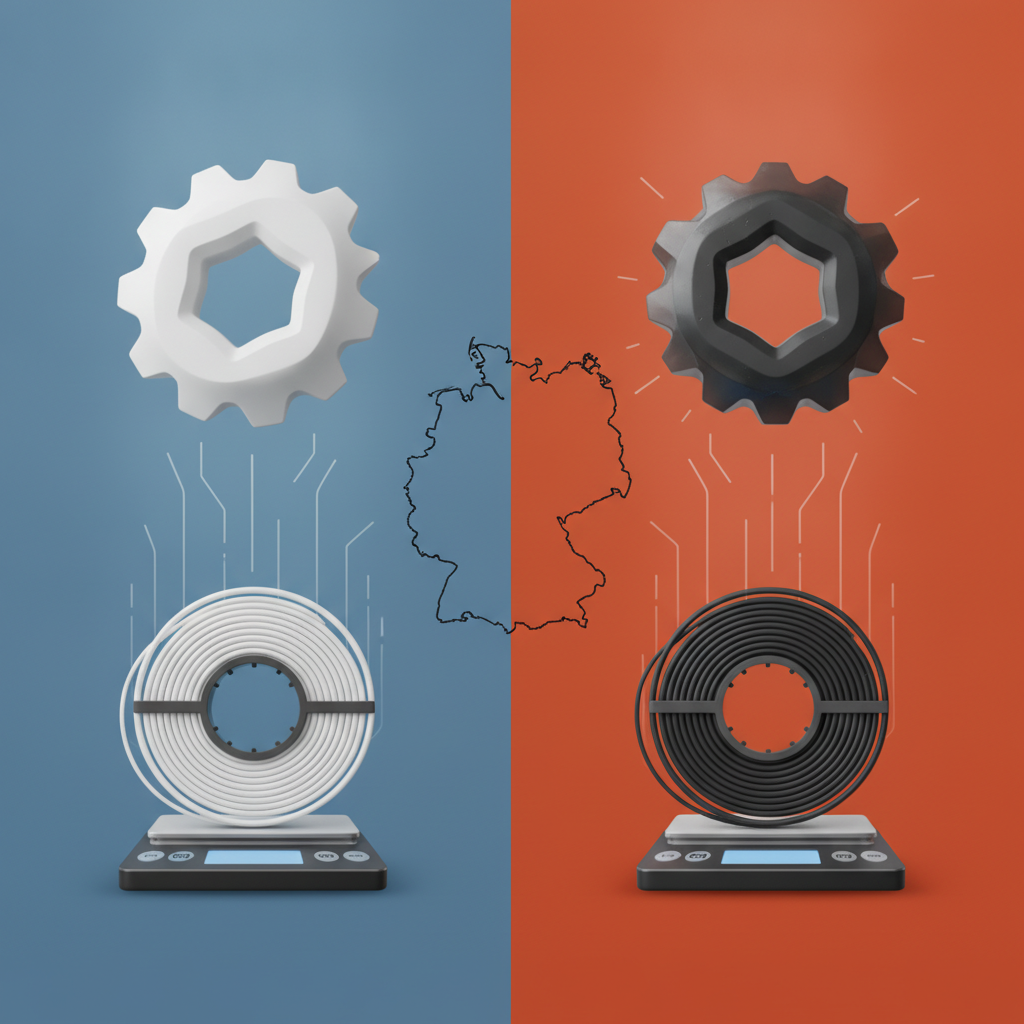
Embarking on a 3D printing project, whether for hobby or professional use, always brings you to a crucial crossroads: choosing the right filament. In the vibrant world of additive manufacturing, two materials consistently stand out for their popularity and versatility: PLA (Polylactic Acid) and PETG (Polyethylene Terephthalate Glycol). For anyone looking to find the perfect 3d-drucker filament kaufen for their next creation, especially here in Germany, understanding the nuances between these two is absolutely essential.
At PrintIn3D.ie, your trusted 3D printing partner, we understand that selecting the ideal material can make or break your project. That's why we've put together this comprehensive comparison, helping you navigate the world of PLA and PETG to make an informed decision for your specific needs. From understanding their properties to practical applications, we'll guide you through which filament is the right choice for your 3D printing dreams in Germany.
Quick Overview: PLA vs. PETG
PLA Filament: Often hailed as the 'friendly' filament, PLA is derived from renewable resources like corn starch, making it biodegradable and a favorite among beginners and environmentally conscious users. It's renowned for its ease of printing, producing crisp details with minimal warping, and is ideal for models, prototypes, and decorative items. When you're looking for an accessible and reliable material to bring your initial ideas to life, PLA often comes to mind first. Many enthusiasts operating common machines like the Ender 3 often start their journey with 3d-druck-filament für ender 3 in PLA due to its forgiving nature.
PETG Filament: Positioned as a bridge between PLA's ease of use and ABS's durability, PETG offers a robust combination of strength, flexibility, and temperature resistance. It's a fantastic choice for functional parts that need to withstand more stress, impacts, or fluctuating temperatures. If you're creating 3d-druck ersatzteile or components for mechanical assemblies, PETG's properties make it an excellent contender. It’s becoming increasingly popular for its balance of printability and mechanical properties, making petg filament kaufen a smart choice for more demanding projects.
Feature-by-Feature Comparison
Let's dive into a detailed comparison of PLA and PETG across several key criteria, helping you pinpoint the best fit for your 3D-Druck project in Deutschland.
| Criterion | PLA (Polylactic Acid) | PETG (Polyethylene Terephthalate Glycol) |
|---|---|---|
| Ease of Printing | Generally considered the easiest filament to print. Low melting point, minimal warping, and no heated bed required for smaller prints (though recommended). Odourless printing. Excellent for beginners and intricate designs. | Relatively easy to print, but slightly more challenging than PLA. Requires higher printing temperatures and a heated bed to prevent warping and ensure good bed adhesion. Can be prone to stringing if retraction settings aren't dialled in. |
| Strength & Durability | Good tensile strength but brittle. Parts can snap under stress. Not ideal for functional components that experience impact or flexing. Best for models, prototypes, and aesthetic items. | Excellent tensile strength, significantly more durable and impact-resistant than PLA. Offers good flexibility, allowing parts to bend before breaking. Ideal for functional parts, tools, and mechanical components. |
| Temperature Resistance | Low heat deflection temperature, typically deforming at around 60°C. Not suitable for parts exposed to high temperatures, direct sunlight, or hot environments (e.g., car interiors). | High heat resistance, typically with a glass transition temperature around 80-90°C. Can withstand hotter environments than PLA, making it suitable for outdoor use or components near heat sources. |
| Flexibility | Rigid and stiff. Offers very little flexibility before fracturing. Not suitable for parts that require any degree of bend or resilience. | Good inherent flexibility and ductility. Parts can absorb impact and flex without immediate breakage. This makes it ideal for 3d-druck teile online bestellen for applications needing a bit of give, like clips or protective covers. |
| Post-Processing | Easy to sand, paint, and glue. Can be tricky to vapor smooth. Best for finishing with traditional methods. Good for models requiring a smooth, painted finish. | Can be challenging to sand due to its tough, slightly flexible nature. Resists most solvents, making vapor smoothing difficult. Typically used for functional parts where surface finish is less critical, or parts that benefit from its natural sheen. |
| Environmental Impact | Derived from renewable resources (e.g., corn starch) and is biodegradable under industrial composting conditions. A more environmentally friendly choice for disposable or short-term prototypes. | Not biodegradable, but recyclable (though often requires specific facilities, similar to PET plastic bottles). Made from petroleum-based resources. Less eco-friendly than PLA in terms of disposal, but its durability can lead to longer-lasting prints. |
| Adhesion (Layer & Bed) | Excellent layer adhesion, creating strong bonds between layers. Good bed adhesion with a wide range of surfaces, often without needing adhesives, reducing the chance of failed prints. | Very good layer adhesion, often resulting in strong, robust parts. Strong bed adhesion can sometimes be *too* strong, potentially damaging the print surface if not handled carefully. Use of an interface like painter's tape or glue stick is often recommended. |
| Chemical Resistance | Relatively poor chemical resistance. Soluble in some strong solvents like chloroform. Not ideal for parts that will be in contact with harsh chemicals. | Good chemical resistance to water, acids, and alkalis. This makes it a better choice for containers or parts that might be exposed to various liquids. |
Pros & Cons of PLA Filament
Pros:
- User-Friendly: Incredibly easy to print, making it perfect for beginners and educational settings. Minimal warping and good bed adhesion mean fewer failed prints.
- Aesthetic Appeal: Produces high-quality, smooth surfaces with crisp details, making it ideal for visual models and artistic creations.
- Wide Color Range: Available in a vast array of colors and special finishes (silks, glitter, glow-in-the-dark), allowing for great creative freedom.
- Low Odor: Emits very little odor during printing, making it more pleasant to use in home or office environments.
- Environmentally Friendlier: Biodegradable and derived from renewable resources, appealing to those seeking sustainable options.
- Low Cost: Generally more affordable than PETG, making it a cost-effective choice for many projects.
Cons:
- Brittle: Lacks impact resistance and can easily snap or crack under stress, limiting its use for functional parts.
- Low Heat Resistance: Deforms at relatively low temperatures, making it unsuitable for outdoor applications or parts exposed to heat.
- Poor UV Resistance: Degrades over time when exposed to direct sunlight, leading to brittleness and discoloration.
- Limited Flexibility: Very rigid, not suitable for parts that need to bend or flex.
Pros & Cons of PETG Filament
Pros:
- Strong & Durable: Offers excellent strength, impact resistance, and durability, making it ideal for functional and mechanical parts. Perfect for 3d-druck kleinserie production of robust components.
- Good Flexibility: More flexible and less brittle than PLA, allowing parts to absorb shock and flex without breaking.
- High Temperature Resistance: Withstands higher temperatures without deforming, suitable for applications in warmer environments.
- Chemical Resistance: Good resistance to water, many chemicals, and solvents, enhancing its utility for various applications.
- Food Safe (select grades): Some PETG grades are considered food-safe, making them suitable for certain household items (always verify with manufacturer).
- UV Resistance: Better resistance to UV light than PLA, making it more suitable for outdoor applications.
Cons:
- Prone to Stringing: Can be more challenging to print than PLA, especially regarding stringing and oozing, requiring careful calibration of retraction settings.
- Strong Bed Adhesion: While generally a pro, very strong bed adhesion can sometimes damage print surfaces if not properly managed (e.g., with blue painter's tape or glue stick).
- Hydroscopic: Tends to absorb moisture from the air, which can degrade print quality. Requires proper storage in dry conditions.
- Fumes: Can produce more noticeable fumes than PLA during printing, though generally less than ABS. Good ventilation is recommended.
Who Should Choose Each Filament?
Deciding between PLA and PETG ultimately comes down to your project's specific requirements. Consider these scenarios:
Choose PLA if:
- You are a beginner in 3D printing. Its ease of use and forgiving nature make it perfect for learning the ropes.
- Your project is for aesthetic purposes. Think decorative items, display models, intricate figurines, or prototyping initial designs where visual appeal is key.
- You need quick prototypes. PLA's speed and reliability in printing make it excellent for rapid iteration of designs.
- The printed object won't be exposed to heat or significant stress. Desk organizers, artistic pieces, or models for indoor display are ideal.
- Environmental considerations are a priority. Its biodegradability is a significant advantage for those seeking more sustainable options.
- You are printing 3D-printed solutions for your home that are not under stress.
Choose PETG if:
- You need strong, durable, and functional parts. Tools, mechanical components, drone parts, or robust enclosures benefit greatly from PETG's properties. It’s excellent for 3d-druck kleinserie where resilience is paramount.
- The object will be exposed to higher temperatures or direct sunlight. Outdoor fixtures, components near engine parts, or items left in a hot car are good candidates.
- Your design requires some flexibility or impact resistance. Parts that need to bend, absorb shock, or withstand drops will perform better with PETG. This is key for creating reliable 3d-druck ersatzteile.
- Chemical resistance is important. If your print will interact with various liquids or chemicals, PETG offers superior protection.
- You're looking for a balance between ease of printing and material strength. PETG bridges the gap between PLA and more demanding industrial filaments like ABS.
If you're unsure or need highly specialised parts, considering a 3d-druck dienstleister deutschland like PrintIn3D.ie can provide expert guidance. We can also assist with a 3d-druck design service if you have an idea but no ready model, or even objekte 3d scannen lassen to reverse-engineer existing parts.
Verdict: Your 3D Printing Partner for Success
In the "PLA vs. PETG Filament" debate, there's no single winner; only the right choice for your specific project. PLA excels in ease of use, aesthetics, and rapid prototyping, making it a fantastic starting point for hobbyists and for non-functional models. PETG, on the other hand, steps up for projects demanding greater strength, durability, temperature resistance, and flexibility, perfect for robust, functional components and challenging environments. Understanding these differences empowers you to select the material that will best serve your vision, ensuring your 3D printed creations are not just visually appealing but also perform exactly as intended.
Whether you're a seasoned professional or just beginning your 3D printing journey in Germany, PrintIn3D.ie is here to support you. We offer a wide range of high-quality filaments, including top brands like Bambu Lab and SUNLU for both PLA and PETG, readily available to 3d-drucker filament kaufen with fast delivery. Beyond filament, our custom 3D printing services can handle your projects, from 3d-druck kleinserie to complex 3d-druck ersatzteile, ensuring you get perfect 3d-druck teile online bestellen without the hassle of owning a printer. With our expert 3D design services and option to objekte 3d scannen lassen, we are truly your one-stop solution for bringing your 3D dreams to life.
Ready to bring your ideas to life? Visit PrintIn3D.ie today for hassle-free 3D printing services and top-quality filaments!