PLA vs PETG: Which Filament is Better for Your 3D Printing Projects in Germany?
PLA vs PETG: Welches Filament ist besser für Ihre 3D-Druck Projekte in Deutschland?
Navigating the world of 3D printing can be thrilling, but choosing the right material is often the first significant hurdle. For hobbyists and businesses diving into additive manufacturing in Germany, the debate between PLA and PETG filaments is particularly common. Both are incredibly popular, yet they offer distinct characteristics that make them suitable for different applications. At PrintIn3D.ie, your trusted 3D printing partner, we understand this dilemma and are here to help you make an informed decision for your next project.
Whether you're crafting intricate models, developing robust prototypes, or printing essential 3d-druck ersatzteile, the choice between PLA and PETG can significantly impact the success, durability, and aesthetics of your final product. This comprehensive guide will break down the strengths and weaknesses of each, helping you determine welches Filament besser ist for your specific needs, especially for your 3D-Druck Projekte in Deutschland. Let’s explore these two titans of the filament world!
Quick Overview: PLA vs PETG
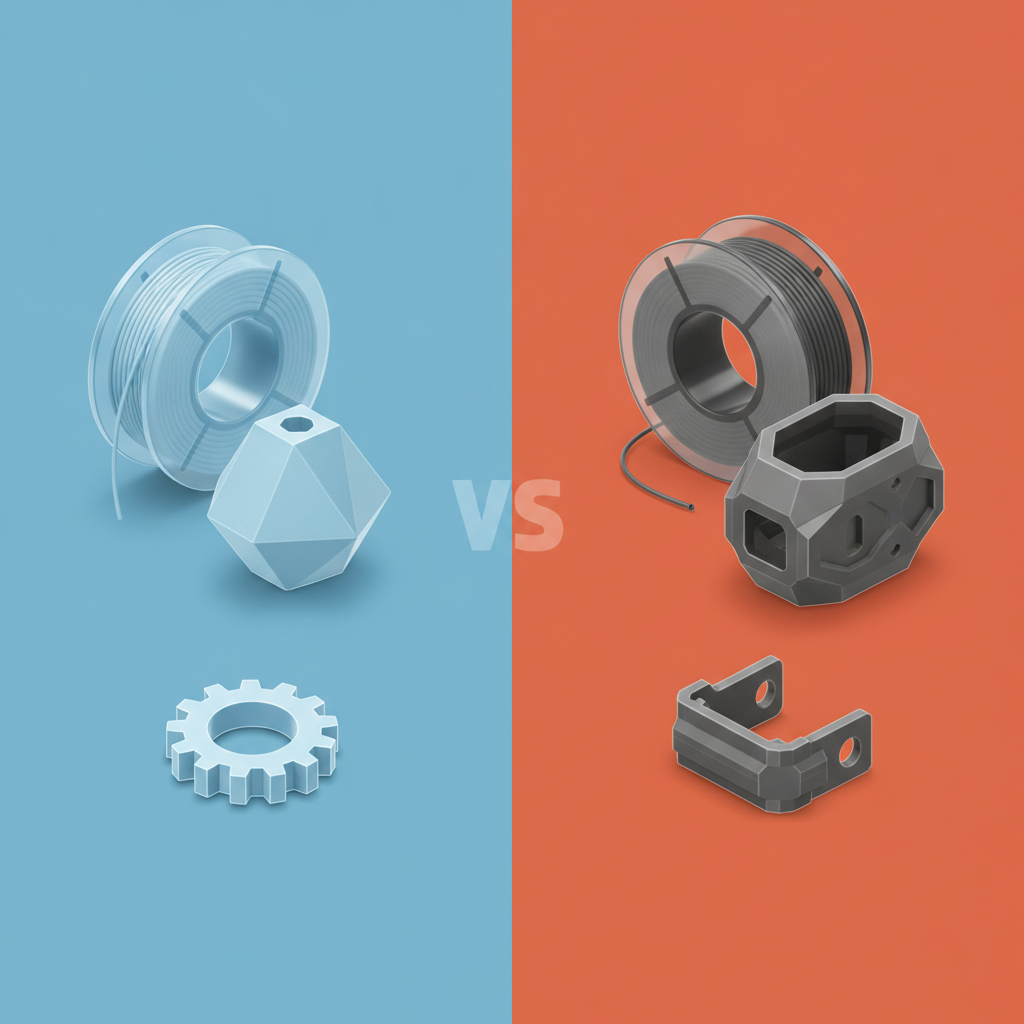
PLA (Polylactic Acid): Often hailed as the beginner-friendly filament, PLA is a thermoplastic derived from renewable resources like corn starch or sugarcane. It's renowned for its ease of printing, minimal warping, and lack of strong fumes, making it a favourite among enthusiasts just starting their journey in 3d-druck lernen. PLA is ideal for creating highly detailed models, artistic pieces, and prototypes where aesthetic appeal and ease of production are paramount.
PETG (Polyethylene Terephthalate Glycol-modified): PETG is a more robust and versatile thermoplastic. It shares some of PLA's printability advantages but significantly surpasses it in terms of strength, durability, and temperature resistance. Think of it as a bridge between the ease of PLA and the engineering capabilities of ABS. PETG is the go-to choice for functional parts, mechanical components, and items that require greater resilience and impact resistance, often seen in industrial and automotive applications.
Feature-by-Feature Comparison: PLA vs PETG
To truly understand which filament suits your project best, let's dive into a detailed comparison across key criteria:
| Criterion | PLA (Polylactic Acid) | PETG (Polyethylene Terephthalate Glycol-modified) |
|---|---|---|
| Ease of Printing | Easier. Low printing temperatures, minimal warping, and excellent bed adhesion make it very forgiving for beginners. Doesn't require a heated bed or enclosure, though they can improve results. | More Challenging. Requires higher printing temperatures (nozzle and bed) and is prone to stringing and oozing. Can be sensitive to cooling settings and more susceptible to warping than PLA, often benefiting from an enclosure. |
| Strength & Durability | Brittle. High tensile strength but low impact resistance. Parts can snap under stress. Not ideal for functional components that will undergo significant mechanical load. | Strong & Durable. Excellent impact resistance and flexibility compared to PLA. Less brittle, making it suitable for functional parts, jigs, fixtures, and components requiring resilience. |
| Temperature Resistance | Low. Softens at around 50-60°C (122-140°F), making it unsuitable for parts exposed to heat, such as car interiors or outdoor applications in direct sunlight. | High. Withstands temperatures up to 80°C (176°F) or even higher, depending on the specific blend. This makes it a better choice for outdoor use, electronic enclosures, and other heat-exposed applications. |
| Flexibility | Rigid. Once solidified, PLA is quite stiff. It will break rather than bend under pressure. | Flexible (Moderate). Offers good flexibility and elasticity compared to PLA, though not as flexible as specialised filaments like TPU. It can bend and return to its original shape, making it ideal for parts that need to absorb some shock. If you need extreme flexibility, consider tpu filament kaufen. |
| Post-Processing | Easy. Simple to sand, paint, and bond together. Its smooth surface finish after printing often requires less post-processing, especially for aesthetic models. | Challenging. Its sticky nature makes sanding difficult as it can gum up sandpaper. Painting can also be tricky without proper preparation. However, it can be easily vapour smoothed with certain chemicals. |
| Environmental Impact | Biodegradable. Derived from natural resources, PLA is compostable under industrial conditions, making it a more environmentally friendly option. | Recyclable. While not biodegradable, PETG is recyclable (often classified as a #1 plastic, like water bottles), offering a sustainable advantage over some other plastics. |
| Adhesion (Layer & Bed) | Good. Excellent layer adhesion for strong bonds between layers and reliable bed adhesion, reducing the risk of prints detaching during the process. | Strong. Exceptional layer adhesion creates very strong, fused parts. However, bed adhesion can sometimes be *too* strong, potentially damaging the build surface if not properly managed. |
| UV & Chemical Resistance | Low. Degrades and becomes brittle when exposed to UV light and is not very resistant to many common chemicals. | Good. Offers decent resistance to UV radiation and a wide range of chemicals, making it suitable for outdoor use and environments where exposure to various substances is expected. |
Pros & Cons of PLA
PLA Pros:
- Easy to Print: Very forgiving, minimal warping, and no enclosure needed, ideal for those learning 3D printing.
- Aesthetics: Produces visually appealing prints with a smooth finish and a wide range of vibrant colours.
- Biodegradable: Environmentally friendlier as it's derived from renewable resources and can be industrially composted.
- Low Odour: Doesn't emit strong, unpleasant fumes during printing.
- Cost-Effective: Generally more affordable than PETG, especially when you buy 3D-Druck Zubehör like filament.
PLA Cons:
- Brittle: Parts are prone to breaking under stress or impact.
- Low Heat Resistance: Not suitable for high-temperature environments or outdoor use.
- Limited Durability: Less ideal for functional parts that require long-term strength or resilience.
- UV Sensitive: Can degrade and become brittle with prolonged exposure to sunlight.
Pros & Cons of PETG
PETG Pros:
- High Strength & Durability: Excellent impact resistance, making it suitable for functional parts and 3d-druck ersatzteile.
- Good Temperature Resistance: Holds up well in hotter environments compared to PLA.
- Chemical Resistance: Resistant to many acids, alkalis, and solvents.
- Food Safe (clear variants): Some PETG formulations are food-safe, making them suitable for containers or kitchen items.
- Flexibility: Offers a degree of flexibility and elasticity, allowing parts to bend without breaking.
PETG Cons:
- More Challenging to Print: Prone to stringing, oozing, and requiring higher temperatures.
- Hydroscopic: Absorbs moisture from the air, which can lead to poor print quality if not stored properly.
- Sticky Surface: Can be difficult to sand and post-process due to its tacky nature.
- Adhesion Issues: Can sometimes adhere too strongly to the build plate, potentially causing damage.
Who Should Choose Each Filament for 3D-Druck Projekte in Deutschland?
Understanding the distinct characteristics of PLA and PETG allows you to make an informed choice based on your specific project needs. Here’s a quick guide:
Choose PLA if:
- You're a Beginner: Its ease of printing makes it perfect for those new to 3D printing or looking to learn 3D printing without too much hassle.
- You Need Aesthetic Models: Ideal for highly detailed figurines, decorative items, cosplay props, and artistic creations where visual quality is key.
- You're Rapid Prototyping: For quick iterations and proof-of-concept models that don't require high strength or heat resistance.
- Your Project is Indoor-Use Only: For items that won't be exposed to high temperatures or direct sunlight, such as desk organisers, toys, or home decor.
- Environmental Impact is a Concern: If you prioritise biodegradable materials derived from renewable resources.
- You have 3d-druck ideen for simple, non-functional prints.
Choose PETG if:
- You Need Functional & Durable Parts: For components that will experience stress, impact, or regular use, such as mechanical parts, jigs, fixtures, or tool holders.
- Your Project Requires Heat Resistance: Ideal for items exposed to elevated temperatures, like automotive parts, outdoor sensors, or enclosures for electronics.
- You're Printing 3d-druck ersatzteile: Its strength and durability make it excellent for replacing broken plastic components around the house or workshop.
- Chemical Resistance is Necessary: For parts that might come into contact with oils, greases, or cleaning agents.
- Flexibility is a Factor: While not as flexible as TPU, PETG offers enough give for snap-fit enclosures or parts that need to absorb minor impacts without breaking.
- You have a 3d-design service or cad design für 3d-druck project that requires robust end-use parts.
Verdict: Making the Right Choice for Your German 3D Printing Project
Ultimately, there's no single "better" filament between PLA and PETG; the superior choice is always the one that best matches the specific requirements of your 3D printing project. PLA excels in ease of use, aesthetic quality, and cost-effectiveness, making it a fantastic starting point for beginners and a staple for decorative or non-functional items. PETG, on the other hand, steps up when strength, durability, flexibility, and resistance to heat or chemicals are paramount, perfect for functional prototypes and end-use parts.
For individuals and businesses across Germany looking for reliable 3D printing solutions, PrintIn3D.ie offers both custom 3D printing services and high-quality filaments from brands like Bambu Lab and SUNLU. Whether you need a quick prototype in PLA or a robust functional component in PETG, we're equipped to bring your 3D dreams to life. Our expert team can help you select the ideal material and printing parameters for your needs, ensuring a hassle-free experience from concept to creation. If you're looking to buy filament for Prusa drucker or other popular machines, or simply need a trusted 3d-druck online shop, we have you covered with fast dispatch and friendly support.
Don't have a 3D model yet? Our professional 3D design service can transform your ideas or sketches into print-ready CAD design for 3D-Druck. And if you have a physical object you need to replicate or modify, our 3d-scan service is available to create precise digital models. We pride ourselves on offering award-winning service and a 30-Day Risk-Free Return policy, demonstrating our commitment to your satisfaction.
If you're still pondering the best choice for your project or require hassle-free custom 3D printing in Germany, our experts are always ready to provide guidance. We ensure that choosing the right material is as simple and straightforward as possible, empowering you to create incredible things.
Ready to Print Your 3D Dreams?
Explore PrintIn3D.ie's extensive range of filaments and custom 3D printing services today to bring your projects to life with confidence and quality.